
Story contributed by Kristen
Click here for the theological background of Matthew 6-7
(Sermon on the Mount Part 2)
Remember, repetition helps children internalize and make connections. It might be a good idea to read the same story every day for a week. You can add different activities every day.
Ask, and it shall be given you; seek, and ye shall find; knock, and it shall be opened unto you: For every one that asketh receiveth; and he that seeketh findeth; and to him that knocketh it shall be opened.
Matthew 7:7-8 KJV
The morning by the Sea of Galilee is turning to afternoon, and you are still listening to the teacher. Lying comfortably on your tummy, you can watch the waves crash over rocks in the sea and see fishermen getting their boats ready for a night of fishing. Somehow, you feel like you could listen to this teacher all day. His words make you feel peaceful, even when you don’t understand them all.
God doesn’t care so much about the things you do, God cares about who you are inside.
The teacher pauses, and I see people around me looking at each other in shock. What is this rabbi saying?
God wants to change your hearts so that when you see someone hurting or in pain you want to help them not because you feel like you have to but because you feel so much compassion for them.
When your heart is full of compassion and love, you do good and kind things without even thinking about it. It is who you are.
And when you pray, don’t worry about using fancy words. Don’t worry about what other people will think of your prayer. Just open your heart to God, and let God see your heart.
You start wondering. Can God really see who I am inside? Can God see my heart? What does my heart look like?
The rabbi paused, and I could see him leaning against a tree and watching the flowers on the hill sway in the wind.
Consider the lilies of the field, he said.
There is a flower right next to you! You look closely at it. It is bright red, with petals as soft and fragile as skin. The center is black and white, and it looks fuzzy and soft. Maybe you’d never thought a lily was very important, but now that you’re looking you notice how much life the flower has. You wonder, is a flower just as alive as I am?
Lilies do not spin their clothes from wool. They do not create themselves or put clothes on themselves. The earth nourishes them, and the sun feeds them, and the rain waters them, and they come to life in the spring with petals made of sunlight and water. Their clothing, made by the earth, is even more beautiful than Solomon’s temple.
You hear gasps of surprise around you. You know about Solomon’s temple—the temple of a powerful king during your people’s golden age. You remember your mama telling you the stories of how beautiful it was, with glorious jewels and gold and splendor. But this rabbi was saying that a lily, made from the earth, is just as important as a temple made by humans? What did he mean?
Consider the birds in the sky, he says, and you can see him watching a bird who landed in a tree closeby. The birds do not go to the market for their food. They do not barter for fish like we do. They are fed by the earth.
The earth clothes the flowers and feeds the birds. God is in the earth, loving the birds and the flowers. God cares for them like a loving mother, and God will care for you too. Trust, like the lilies, that you can rely on God’s tender care. See the flowers and the birds, and be at peace.
Your head is spinning. Can you really rely on God’s tender care and be at peace? You look again at the red flower close to you. In the wind, it looks almost like the flower is nodding. Smiling, you roll onto your back, looking at the sky, and listen to the rabbi.
Don’t worry about how other people act, he says. Focus on healing your own heart and packing it full of good things. Then you will be filled with compassion and you will see that you are no better than anyone else. I will help you do this. Ask me and I will give you compassion. Seek to love others and I will help you find ways to love. Try, and I will make your heart new.
Who is this person, I wonder, that can help my heart become new?
Suddenly the rabbi stands up and walks to a fig tree close to the top of the mountain you’re sitting on. He picks a ripe fig, and you see him kneel down and offer the fruit to a child at the front of the crowd.
You are like a tree, he says to everyone, planted in the good earth. A tree that is cared for will make delicious fruit. A tree that is cared for cannot make bad fruit. When you let God care for you, when you let me help make your hearts new, your roots will sink deep into the earth and you will be a tree bursting with fruit. You will know, then, that you are good to your core. You cannot be otherwise.
Plant yourselves on good, strong ground. Sink your roots into earth that can feed you and hold you up. Let the rain water you and the sunlight feed you . Look up at the birds and down at the flowers. Be at peace.
Ideas for Play
Contributed by Kristen
See last week’s post for ideas about the verses themselves.

- Read “How to Pray” and “The Singer” in The Jesus Storybook Bible
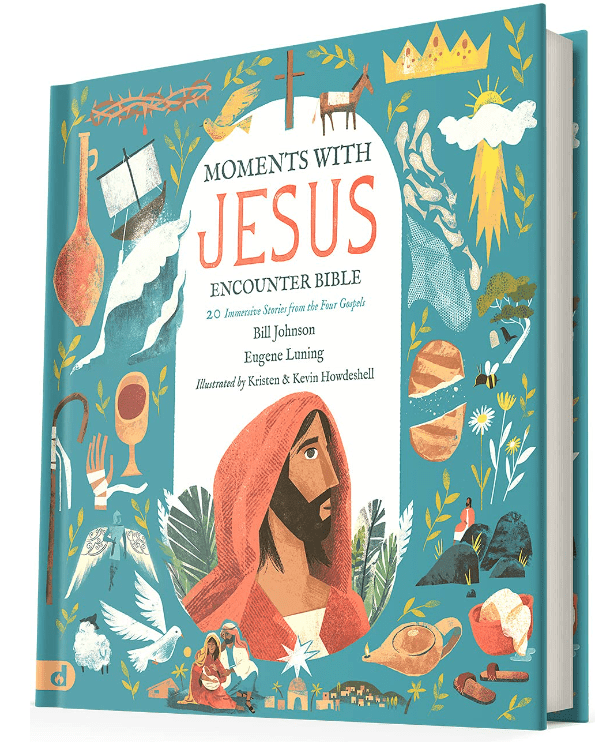
- Read “Wonderful Words on a Hillside” from Moments with Jesus
What does my heart look like?

- Make paper hearts and draw what your hearts looks like.
- Connect the dots: write down things that you want to fill your heart, and then make lines to what those things invite you to do. For example, I want to have a compassionate heart. Compassion leads me to give hugs, or bring cookies, or listen to a friend who is hurting.

- Fill mason jars with paper hearts that have words describing who you are.
Lilies of the field
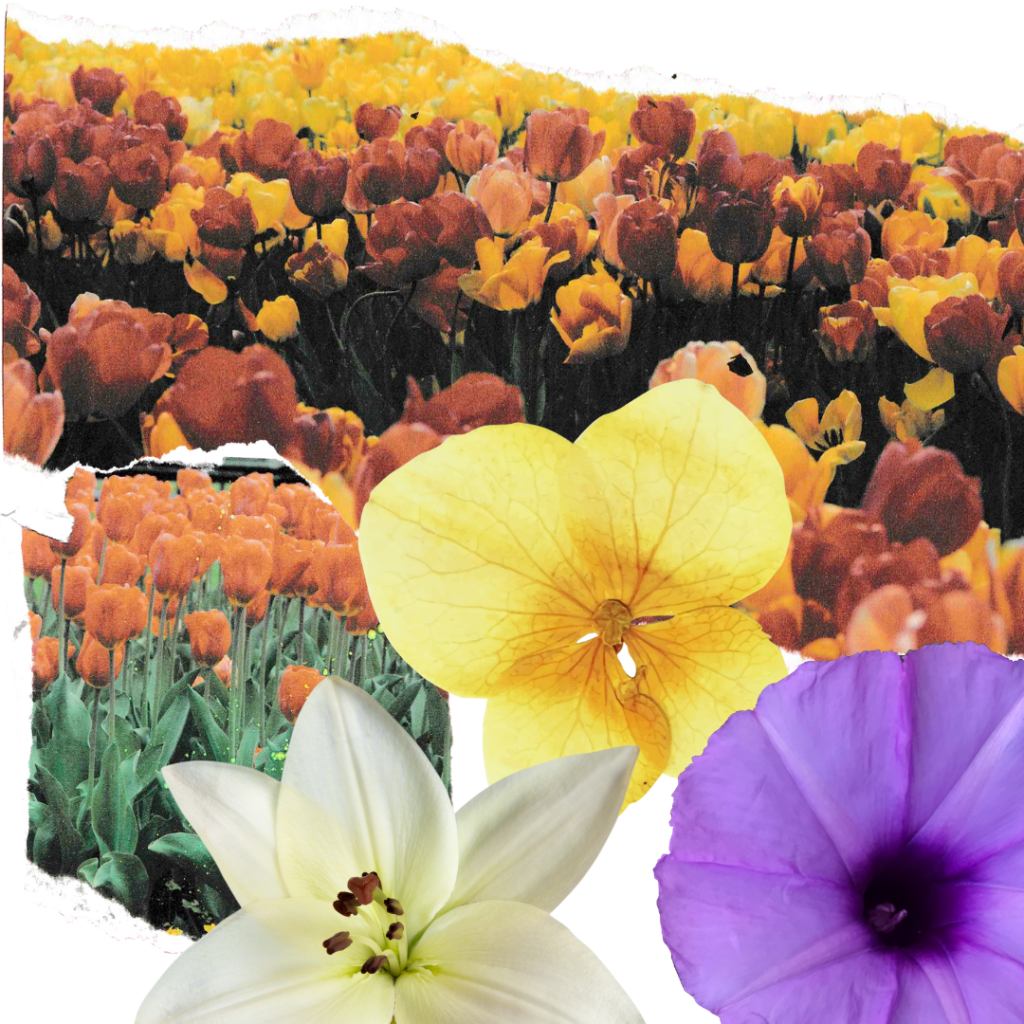
- Make art of your favorite flowers (collage from magazines would be great too). Pay attention to the details. Learn the names of a few flowers in your region.

- How do flowers show that God is with us on the earth? Learn about how flowers grow (The Seed; Lola Plants a Garden; In the Garden; Miss Rumphius) and maybe plant your own flower (indoors for those of us still in winter!)

- Look at pictures of Solomon’s temple and also of flowers. Which do you like better? Who made the two of them? How are they different? What did Jesus mean by saying a flower is just as beautiful?
Birds in the sky

- Make a birdfeeder (click here for a video tutorial on how to make bird seed ornaments) and watch birds come to eat. I like using apples or oranges. Watch them and make observations.

- Draw birds flying. Older kids could make origami birds. How do birds show that God is with us on the earth?
You are like a tree
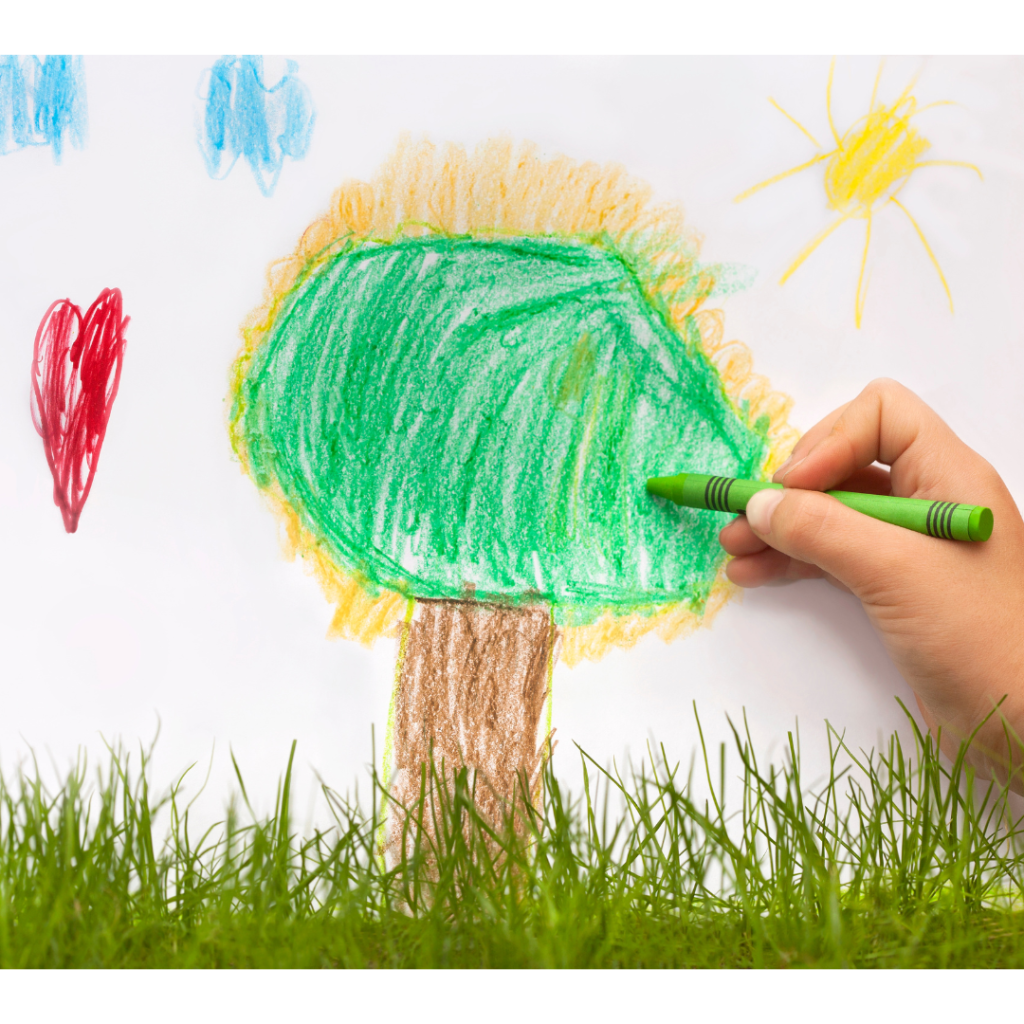
- Draw yourself as a tree. What kind of soil and nourishment do you need? What kind of fruit are you making?

- Talk about trees! The Wisdom of Trees by Lita Judge is a great introduction.
- Build a jenga tower on a bed of rice/dry beans versus a smooth surface and discuss having a strong foundation.
Art
Compiled by Caroline
These two paintings depict Christ interacting with creation.
The first is by Stanley Spencer, a British artist who painted his Christ in the Wilderness series through 1938-1939.
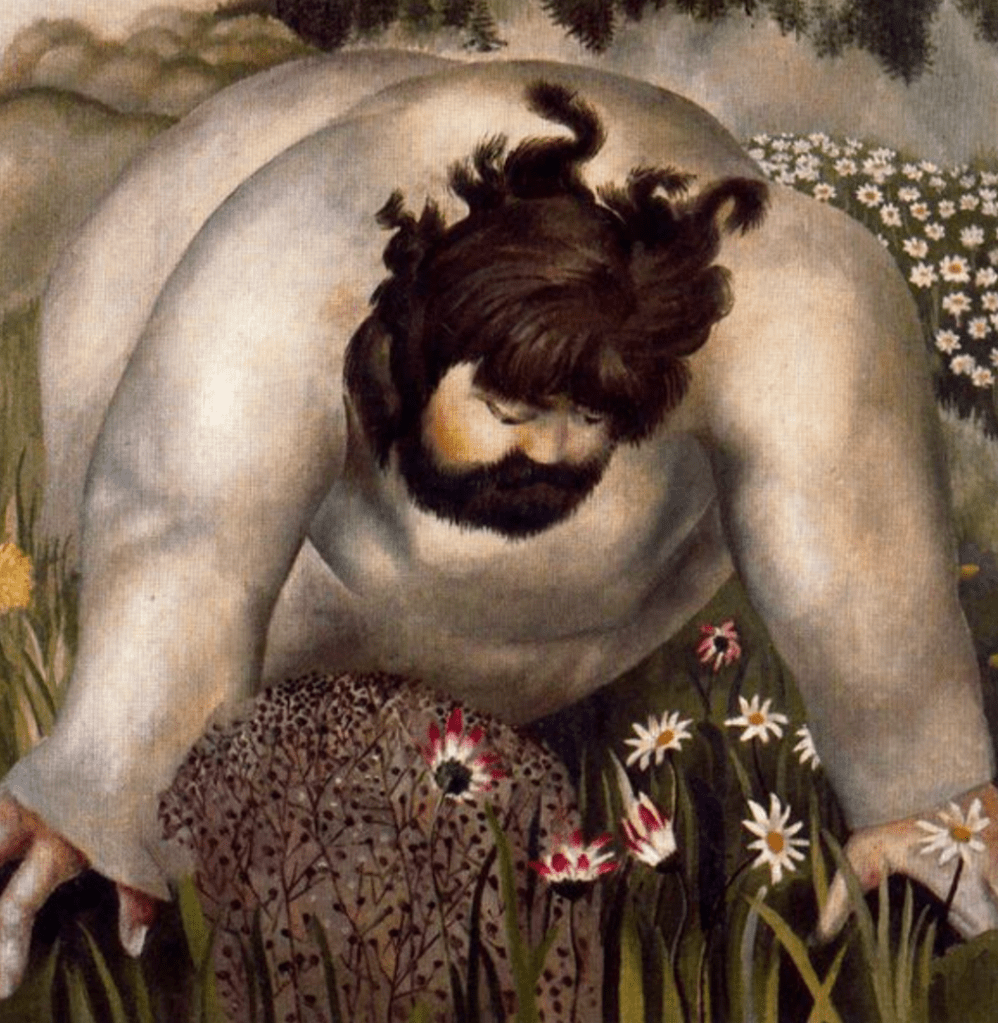
Spencer intended to paint 40 paintings depicting Christ’s 40 days in the wilderness, which would also correspond with Lent. They were to be mounted on a ceiling and viewed from below with the large figures of Christ resembling clouds. However, only eight were complete before he died. In the one below, we see a large Christ kneeling right down in the earth and gazing on the lilies.
When I first saw this painting, I was honestly disturbed by this imaging of a large Jesus. But as I’ve gazed and pondered on it more, it’s made me quite pleased to think of such an abundant Jesus—a Jesus who is full of body and spirit and is down with His creation. His hands are in the earth, his gaze is fixed on the flowers, and his big billowing frame looks as if it is part of the sky. This reminds me of Christ’s role as a creator and his loving care over his creation.
This painting can act as an invitation to ponder on how we imagine Jesus. Since we don’t really know what He looked like (besides the fact that he was Jewish), I think it can be a good exercise to imagine Him in many different forms and see what new insights this imagining can bring.
Here are some questions about this painting that you could discuss with your child:
What is Jesus doing? Why is He doing that? What do you think it would feel like to give this Jesus a hug? What do you think is beautiful in this painting? What looks smooth in this painting? What looks soft? Why does Jesus care about flowers? Why does He care about us? How does this painting make you feel?
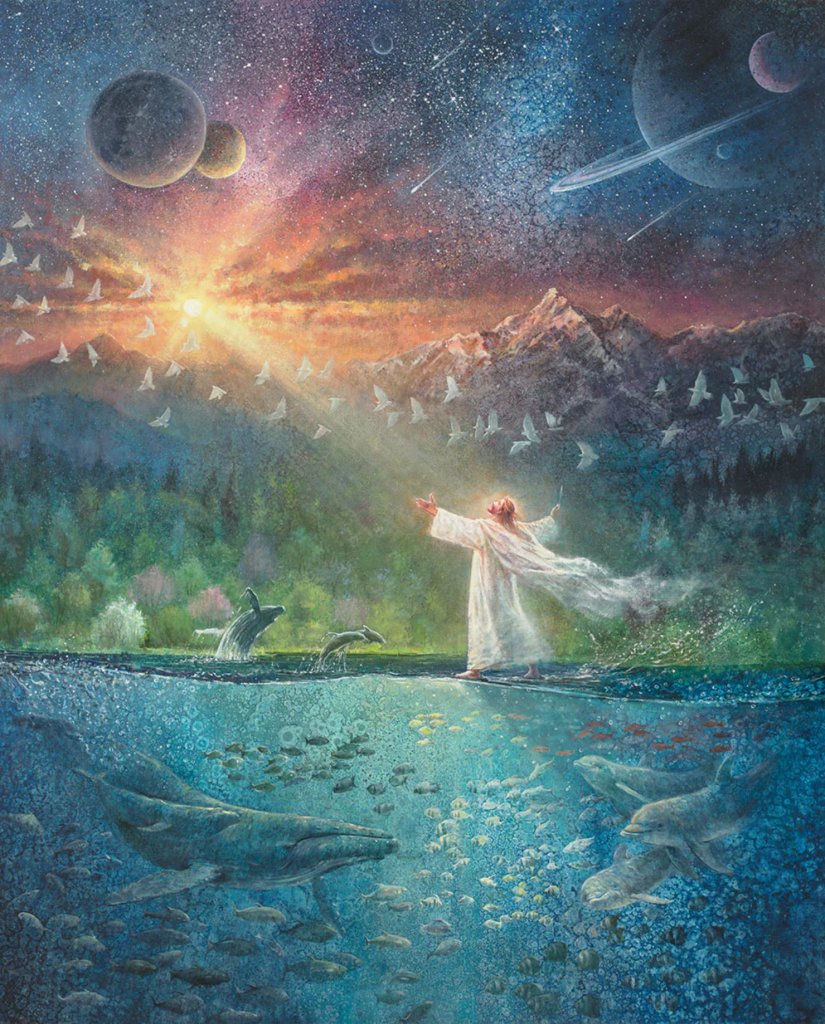
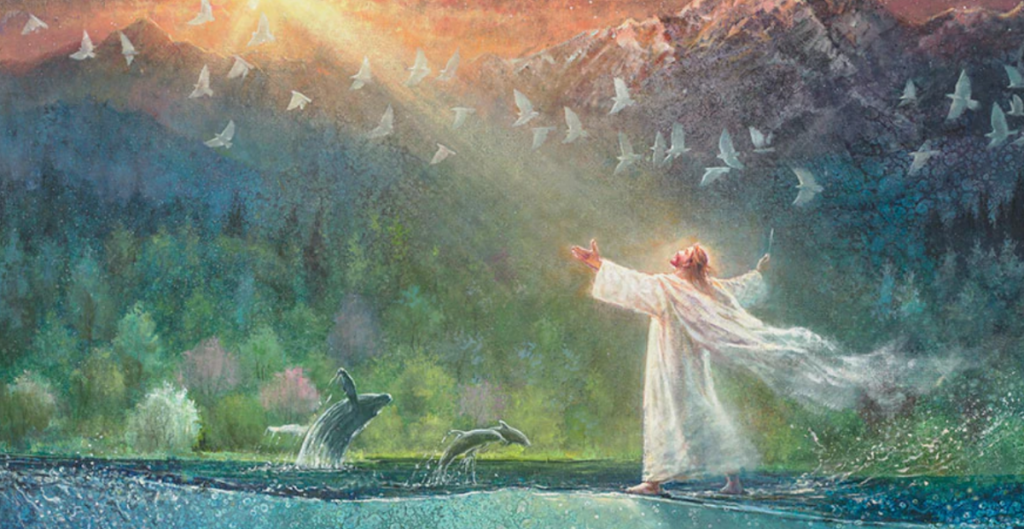
This second painting is by Yongsung Kim, a Korean artist who likes to focus on themes of light and care. In this image, Christ is joyfully exulting in His creation. His arms are outstretched, like he wishes to embrace every part of this beautiful world. Here are some questions you could ask your child while you explore it together:
What animals do you see in this painting? Which animal would you like to be and why? What other parts of God’s creation do you see in this painting? Where is the light coming from? What colors do you see? What is Jesus doing? Why is He doing that? What’s your favorite part of this painting? What’s your least favorite part? How does this painting make you feel?
Poem
Compiled by Caroline
This brilliant and evocative poem by George Herbert startles us with images of what prayer can be. You could ponder on each individual image for hours (“the soul in paraphrase” is one I come back to often), but it is also wonderful to let each image spill into the next until you have a waterfall of delicious ideas surrounding you. This one could be considered a little “old” for children, but I think children will immediately know that it is beautiful. You could ask them if prayer has ever felt like any of these things to them or which one they would like prayer to feel like (how could your prayer feel like the Milky Way? Or a church bell?).
Prayer (I)
BY GEORGE HERBERT
Prayer the church’s banquet, angel’s age,
God’s breath in man returning to his birth,
The soul in paraphrase, heart in pilgrimage,
The Christian plummet sounding heav’n and earth
Engine against th’ Almighty, sinner’s tow’r,
Reversed thunder, Christ-side-piercing spear,
The six-days world transposing in an hour,
A kind of tune, which all things hear and fear;
Softness, and peace, and joy, and love, and bliss,
Exalted manna, gladness of the best,
Heaven in ordinary, man well drest,
The milky way, the bird of Paradise,
Church-bells beyond the stars heard, the soul’s blood,
The land of spices; something understood.
Music
Compiled by Caroline
The first three songs come from the Rain for Roots album, The Kingdom of Heaven Is Like This, and the last is from Slugs and Bugs. These songs all draw directly from the assigned scriptures for this week. My son’s favorite is the “Good Fruit” song. Which song is your child’s favorite?
 milk & honey mamas
Leave a comment