
Symbols
Written by Kristen
Theological Background
The next day as they were leaving Bethany, Jesus was hungry. Seeing in the distance a fig tree in leaf, he went to find out if it had any fruit. When he reached it, he found nothing but leaves, because it was not the season for figs. Then he said to the tree, “May no one ever eat fruit from you again.” And his disciples heard him say it.
Mark 11: 12-14 NIV
Mark 11:12-26. On Monday, Jesus enters Jerusalem again. On his way into the city, he sees a fig tree with no fruit and “curses” the tree, declaring that it will never bear fruit again.
Next, he goes to the Temple and decries its unholy state. In typical Markan parallels, these episodes are bookmarked in sequences; after the Temple scene, Jesus’ disciples see that the tree has withered and died (Mark 11:12-14, 20-21).
Often referred to as the “cursing of the fig tree” and “cleansing of the Temple,” these two sequences are symbolic acts within Jesus’ ministry. The fig tree is a type of the Temple. Jesus’ actions in the Temple stand within prophetic tradition and represent a shutting down of God’s house.
Long before Jesus, the prophet Jeremiah warned the people of Jerusalem that God was not pleased with their empty worship. Amos, Hosea, Micah, and Isaiah all echo the same sentiments, repeating emphatically that the Temple is not a replacement for the compassionate presence in the world God calls us to (Borg and Crossan).
Jesus continues this tradition, proclaiming that the Temple is a “den of robbers.” Jesus is not condemning the buying and selling happening in the Temple, as this was required for the Temple to function (Guthrie), he is symbolically shutting down the Temple, showing that it is not fruitful.
The High Priests who operated the Temple came from certain families and necessarily worked with Roman officials. Jesus is condemning the fact that this High Priesthood was functioning to perpetuate hierarchical systems that left the majority of Judeans suffering. In contrast to the Temple under imperial Rome, we have an earlier prophet’s vision of the kin-dom: “Everyone will sit under their own vine and under their own fig tree, and no one will make them afraid” (Micah 4:4).
Story
Contributed by Kristen

The next day, Jesus came to Jerusalem again. The shouts of “Hosanna!” which means God, save us still rang in his ears. His friends noticed that he was quiet, and that he seemed a bit sad.
“Jesus,” Mary asked, “are you alright?”
“What’s that?” said Jesus, “Oh, yes, Mary. Thank you. I am just thinking about God’s people. About how much they suffer.”
They walked on in silence, until Jesus stopped. They were standing by an old fig tree, one that had stopped making fruit. Jesus looked at the tree, and his friends saw that there were tears in his eyes.
“This tree is like the leaders who ignore the people’s cries,” he said. “No more fruit.”
They walked on. They came to the Temple, and Jesus stopped again. He looked up into heaven. “God of the lost ones,” he prayed, “give me courage.”
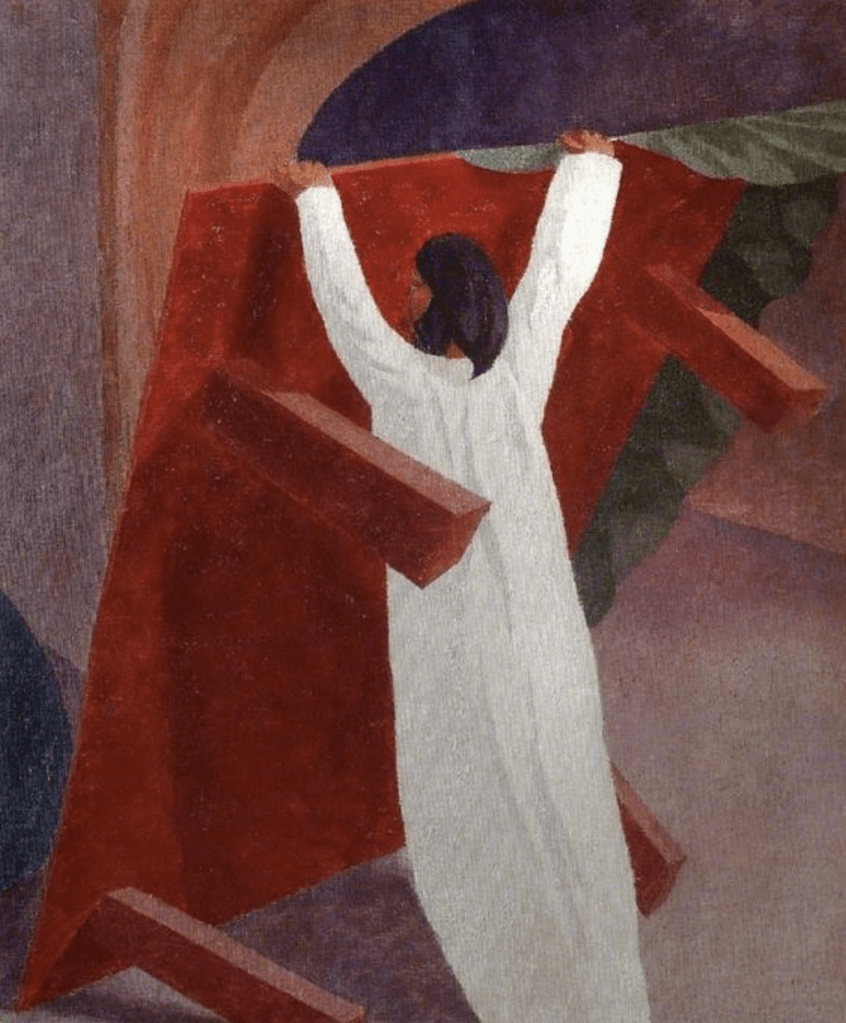
Then he walked into the Temple. “This is no longer a holy place,” he said. “God cannot stand it. The hurting people out there on the streets cry out for justice, and this is no place of justice.” He turned over tables. He threw money on the ground. He stopped people from entering. “No more fruit,” he said. “God’s house is empty.”
Activity
Contributed by Kristen

What is God’s dream for people? Discuss, draw, or play with this scripture:
Everyone will sit under their own vine and under their own fig tree, and no one will make them afraid
Micah 4:4
Poem
Compiled by Caroline
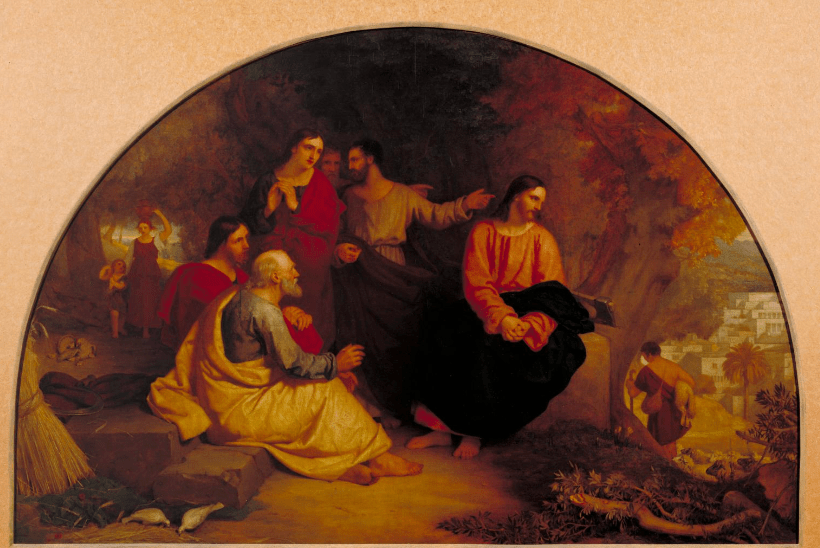
Cleansing the Temple
by Malcolm Guite
Come to your Temple here with liberation
And overturn these tables of exchange
Restore in me my lost imagination
Begin in me for good, the pure change.
Come as you came, an infant with your mother,
That innocence may cleanse and claim this ground
Come as you came, a boy who sought his father
With questions asked and certain answers found,
Come as you came this day, a man in anger
Unleash the lash that drives a pathway through
Face down for me the fear the shame the danger
Teach me again to whom my love is due.
Break down in me the barricades of death
And tear the veil in two with your last breath.
Song
Compiled by Caroline
Art
Compiled by Caroline

 milk & honey mamas
Leave a comment