

Losing
Written by Kristen
Theological Background
With a loud cry, Jesus breathed his last
Mark 15:37
Mark 15. Good Friday, or Holy Friday, is a solemn day. It marks the day Jesus willingly succumbed to the Roman domination system and died without fanfare or rescue. The cross is a symbol of Roman imperialism. It was uniquely Roman and a uniquely cruel tool of violent death reserved for traitors and threats to the state.
As others have said before, focusing on the violence of Jesus’ death may in some ways miss the point. Jesus did not have to die violently and painfully, the system under which he died was violent and painful.
As Marcus Borg puts it, “Good Friday is the result of the collision between the passion of Jesus and the domination systems of his time” (Borg and Crosssan, 162). Jesus’ passion was the kingdom, or kin-dom. The gospel of peace, and healing, and love—the opposite of Rome’s violent and oppressive system of imperialism.
On Holy Friday, we consider the price Jesus paid for opposing a domination system. We consider the price others have paid for opposing other domination systems—we consider the wealth of suffering.
The cross resurfaces symbolically in other forms throughout history: the lynching tree, the Nuremburg race laws, the trail of tears. Powerful systems do not like being threatened, and Jesus’ message of God’s kin-dom was a threat.
Today, his followers read Good Friday worshipfully, anticipating Easter Sunday. Back then, his followers saw their hope swallowed in the power of the state. Nailed to a tree, the King of the Jews did not seem very powerful or very royal. Is this still the kingdom, his friends may have asked. We ask again today, is this the kingdom?
Story
Contributed by Kristen
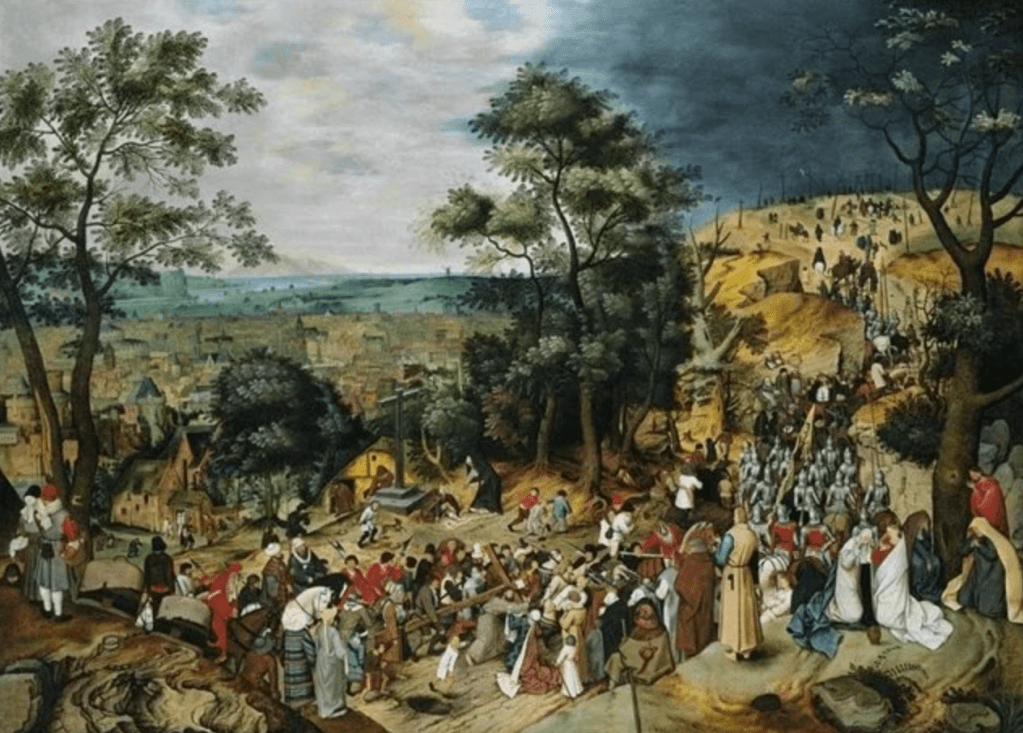
Friday is a long, sad day. Jesus is beaten. He is nailed to a cross. Rome is in charge, the cross says, do not mess with us. Soldiers spit on him and made fun of him.
He is quiet, tired, and sad. His friends gather around the cross. They kneel at his feet. Maybe they cry, maybe they sing quiet songs, maybe they remember their happiest days together. They wait with Jesus. They hear him suffering. They hear him cry out to God, asking for help. And then, they hear him die.
It is over, they think. Our master, our shepherd, our leader, our healer, our friend. He is gone. Rome has won. The greedy leaders have won.
Ever so gently, they wrap Jesus’ body in soft, white fabric. The women smooth his hair, and wash the sweat from his face. Mother Mary holds him in her arms, cradling his quiet body and remembering his very first cry.
Quietly, silently, they lay him in the tomb, his head resting on a soft pillow. They roll the heavy rock over the door. They stand there, together, no one saying anything. They think about the things he taught them. They think of his laugh, and how he loved to share bread, and the way flowers always seemed to appear on his path. They think again of their last supper together, and how he invited them to be with him. They take hands, and they look once more at the tomb, and slowly, they walk home.
Activity
Watch this video created by Caroline
Poem

John Donne (1572–1631)
Death Be Not Proud (Holy Sonnet X)
Death, be not proud, though some have called thee
Mighty and dreadful, for thou are not so;
For those whom thou think’st thou dost overthrow
Die not, poor Death, nor yet canst thou kill me.
From rest and sleep, which but thy pictures be,
Much pleasure; then from thee much more must flow,
And soonest our best men with thee do go,
Rest of their bones, and soul’s delivery.
Thou’art slave to fate, chance, kings, and desperate men,
And dost with poison, war, and sickness dwell,
And poppy’or charms can make us sleep as well
And better than thy stroke; why swell’st thou then?
One short sleep past, we wake eternally,
And death shall be no more; Death, thou shalt die.
Song
Art

 milk & honey mamas
Leave a comment