
Story contributed by Kristen
Click here for the theological background of Matthew 21-23; Mark 11; Luke 19-20; John 12
Remember, repetition helps children internalize and make connections. It might be a good idea to read the same story every day for a week. You can add different activities every day.
“And when Jesus came to the place, he looked up, and saw [you].”
Luke 19:5
Do you remember the day Jesus and the Roman army both came into the city on the same day? When the people gathered branches and cried “Hosanna!”? Well, we talked about the little girl who was the first one to cry “Hosanna!” and we talked about the faithful donkey who carried Jesus, but there was someone else that day, someone who we almost forgot. I want to tell you about him.
His name was Zacchaeus. Zacchaeus liked to play games, and he loved goat cheese, and he really loved to talk. But he didn’t often get a chance to talk. Because Zacchaeus was very small. He was so small that people often didn’t notice him, or didn’t pay much attention to him. You probably know all about that, because you are small too. Zacchaeus often had to speak up to be heard, and he had to climb on top of things to get other people’s attention. Sometimes, he felt invisible. He felt like no one could see him. And he got tired of working so hard to remind people that he was there.
Zacchaeus had been listening to Jesus for weeks. Quietly, he had followed the crowds that came to Jesus and climbed trees so he could hear Jesus’s words. Week by week, he grew to love Jesus and believe in his words. He wanted to meet him, but he didn’t know how. How could he get through the crowds, and get past the people who were so much bigger than him? He tried to think of a way, but he came up empty. “Maybe I can’t meet Jesus,” he thought, “but I can see him.”
On the day the people gathered to wave palm leaves and cry hosanna, Zacchaeus was ready. He found the tallest tree he could find, and he climbed to the very tippy top. He waited there, hoping to catch a glimpse of Jesus.
Soon, he saw Jesus coming around the corner. Jesus was riding the kind little donkey, and he was looking into the eyes of the people around him. Zacchaeus watched him, feasting his eyes on Jesus. He had a great view. But when Jesus got close to the tree, he stopped. It was almost like something stopped him, like he felt something. He looked up, and there was Zacchaeus.
“My friend!” said Jesus, calling up to Zacchaeus. “I see you in your tree. Come down from there and join me. Tonight, let’s eat together.”
*********************
Sometimes people wondered who Jesus was talking to. Maybe small people like Zacchaus thought, I’m so little, he probably isn’t talking about me when he says these nice things. He’s probably talking about the important people, the ones everyone listens to. But one day, Jesus told a story.
Once, there was a King. This King loved his people, and the people loved him. The King was very excited, because his beloved son was getting married! He was planning the most amazing party. There would be food, food, and more food. Food enough to feed everyone, and leftovers to spare. There would be music, and dancing, and rejoicing for days. The King worked hard to prepare the feast and the party, and he sent invitations to all the most important people in the kingdom. The ones with fancy titles and plenty of money.
But guess what? Those important people got the invitations and they said, “meh. Who needs a feast anyway? We’ve got plenty of food at home.”
The King was very hurt and angry. Why didn’t the important people want to come to his feast? He sat in his favorite chair and he stewed and grumbled and groaned. After a while of this, the Queen came in. “My dear,” she said, “who did you invite to the feast?”
“All of the important people, of course,” snapped the King.
“Hmm,” said the Queen, “perhaps you have forgotten who really fills our Kingdom.”
“What do you mean?” asked the King.
“Well,” said the Queen, “who knows our son better than the bakers, and the dressmakers, and the florists, and the stablegirls, and the teachers, and the doctors, and all of the ordinary people in our Kingdom?”
The King listened. He knew the Queen was right. He got up from his chair, and he got a new batch of invitations. And he addressed them to everyone in the kingdom. He went to the window and he threw the invitations out into the wind. The wind blew them all over the town, so everyone could see.
And they came. When the day of the party arrived, they came. The bakers and the dressmakers and the florists and the stablegirls and the teachers and the doctors and the children and the people, all of the people, that loved the Prince. And the important people were still invited, if they wanted to come. But the feast was all about love, and people who loved each other, and people who wanted to be together, to eat the good things and celebrate a new chapter of life, and dance until the sun poked her head over the top of the mountain.
And you know what? I think that Jesus was thinking about God’s great feast. The one we’re all invited to, if we want to come. The one with food for everyone, no matter where they come from or what they look like. The one that fills hungry bellies and hungry hearts. Jesus believed that this feast is God’s dream for the world, for you and for me. So wherever he went, he shared bread, and fish, and juice. And he dreamed about the great feast. He dreamed of a world where no one would go hungry, and no one would be alone, and no one would feel less important than their neighbor. We’re still dreaming with Jesus, today.
Ideas for Play
Contributed by Kristen
Ideas for Play
Zacchaeus
- Act it out!

- Can Jesus see you, even when you feel small? How does it feel to be seen?

- Read “the man who didn’t have any friends (none)” in The Jesus Storybook Bible

- Make a tree out of colored paper and put your own pictures in it. Write your favorite verses from the story of Zacchaeus, and remember that Jesus can see you in your tree.
Marriage of the King’s son
- Act it out!
- What do you think God’s great feast would be like?

- Prepare your own feast and read the eucharist prayers in the context of nourishment and love.
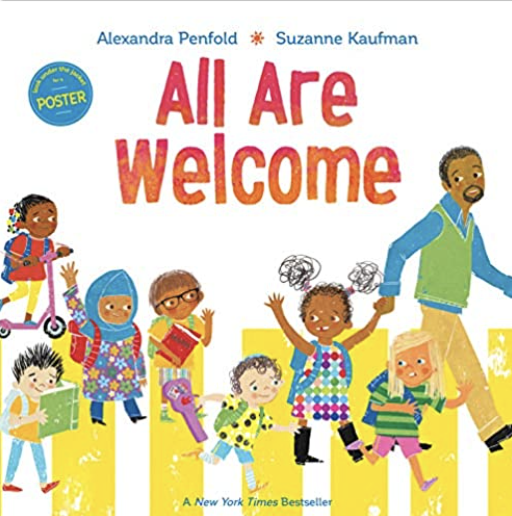
- Read All Are Welcome (note this is in the context of a classroom, but it’s a great way to weave the discussion into all contexts!)
Poetry
Compiled by Caroline

In Summer Kitchen, we are brought into the vivid scene of a woman making a meal. It is a poem that encourages all of the senses: listening to the bobolink (a small blackbird), smelling the crushed garlic, touching the kitchenware, tasting the sauce. All of these details encourage us to be present and experience the language in an immersive way. As you read it with your child, you could ask them to close their eyes and imagine the smell of what’s cooking, to imagine tasting it on their tongue, to imagine the feel of the table, and to imagine the light filtering into the kitchen.
When I read this poem, I am reminded of the countless meals my mother made me growing up and the good conversations that surrounded our table. My mother was an expert at hospitality and so there were usually a few strangers that were welcomed to the meal. As we talked, shared, listened and were just in the presence of one another, there was often a feeling of complete contentment that has become my standard for that word. There is something about being fed together that tends to feed the soul as well.
I think Jesus understood this best of all.
I am struck by how often Jesus is connected with food. He is often reclining at his table with all sorts of people, telling a parable involving food, or being called a winebibber. Jesus knew how to enjoy a meal and I love that he compares the kingdom to a feast.
This poem captures what I imagine God’s feast to feel like. It feels like home, like comfort, like something has been prepared for me, like a miracle that is familiar. All are welcomed to light and candle, to rest, and to be filled.
Summer Kitchen
BY DONALD HALL
In June’s high light she stood at the sink
With a glass of wine
And listened for the bobolink
And crushed garlic in late sunshine.
I watched her cooking, from my chair.
She pressed her lips
Together, reached for kitchenware,
And tasted sauce from fingertips.
“It’s ready now. Come on,” she said.
“You light the candle.”
We ate, and talked, and went to bed,
And slept. It was a miracle.
Art
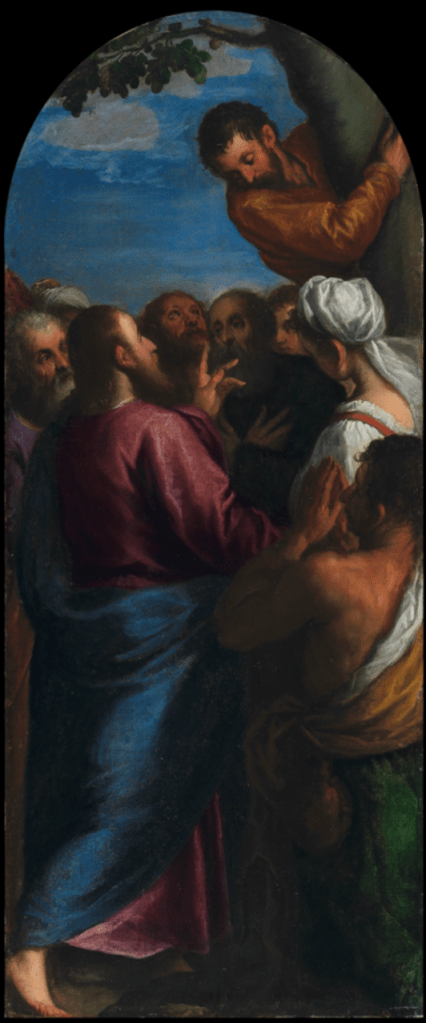
Where is Jesus? Where is Zacchaeus? What do you think is happening in this scene? What does this painting teach you about this story? What does it teach you about Jesus? Why does this painting feel “active” instead of still? Who would you like to be in this painting?

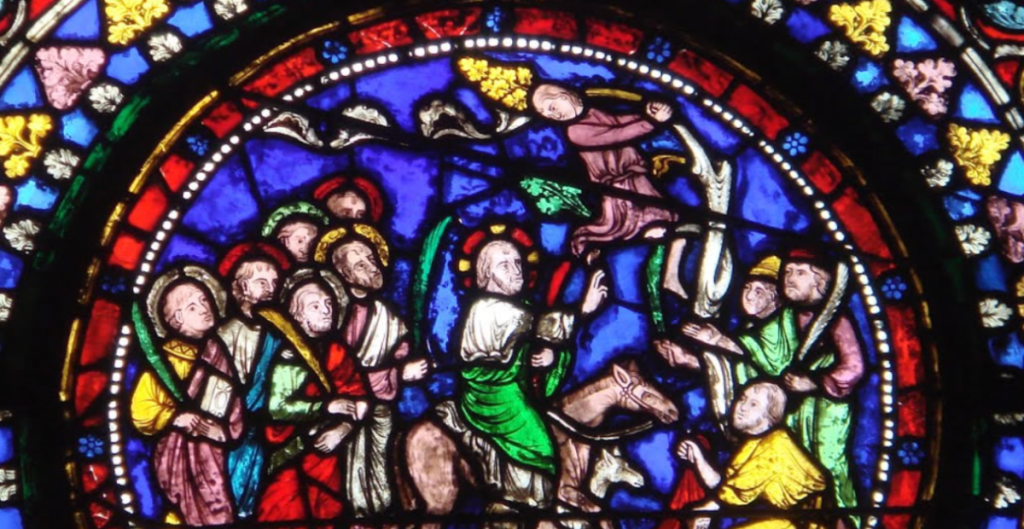
Did you know this is a special window called a “stained glass” window? Where is Jesus? Where is Zacchaeus? Who is holding a palm branch? Jesus is holding his hand in a special way that symbolizes blessing—what kind of blessing do you think He is giving the people? What kind of blessing would you want to give people? What do you think Zacchaeus felt like in his tree? What colors do you see?

There are many different people at this banquet! Can you find someone who looks old? Someone who looks young? Someone who looks wealthy? Someone who looks poor? Someone who looks sick? Someone playing music? What kind of food do you think they’re having? What do you think it would taste like? If you could be anyone in this painting, who would you be and why? How does this painting make you feel?
Music
Our first song is a classic Bible camp song that tells the story of Zacchaeus. The other two continue our focus on the joy of the feast.
 milk & honey mamas
Leave a comment