

Theological Background by Kristen
Wherefore, men are free according to the flesh; and all things are given them which are expedient unto man. And they are free to choose liberty and eternal life, through the great Mediator of all men, or to choose captivity and death, according to the captivity and power of the devil; for he seeketh that all men might be miserable like unto himself.
2 Nephi 2:27
Lehi knows he is dying. He wishes to bless his children, to impart his final words of instruction and belief, finally defending his prophetic decision to bring his family into the wilderness and toward a new land.
To Laman, Lemuel, Sam, and Zoram, Lehi employs a common biblical strategy of rehearsing the dealings of God with God’s people. Lehi emphasizes his sons’ place among the chosen people, the children of Israel. He emphasizes the history of God’s work with Israel, insisting that God is intimately connected to His people and continues to work among them. Consistent with his prioritization of the records found in the brass plates, Lehi is leaving his sons with the legacy of what I see as his core prophetic mission: the exodus from Jerusalem was and is part of God’s divine plan for the chosen house of Israel. Lehi pleads with his children to see themselves in the tapestry of this majestic story, to see themselves connected to the original promise, and to carry on the piety and responsibility of the consecrated mission of Israel.
To Jacob, Lehi relates his understanding of this salvific plan, this holy precariousness of Israel. This is my interpretation of what he says: God is bringing us into a new land, a land consecrated for a chosen people. It is, in fact, consecrated for our holy use. If we retain our covenant relationship according to the original promise, this land will be a place of liberty for us. If we break the covenant, the land will be cursed.
The covenant instructs us to know good from evil. The commands of God demonstrate this dichotomy. The dichotomy between good and evil is necessary, though tragic. Without it, all things would be reduced to non-being with no activity and no end to its creation. The law orders the divinely ordained relationship between all things. Without this law, no thing in creation would have sense. God himself would not exist, and there would therefore be no First Cause to initiate being.
Because there is law, however, there is material persuasion between good and evil. The law is the ultimate Providence of God. In the law, mankind has freedom to choose between good and evil. They are responsible for their choices and able to be persuaded by the pull of both good and evil. Virtuous choice wields virtuous life and freedom, while unvirtuous choice wields unhappiness and captivity.
Theories of free will and divine providence have been sources of philosophizing from ancient times. Aristotle believed that choosing was a form of desiring and choice reveals the education one has had in order to desire what is good (as opposed to failing to desire what is good. So, “‘Freedom to do otherwise’ would be the ability to choose what is worse, rather than the ability to choose consistently what is better” (Burns, 228). Socrates’ proof for the existence of divine providence is the placement of human organs in harmonious proportion. Plato and other Platonic and Neoplatonic thinkers taught theories of pre-natal agency, or pre-mortal choice. Before we came to earth, our souls made choices which had causal efficacy, determining the diverse circumstances of our birth. Neoplatonists emphasized a First Cause, the Good/One/Being that precedes all things and theorized an ascent of being: the higher one ascended, rejecting the body and irrationality, the closer one comes to Intellect. The Stoia (practitioners of Stoicism) taught that there is no such thing as evil; human beings as agents are free insofar as they choose virtuously and captive insofar as they fail to choose virtuously. For the Stoia and some other Neoplatonists, suffering is educational, marking God’s providence to educate the soul toward the good.
Early Christian thinkers take these philosophies a step further: agency is a human endowment (not an achieved state) but the soul’s ability to utilize logos and exercise this natural endowment requires liberation from “cosmic necessity’ which takes place through baptism. Justin Martyr taught that Birth into the body is necessary and done in ignorance, but “we do not continue as children of necessity and ignorance, but of deliberate choice (prohairesis) and knowledge” (264).
The point I am trying to make here is that Lehi is wrestling with ancient, thorny questions. Does God care? Do my choices matter? From the perspective of God’s covenant relationship with Israel, what is the meaning of the law? What is God’s work with me and my people? Lehi lands in philosophical territory that would have been comfortable to Neoplatonists and early Christian apologists. Thousands of years later, it may or may not resonate with new contexts. The questions, however, remain fresh and poignant.
What does it mean to be an agent? Are good and evil diametrically opposed (in a dualistic sense) or is there a primordial First Cause (monism) and lower beings / agents responsible for the production of evil? Do our choices determine our worthiness of God’s love and care? What does it mean to be in covenant relationship with God, and to uphold that covenant by law? What is the nature of God’s law, and our adherence to it?
These questions remain deeply relevant and they are, to my view, still very much open. I read in Lehi the apology of a mystic, far from home, but believing still that his wayfaring is less a departure than a homecoming. Yet when we wrest Lehi’s account from the wilderness and fix it steadfastly to our disparate paradigms, I think we miss some of the magic of this book. I am not sure that Lehi’s theology needs to be normative for it to remain prophetic. It is a theology about covenant, understood for a covenant people in diaspora. Maybe it brings you home, maybe it doesn’t.
Finally, ultimately, I will allow Lehi’s theology to be a blessing for Jacob, a child born out of his homeland. You, too, are part of this story. You, too, are ushered into this great covenant. My child, as I die, I bless you to know you are Israel.
Ideas for Play
Contributed by Kristen
- Read some books about Adam and Eve
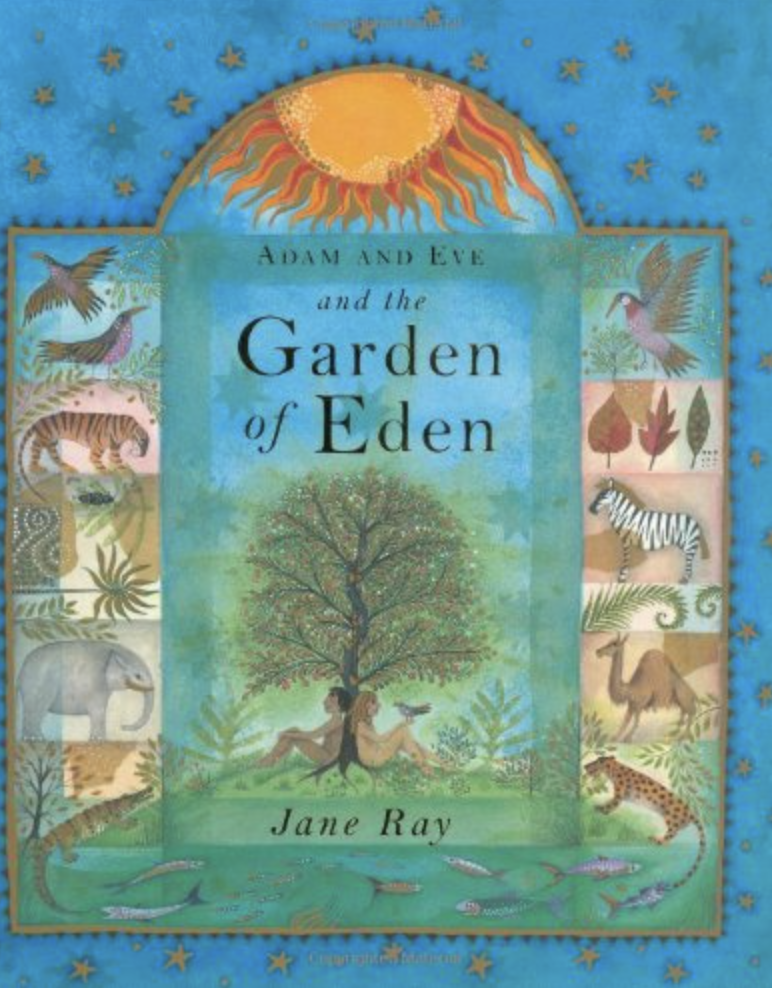
- Adam and Eve and the Garden of Eden by Jane Ray

- Adam and Eve in the Jesus Storybook Bible
- This little video
- Talk about choices and feelings. How does it feel to do kind things? How does it feel to do unkind things?
- Discuss how strong feelings can cause us to act in ways we regret, but that we can learn to listen to our feelings so we can better respond
- Watch this helpful video for kids about the upstairs and downstairs brain
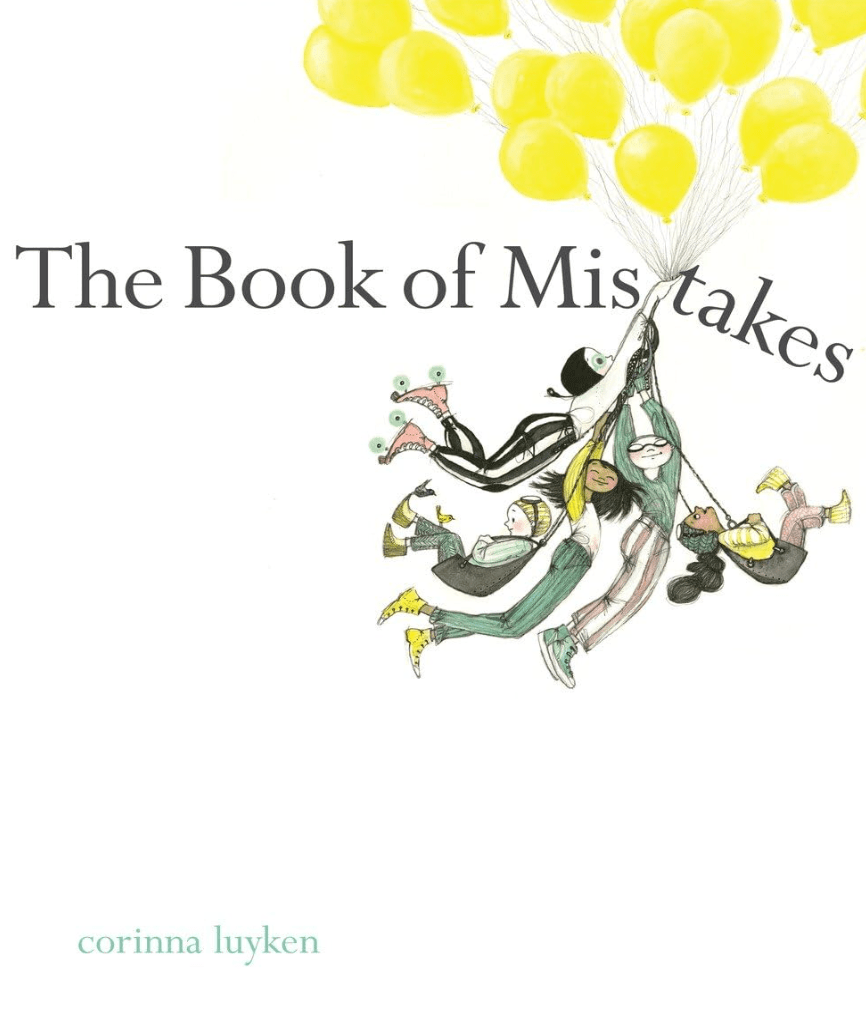
- Read The Book of Mistakes and talk about how even when we do things we regret, God doesn’t give up on us
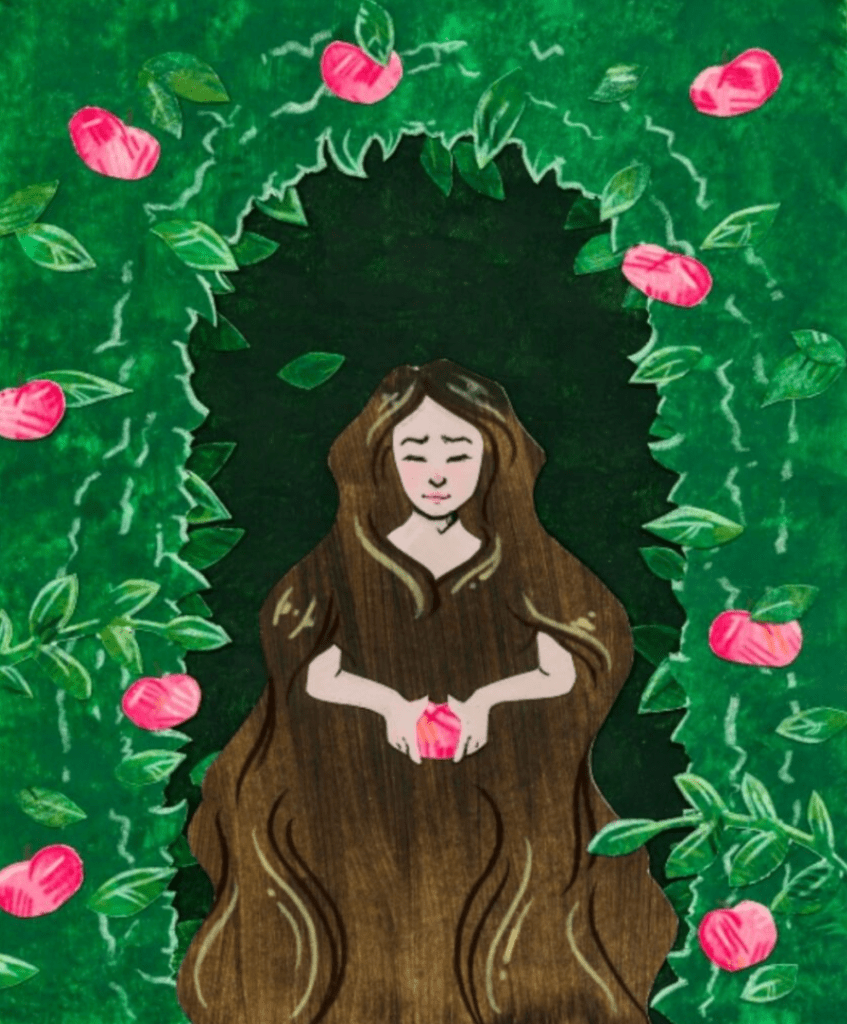
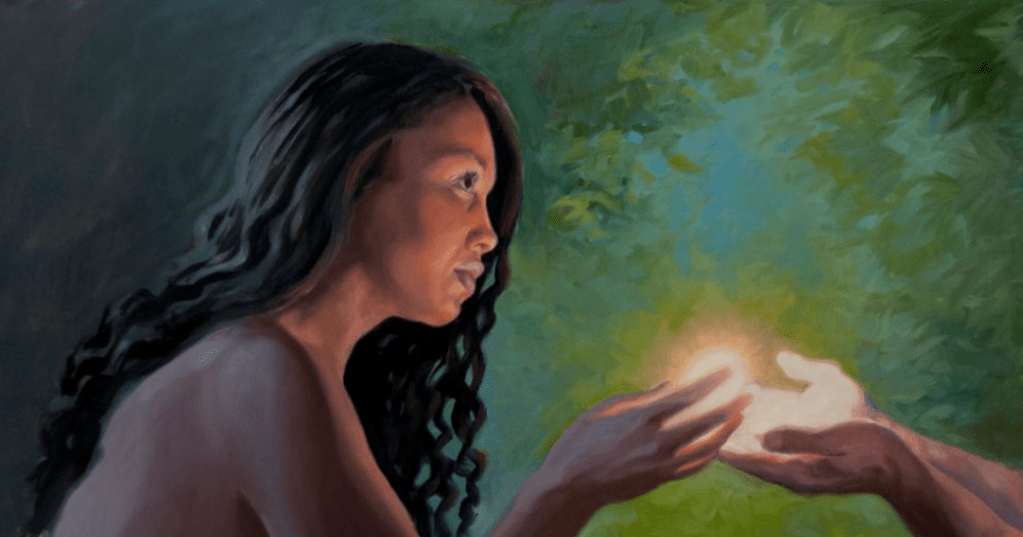
Art
Compiled by Caroline


Poetry
Compiled by Caroline
I wonder did each flower know?
By Annette Wynne
I wonder did each flower know
As well as now just how to grow
In that far first early spring
When the world was made.
Or did they make mistakes as I
Make very often when I try
At first, and try again,—perhaps just so,
As you and I, they learned to grow.
Music
Compiled by Caroline
God Makes Messy Things, Slugs and Bugs
 milk & honey mamas
Leave a comment