

Theological Background by Kristen
What is Isaiah doing in the Book of Mormon? Scholars have been asking this question for a long time, and there are lots of different answers. What answers have you been given? Maybe we have some of the same ideas, maybe not. Maybe you love “the Isaiah chapters,” maybe your eyes gloss over and you have to prod yourself awake to get through them. Maybe you cherish the poetry, maybe they sound to you like complete gibberish. Maybe in Isaiah’s prophecies you see Christ and the latter days and find hope, maybe you struggle to find any relevance at all.
There are lots of approaches to the Isaiah chapters. You probably know of the “problems” of Isaiah in Nephi; Nephi quotes extensively from passages of Isaiah (a prophet so influential that his identity was copied by later writers after the exile) that most scholars agree didn’t exist yet. That is sometimes called the Problems of second Isaiah, which is resolved for some (the article suggests some of the many diverse approaches) and ongoing for others.
Some scholars read Isaiah Messianically (prophesying the Messiah interpreted as Jesus) some do not. Nephi, and Joseph Smith, certainly did (see Joseph Smith’s interpretation).
However and why ever Isaiah got there, there it is. And though I think the questions of historicity and biblical accuracy are interesting, I’d like to suspend them for a moment and take the word of the story. It is, after all, a story.
Nephi, who we don’t hear much from personally after the split of his family, devotes a lot of time to Isaiah. Why? As modern readers of ancient texts, we have a couple of different tendencies. One is to try to understand the “source,” or unpack the context in an effort to understand exactly what the text is, objectively, saying. Another is to read only through the lens of the present, assuming the writer’s knowledge of our secular context and trying in this way to grasp what the text is, objectivity, saying. Both assume that there is a hidden message in the text, and if we just work hard enough we can unpack it. If we have the right scholarly tools, or the right spiritual mindset, or we’re in tune enough with the spirit, we can unlock the mysteries. Nephi adds to this complex, bless him, with his famous preaching about the “plainness” of Isaiah to those who have the spirit of prophecy (2 Nephi 25:4). The context clues were obvious to Nephi because he grew up in the culture in which they had meaning. They were pre-analytical to him; they didn’t require explanation or contextualizing. In other words, the meaning of Isaiah’s prophecies are apparently obvious to Nephi. He’s frustrated that they aren’t obvious to his people, who don’t have the same context that he has. This, I think, is a crucial point.
Nephi is a bridge writer. He grew up, or at least spent a lot of his childhood in Jerusalem. He takes his father Lehi’s prophetic mantle upon himself, something he takes very, very seriously. As I have written previously, a large part of that prophetic mantle is the work of enlivening the Abrahamic covenant from diaspora. Lehi and his posterity are in exile, yet they (at least Lehi and Nephi) see themselves as part of Israel, part of the covenant, and responsible for that gift.
With this framing, I empathize with Nephi. He has seen in vision the fall of his people. He has witnessed the rupture of his family. He has lost his parents, traveled for years in the wilderness, and is now creating a new civilization which he knows will ultimately fail. Yet he still has hope in the covenant. Nephi believes that Isaiah is writing about them. He sees himself in the words of exile, fall, and eventual redemption. He finds hope in the words of this brother-prophet who foresees healing and gathering for the scattered. At the twilight of his life, making sense of the choices that have led him here and establishing the community he will leave alone, Nephi holds to his life line: the covenant. The brass plates, paid for in blood, remind him that he belongs to this promise. He and his people are still Israel. They don’t understand. They may be ready to forge their own identity, to let the land shape them anew. Indeed, this may be the central struggle of the Book of Mormon. It is, at least, for Nephi.
For him, Isaiah brings them all home. From exile to redemption, from sin to forgiveness, the covenant is still alive. When we talk now of what Nephi is trying to “teach us” about Isaiah, or the Christological meaning of Isaiah illuminated through the Book of Mormon, I wonder if we risk de-humanizing the story. We want so much to find that the text is not written by a man but by God. But it is not God writing, encoding a hidden message we must unlock, it is Nephi. Nephi aching to know that his children will be gathered in. Nephi building his hope for the redemption of his people, including his brothers who will die in unknown land, buried with their own rituals and ceremonies. Nephi making sense of all that has led him here, all that he has clung to so far, all that he will pass on to his children.
The Isaiah chapters may be Nephi’s proof texts. Proof that he and his people still belong. That God has indeed brought them, and that God will still bring them. That they are part of the covenant, that the promise is still true, that the blood is good.
Ideas for Play
Contributed by Kristen
- Learn about Isaiah and his prophecies! This video is a great overview and this one is great for younger kids and so is this one
- Another great video. This one is an overview of Nephi and Isaiah
- Make a map of pictures of what Nephi sees in Isaiah (use the Book of Mormon study book as a guide!)

- What do you turn to for comfort? Make a pile of your favorite comforting objects
- Read some of Isaiah’s words aloud. Have your kids draw or play while they listen to the poetry. Don’t worry too much about comprehension, just focus on building familiarity with the sounds. Maybe try a different translation, too!
- Try listening to Isaiah in Hebrew as it was written
- Try writing letters to each other as though you’re Nephi – what things are most important that you want each other to know?
Poetry
Compiled by Caroline
First to stanzas from: Covenant
If you are happy, I will give you an apple,
if you are anxious, I will twist your arm,
and if you permit me, I will be glad to hold you
close to my heart forever and do you no harm.
If I am happy, will you give me an apple?
If I am anxious, you may twist my arm.
And if you would like to, I would like you to hold me
close to your heart forever and do me no harm.
Music
Compiled by Caroline
Art
Compiled by Caroline
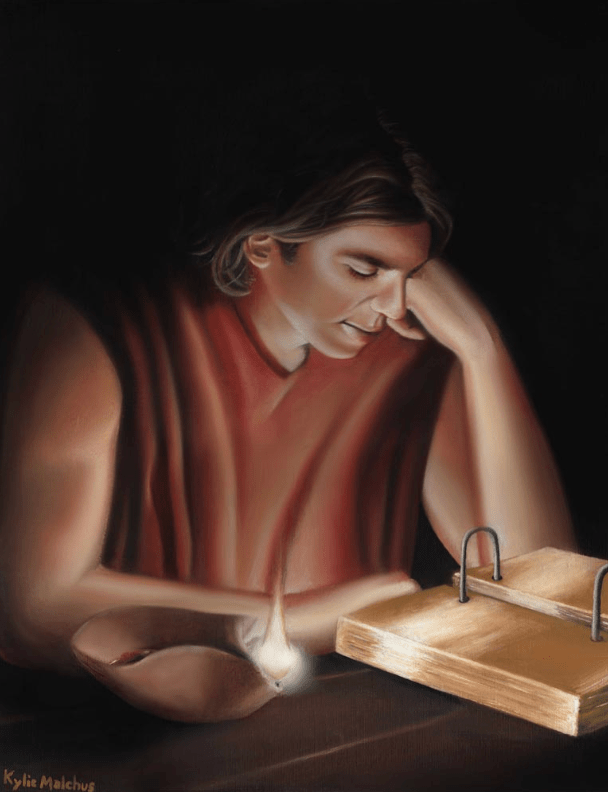
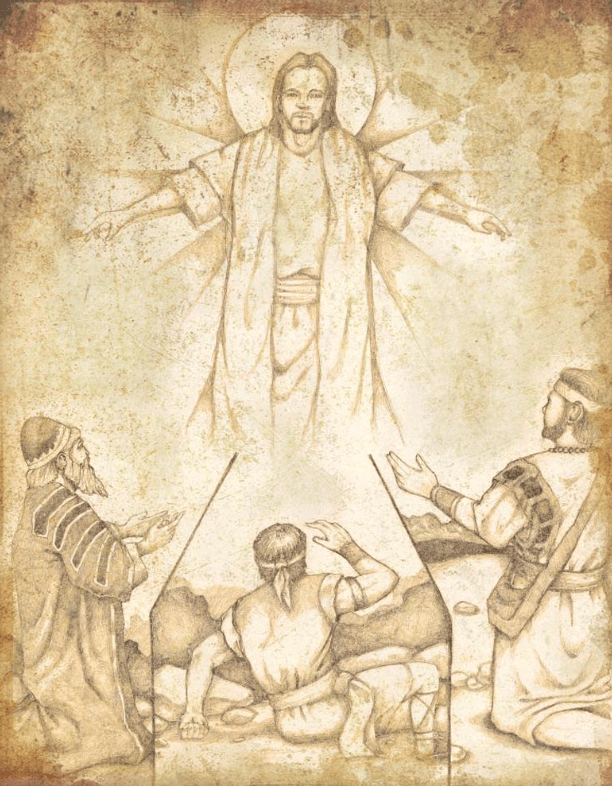
 milk & honey mamas
Leave a comment