
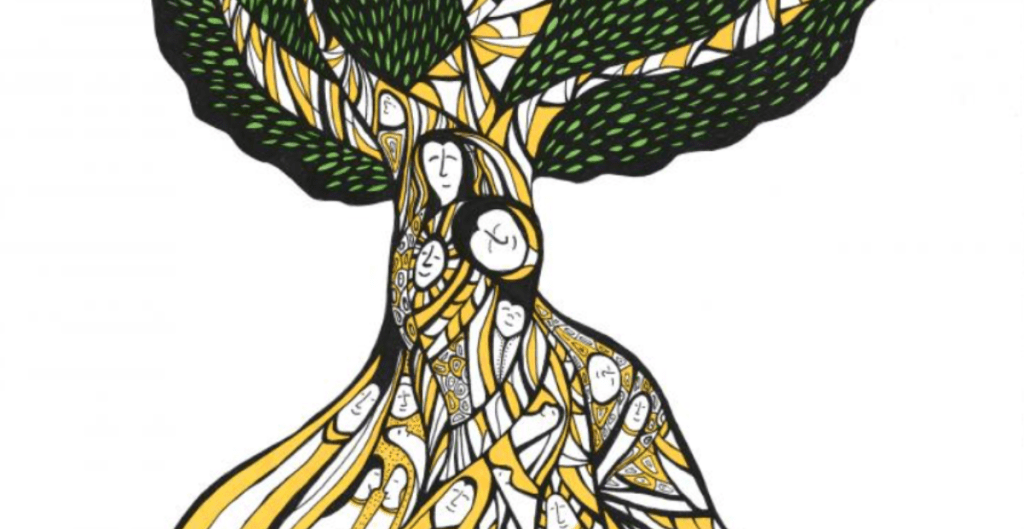
Theological Background by Kristen
Zenos wrote about olive trees. Olive trees, and Israel. Whoever Zenos was, his voice is lost to history. But it is not lost to Jacob. Zenos is perhaps to Jacob what Isaiah was to Nephi. He resonates with this story in a way that tells us something about what he understood of theology, of his perceived plight, and how he made sense of it.
Jacob interprets the allegory as being about the house of Israel. I read in Jacob his lineage; he remembers his father’s prophetic emphasis on the covenant, which reaches the family all the way in diaspora. The covenant sings them home, enlivening all of the pain and suffering and contention fracturing the wilderness. The covenant, for Lehi, is the rod of iron leading the way to the tree of life. The covenant is protection, life, hope, and responsibility. Jacob, it seems, gives his allegiance to this theology. The covenant is life, with rupture bringing death.
It is worth putting Lehi’s prophetic emphasis into context. Lehi, as well as Isaiah, belongs to a generation of prophets now understood as representing a prophetic revolution. Richard Hooker writes:
“In the account of the formation of the monarchy, in the books of Samuel , the prophet of Yahweh, Samuel, tells the Israelites that they are committing an act of disobedience that they will dearly pay for. Heedless of Samuel’s warnings, they push ahead with the monarchy. The very first monarch, Saul, sets the pattern for the rest; disobedient towards Yahweh’s commands, Saul falls out with both Samuel and Yahweh and gradually slips into arbitrary despotism. This pattern—the conflict between Yahweh and the kings of Israel and Judah—becomes the historical pattern in the Hebrew stories of the prophetic revolution.
Whatever the causes, a group of religious leaders during the eighth and seventh centuries BC responded to the crisis created by the institution of the monarchy by reinventing and reorienting the Yahweh religion. In Hebrew, these religious reformers were called “nivea,” or “prophets.” The most important of these prophets were Amos, Hosea, Isaiah … and a third, post-exilic Isaiah), and Micah. These four, and a number of lesser prophets, are as important to the Hebrew religion as Moses.”
Prophetic Innovations include Monotheism, righteousness, and ethics.”
The prophets emphasized monotheism, righteousness, and ethics as the antithesis to the corruption and disobedience they saw in the Hebraic monarchy. Another way of putting this is an emphasis on covenant; being God’s chosen people requires a particular set of responsibilities. Lehi internalizes this deeply and teaches his children the importance of the covenant. To abide by its precepts brings life, to disobey brings death (see 2 Nephi 2).
This theology and the olive tree allegory veers into the territory of prosperity gospel; if you live righteously, you prosper, if you don’t you rot and are “good for nothing but to be hewn down.” (Jacob 5:42). But this too is a simplistic reading of the allegory. For Jacob, the trees in the vineyard have a specific vocation, and when they fail to live into it they bring death to themselves and to the whole. Israel, in other words, has a specific vocation, and when they fail to live into it they reap their own destruction. The covenant has its own life, for Zenos and for Jacob. It enlivens a divine relationship. It gives meaning, shape, and structure to an entire civilization.
And, I wonder, what might the allegory continue to mean? Here I claim the literary right to living interpretation, noting that while the author may have had a specific intent, that intent does not foreclose the potential of the text to further life. We are planted in a garden. We are like trees, hungry for good soil, sunlight, and water. We are cared for by a gardener who loves the land and speaks to the wind. And yet.
“What could I have done more for my vineyard?” the Lord asks plaintively. It is easy to read this as a rebuke of the foolishness with which we reject the plain and clear instructions for the good life. I think again of Lehi and the tree of life. Just follow the path, stay on the firm foundation, he seems to say. How we wish, as parents, that we could build a foundation firm enough to protect our children from the pain of being alive. But as Lehi knows, and Jacob, and Zenos, and Isaiah, and Nephi, and you, we cannot shield life from life.
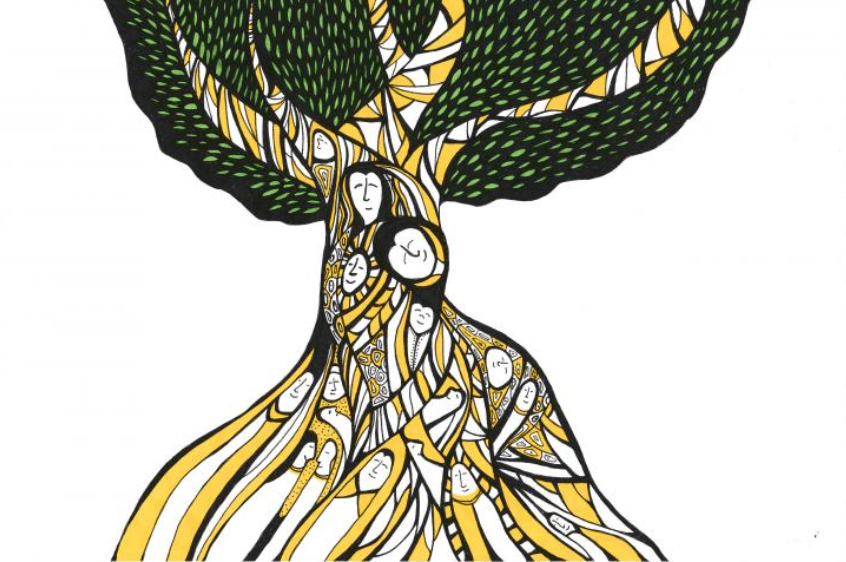
We are planted in a garden. Our roots sink deep. In times of drought, scorching heat, or decay, we falter, branches drooping and leaves withering. And the mother tree shelters the vineyard, her roots reaching across the garden, which is the world, which is each soul. And the living water still comes, and the sun still rises, and we sink our roots into the soil and we live, and heal, and live.
Ideas for Play
Contributed by Kristen
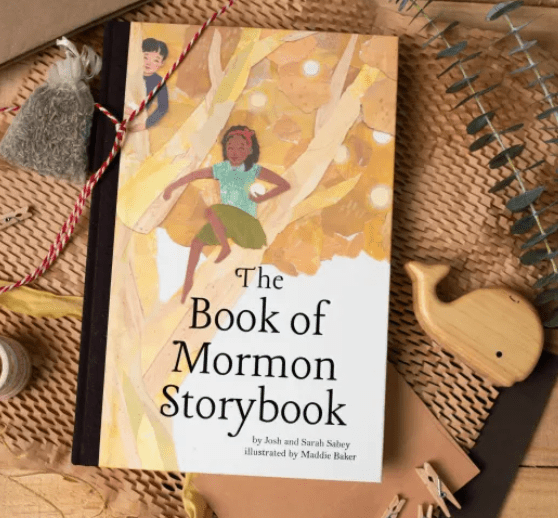
- Watch the Book of Mormon video about the olive tree allegory
- Or this one for younger viewers
- Plant something together! If you have a garden, spend some time working in it!
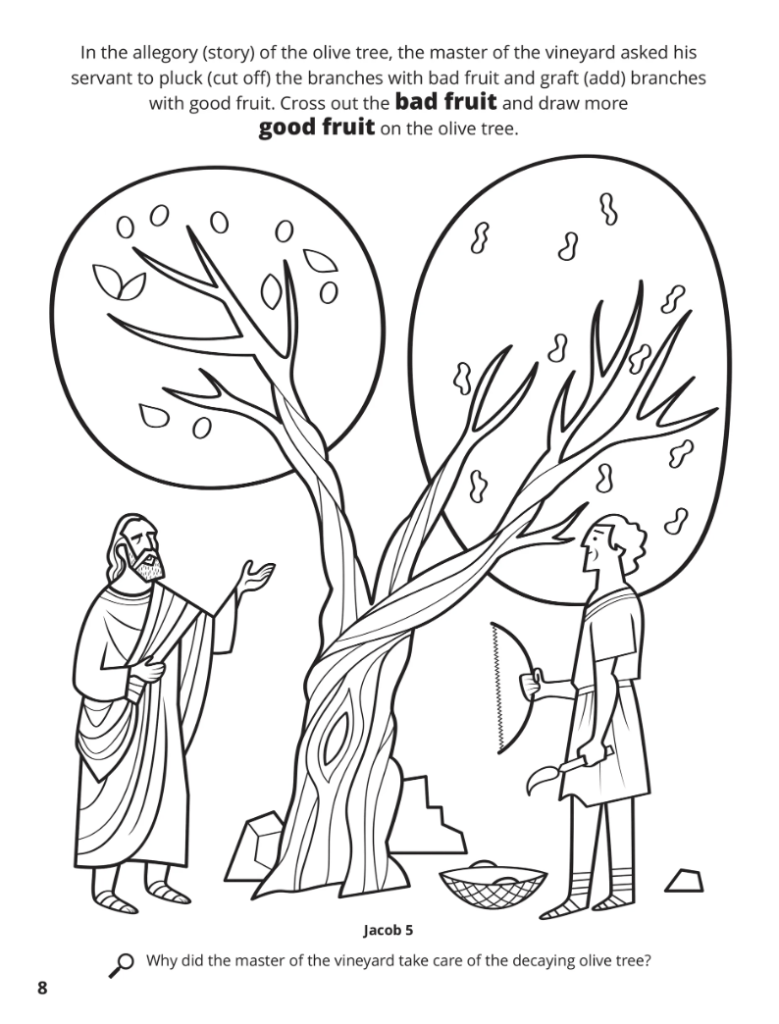
- Read (at least some) verses from Jacob 5 while your kids draw or play. What sticks out? Are there verses you love? Verses you don’t love? Why?
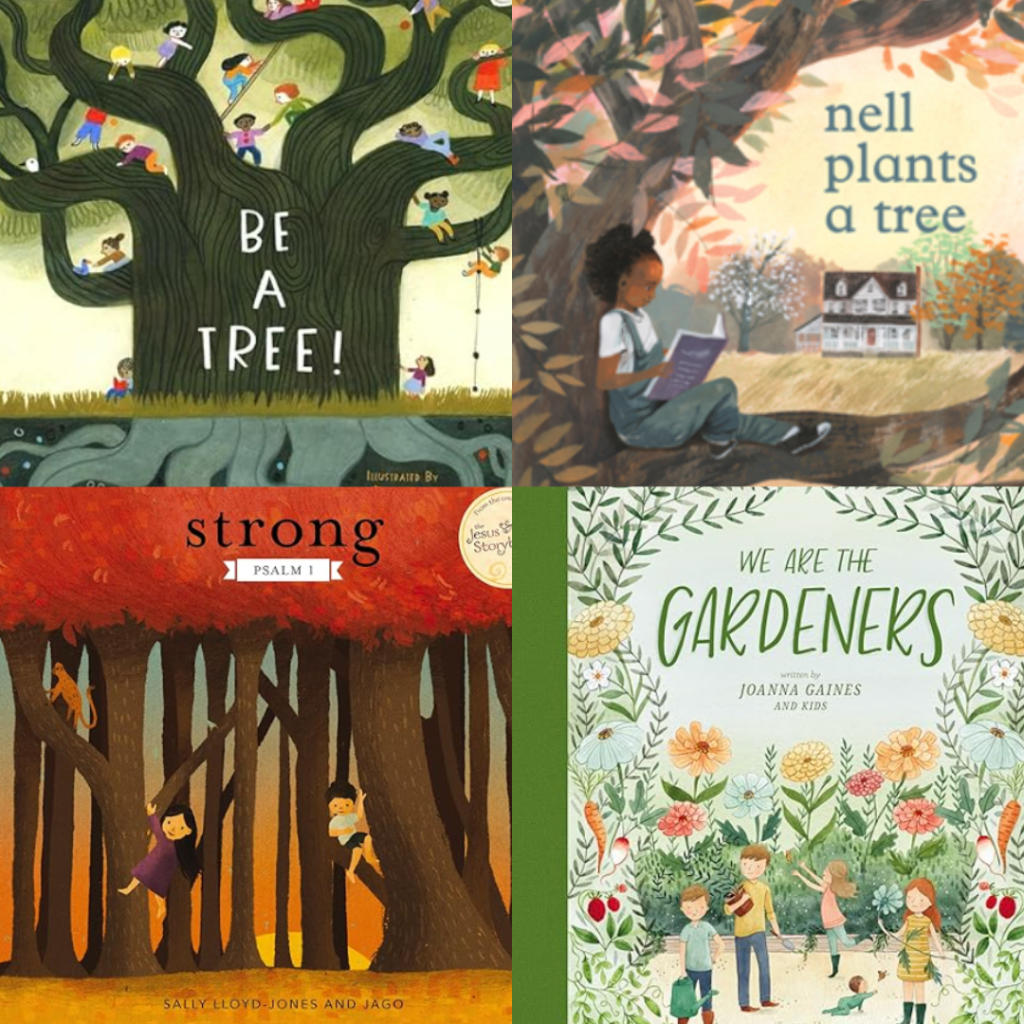
- Read some books about being like trees:
- What does it mean to be in a vineyard? What do we need to be healthy, happy trees? Discuss as a family
- Do this yoga tree pose practice
Art
Compiled by Kristen
Poetry
Compiled by Kristen
The Gardener
by Mary Oliver
Have I lived enough?
Have I loved enough?
Have I considered Right Action enough, have I
come to any conclusion?
Have I experienced happiness with sufficient gratitude?
Have I endured loneliness with grace?
I say this, or perhaps I’m just thinking it.
Actually, I probably think too much.
Then I step out into the garden,
where the gardener, who is said to be a simple man,
Is tending his children, the roses.
Music
Compiled by Caroline
 milk & honey mamas
Leave a comment