

Theological Background by Kristen
In what we read as a few chapters between Enos and Words of Mormon, we find the records of a civilization over hundreds of years. We encounter these professedly vast people through the reports of a few men. Their accounts, and their identities, differ significantly. Enos records his own conversion experience and mighty prayer with God. Jacob “mourns out his days.” Jarom insists that the people he writes about are hard-hearted and stiffnecked. Omni discloses his own imposter syndrome for the task of record-keeping fallen to him. Amaron teaches a sort of prosperity gospel, believing that the “wicked” Nephites have been destroyed and the righteous allowed to remain. Many write of war. Amaleki writes about discovery, and encounter, and community. And then Mormon, reading of the past as he watches the last gasp of a dying people, writes of Christ. Hidden away, filling the endless hours with memories as he awaits his own death, he prays for restoration.
Mormon seems to believe in the blessing/curse of the land, a kind of prosperity gospel associated with righteousness, but the tone of the theology shifts significantly over the surprising course of the text. Prophets attempting to “stir up” the people find this language useful for encouraging moral behavior. But as an entire civilization’s brutal destruction becomes imminent, Mormon doesn’t talk anymore about their just destruction. He talks about Christ, and hope, and the possibility of new life. The language about atonement, about the role of Jesus, morphs over the course of the Book of Mormon as its writers struggle to make sense of the prophecies they encounter. As they put their theological visions into conversation with their lived experience, they change their minds. Their teachings vary. They try to make sense of the space between real and imagined.
It is hard to tell the truth about any people. It is especially hard to tell the truth about an entire civilization. It is hard to be a religious leader tasked with maintaining a moral and ethical code of behavior handed down from a world unimaginable to those living away from it. It is hard to sum up a “thousandth part” of a people’s work, and lives, and loves, and pains, and sufferings, and joys, and delights.
We have only a few voices of people who tried to tell the truth. I wonder if these people kept any other sorts of records, and what they might tell us. I wonder what we might read of women writers. I wonder if others had visions of Christ, or experiences melding the space between real and imaginary. I know, only, that it seems so much easier to simplify things. It seems real to dichotomize wickedness and righteousness as though they are two separate, untouchable entities. It seems real to equate prosperity with goodness, and wickedness with suffering. But usually, this is not the truth. Because it is hard to tell the truth. We search still, with the good writers, for the stories beneath the statements. We search, still, for truth.
Ideas for Play
Contributed by Kristen

- Read from the Book of Mormon storybook
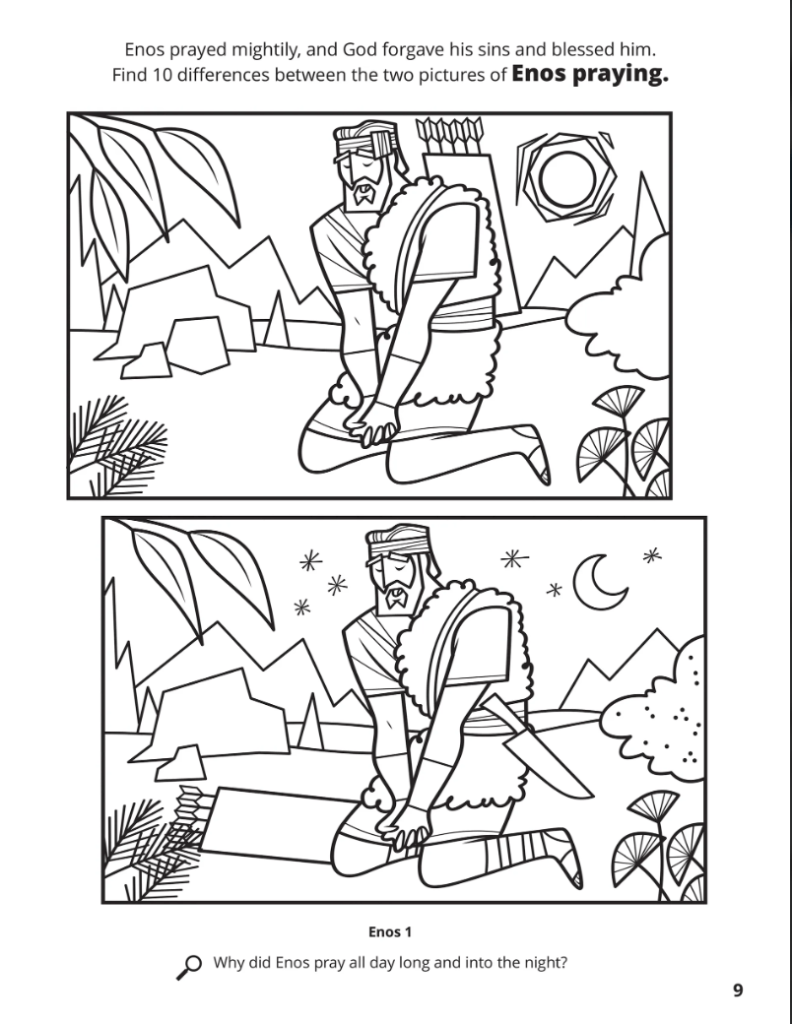
- Tell the story of Enos and talk about prayer. You may want to teach your children that there is no one right way to pray. Some believe that prayer is work. But does God withhold from us, or does it take time to find inner stillness? What does it mean to find enough quiet within to hear yourself? To hear God?
- Learn a bit about record-keeping and people who write history
- Videos about ancient civilizations (here, here, here)
- How did they tell their stories? How do we know what we know about them? What things do we not know?
- Who often gets left out of history?
- Hamilton: who lives, who dies, who tells your story?
- Spend some time writing stories. Imagine a character in the Book of Mormon and tell a story about them.
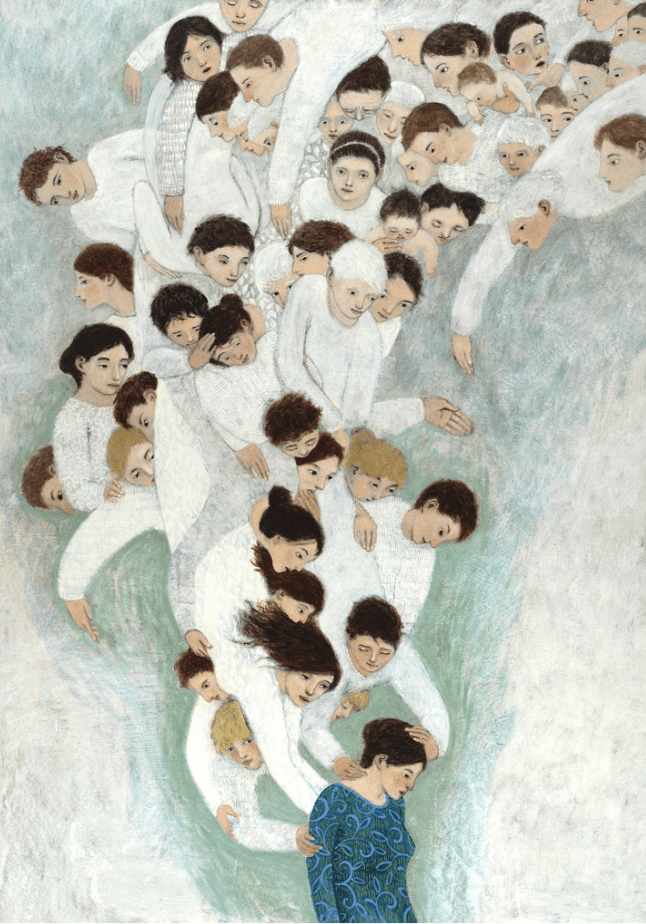
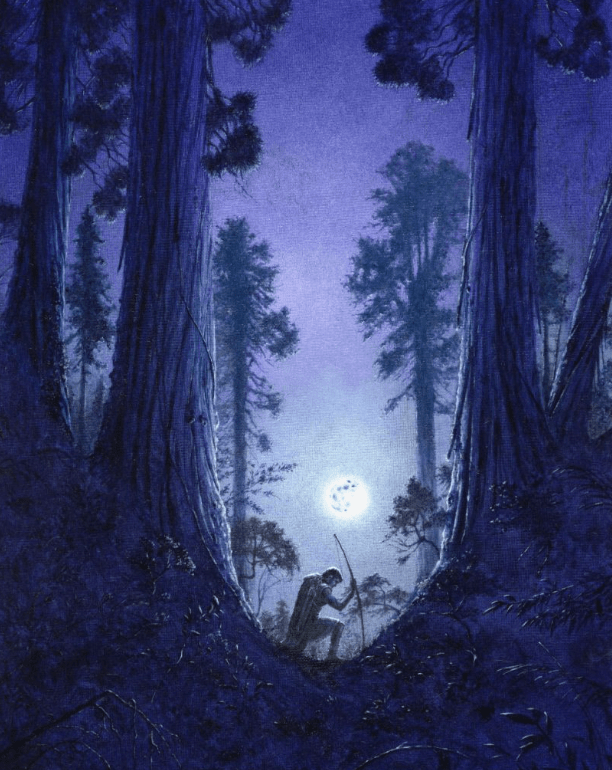
Artwork
Compiled by Caroline

Poetry
A Prayer in Spring
by Robert Frost
Oh, give us pleasure in the flowers to-day;
And give us not to think so far away
As the uncertain harvest; keep us here
All simply in the springing of the year.
Oh, give us pleasure in the orchard white,
Like nothing else by day, like ghosts by night;
And make us happy in the happy bees,
The swarm dilating round the perfect trees.
And make us happy in the darting bird
That suddenly above the bees is heard,
The meteor that thrusts in with needle bill,
And off a blossom in mid air stands still.
For this is love and nothing else is love,
The which it is reserved for God above
To sanctify to what far ends He will,
But which it only needs that we fulfil.
Music
Compiled by Caroline
If You Listen, Elizabeth Mitchell
 milk & honey mamas
Leave a comment