
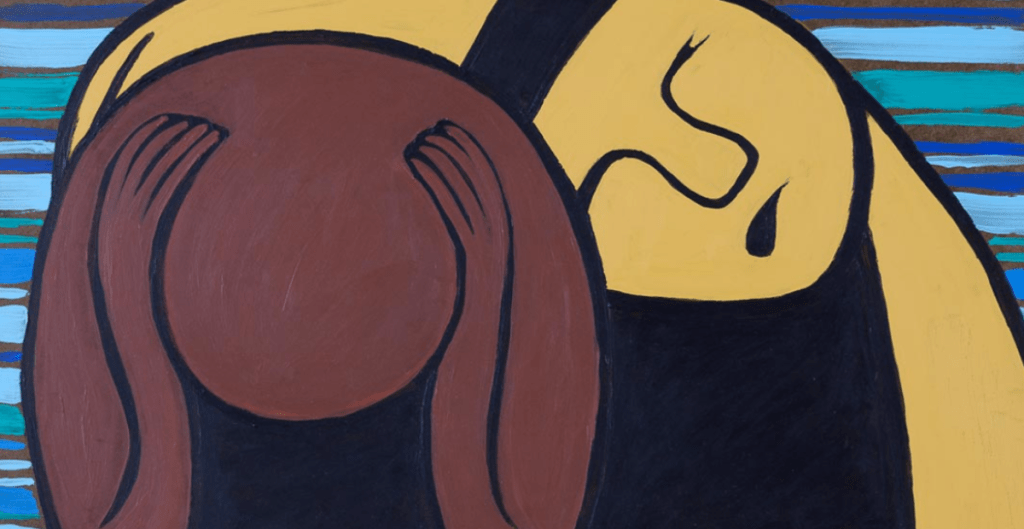
Theological Background by Kristen
Last week, I wondered if we have the theological resources to meet the fires of Ammonihah. The writers find Jesus in the story like this:
And they brought their wives and children together, and whosoever believed or had been taught to believe in the word of God they caused that they should be cast into the fire; and they also brought forth their records which contained the holy scriptures, and cast them into the fire also, that they might be burned and destroyed by fire.
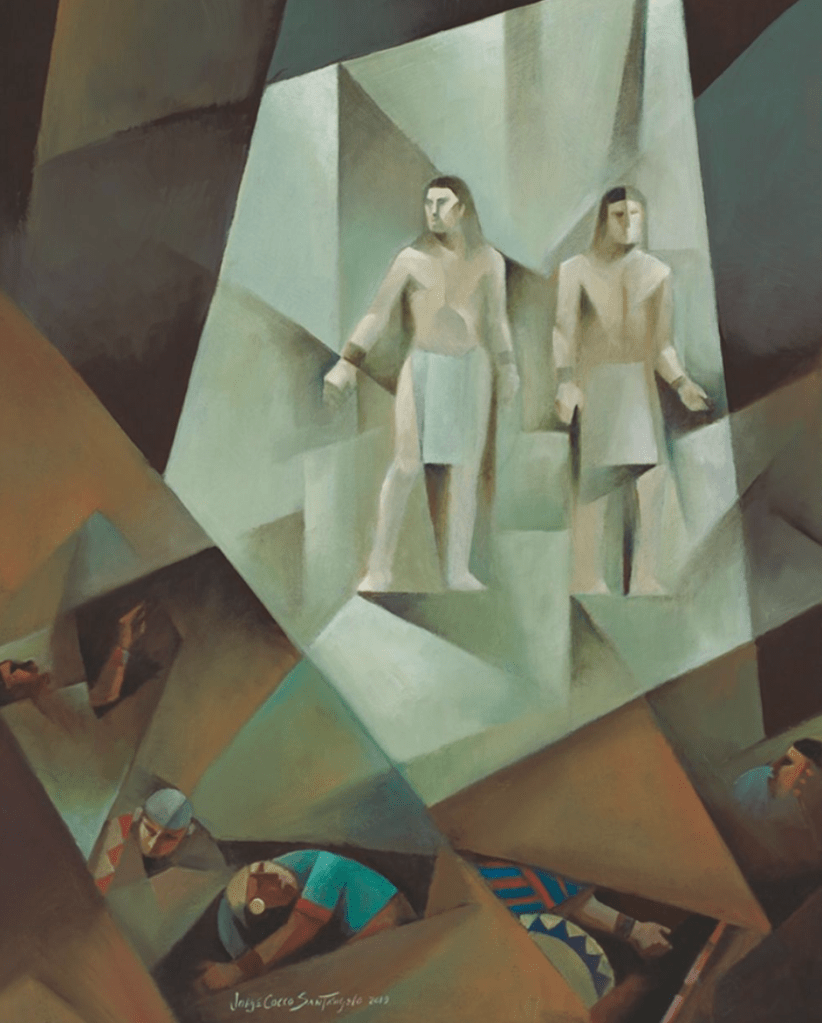
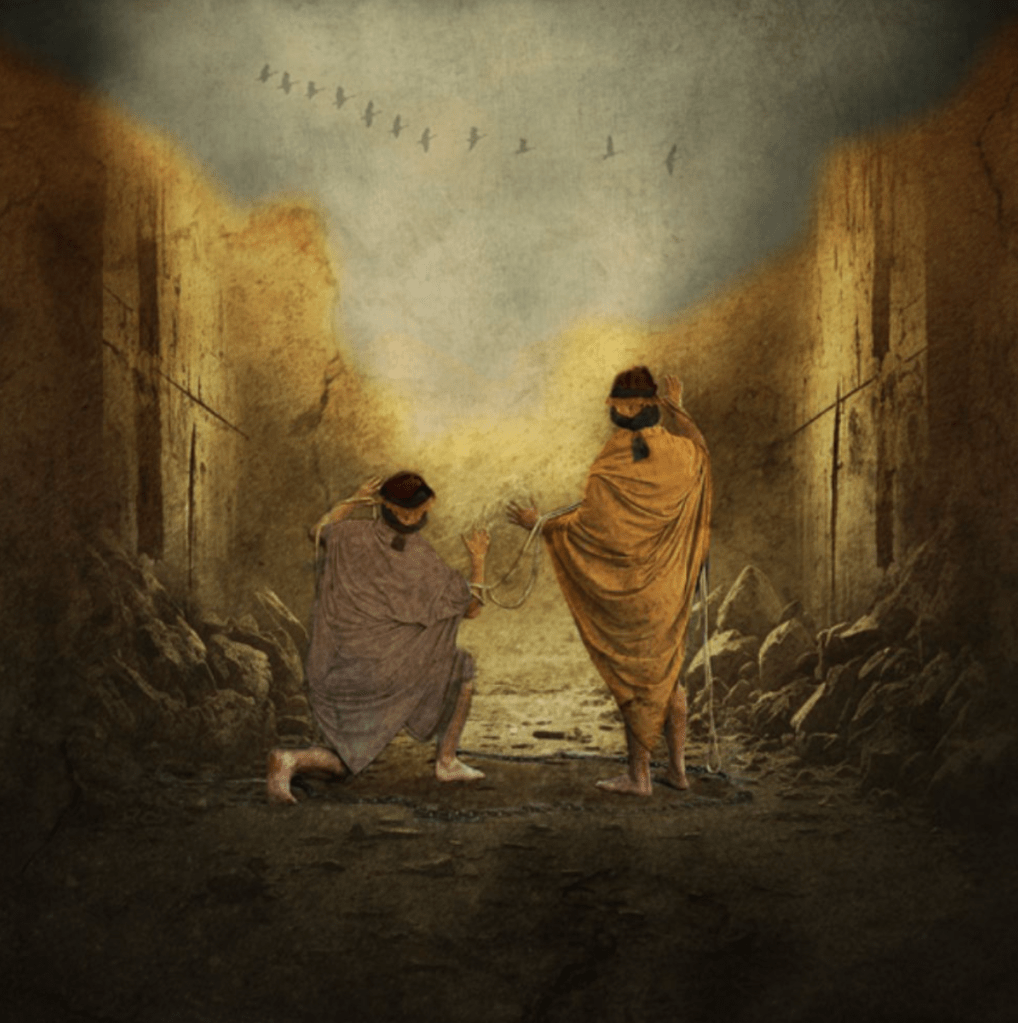
And it came to pass that they took Alma and Amulek, and carried them forth to the place of martyrdom, that they might witness the destruction of those who were consumed by fire.
But Alma said unto him: The Spirit constraineth me that I must not stretch forth mine hand; for behold the Lord receiveth them up unto himself, in glory; and he doth suffer that they may do this thing, or that the people may do this thing unto them, according to the hardness of their hearts, that the judgments which he shall exercise upon them in his wrath may be just; and the blood of the innocent shall stand as a witness against them, yea, and cry mightily against them at the last day.
Alma 14:8-10
Later, the editor takes the time to bring the theodicy full circle:
…and the people of Ammonihah were destroyed; yea, every living soul of the Ammonihahites was destroyed, and also their great city, which they said God could not destroy, because of its greatness.
But behold, in one day it was left desolate; and the carcasses were mangled by dogs and wild beasts of the wilderness.
Nevertheless, after many days their dead bodies were heaped up upon the face of the earth, and they were covered with a shallow covering.
And now so great was the scent thereof that the people did not go in to possess the land of Ammonihah for many years. And it was called Desolation of Nehors; for they were of the profession of Nehor, who were slain; and their lands remained desolate.Alma 16:8-11
I sympathize with the agony of being a witness to such profound and tragic brutality. I sympathize with Mormon’s struggle as an editor, enmeshed in his own witness to an abhorrant genocide. I sympathize with the longing for clean divisions between good and evil, between reward and punishment, between happiness and suffering. And yet. Does this sort of theodicy, where God allows suffering so as to revenge it in His own time, bear any weight when placed under circumstances like the Shoah, or the Rwandan genocide, or systemic evils like slavery, child exploitation, and sexism? It may be that for you, the answer to my questions is yes. The thing about theodicy—the quest for understanding God’s presence in the face of suffering and evil—is that its job is to work.
So here are a few things I believe that work for me. I believe that God wept for the believers consumed by fire. And I believe that God wept for Ammonihah. Because God does not see us as wholly good or wholly bad. God does not sort the world into good people and death eaters, to borrow from J.K. Rowling. God longs for us, and longs for us to love each other. God longs for us to hold each other tenderly, like a father holds his child on his shoulder.
I was in a class once following a heated protest. We were discussing the points of the debate, and my professor asked, “So whose side was God on?” I think this is the question we want to answer when we read about Ammonihah, or Ether, or the thousands of other unthinkable tragedies we have lived as a species. But I’m not convinced this is the question God is answering.
Julian of Norwich writes that God “thirsts” for humanity. “He continually draws and drinks and still He thirsts and yearns.” A weeping God joins us in our vulnerability. She is there in the cracking open of our hearts in the agony of love lost, of love hoped for, and love unsure. She is there in the extent of our ability to hurt each other and ourselves, and in the extent of our ability to nurture and dream and create. God joins us, literally, by coming in the flesh of a baby. Fragile, uncertain, dependent, achingly mortal, God came to be with us. Because, just because, God loves us.
The fire in Ammonihah has long since ceased to smolder. No one today can find the place where once martyrs suffered a painful death. We don’t know their names, their faces, or their longings. But we believe in this story as part of the whole, because God loves us. Because it doesn’t make sense. Because it is too sad, too awful, too wrong. Because it is real, senseless, tragic. Because it awakens images of fires burning today, because the blood still runs through us, because Jesus is not transcendent but enfleshed. Because this is the story of humanity, in sickness and health, and God longs for us, thirsting for us across the ages.
In the still of this night, where fires like the one in Ammonihah still burn, I pray for the arms of God the mother to drape the world with a starry quilt. I pray to feel her presence, laboring still in the birth of our everlasting connectedness. I pray her breath on our faces, her song in the sea, her footsteps winding the mountains. I pray for our world, hurting and wounded and hurting and wounded. I pray for my children, and for your children, and for all children. They carry the world on their shoulders. I pray to know how to pray, and I bow my head in memory and silence, and accept my breath as a blessing.
Ideas for Play
Contributed by Kristen

- Talk about how Jesus is still working even in very sad stories
- How can a story be both sad and hopeful?
- How is Jesus part of this story?
- Can God/Jesus be in a sad, sad story?
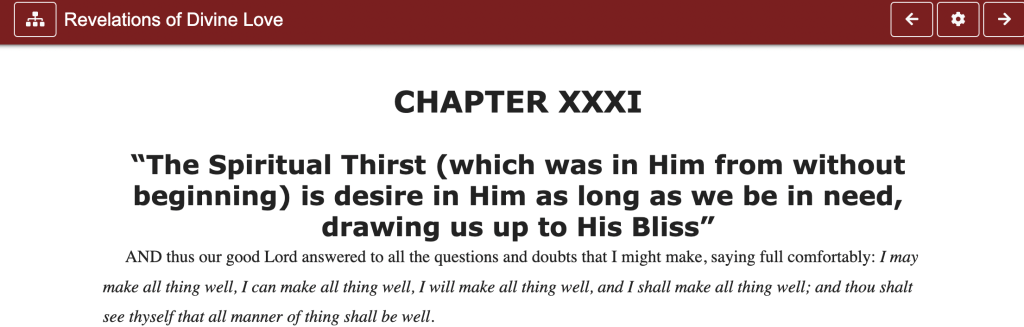
- Read Julian of Norwich’s writing about God’s thirst for us
- Read God is the Fracture by Pádraig Ó Tuama
- Has something sad happened to you, or have you heard of something sad happening in the world? How did you feel? How does God feel?
Artwork

Poetry
Shoulders
A man crosses the street in rain,
stepping gently, looking two times north and south,
because his son is asleep on his shoulder.
No car must splash him.
No car drive too near to his shadow.
This man carries the world’s most sensitive cargo
but he’s not marked.
Nowhere does his jacket say FRAGILE,
HANDLE WITH CARE.
His ear fills up with breathing.
He hears the hum of a boy’s dream
deep inside him.
We’re not going to be able
to live in this world
if we’re not willing to do what he’s doing
with one another.
The road will only be wide.
The rain will never stop falling.
Music
The Valley by the Wailin’ Jennys

 milk & honey mamas
Leave a comment