

Theological Background contributed by Kristen
In this week’s readings, we meet the mothers of the stripling warriors. We meet their sons and their captain. We meet steady Pahoran, and we encounter passionate Moroni. The verses about these intertwining stories are, of course, famous to us. The boy-warriors credit their mothers with their faith, significant and emphatic enough for Heleman to remember and for Mormon to include it in his edit. “We do not doubt our mothers knew it,” Heleman recounts. Having been taught, these youth go forward and do terrible, mighty things on behalf of Moroni’s title of liberty. They do the work of warriors.
Helaman writes: “they had been taught by their mothers, that if they did not doubt, God would deliver them. And they rehearsed unto me the words of their mothers, saying: We do not doubt our mothers knew it” (Alma 56:48). What were the words of their mothers? I want to know what their mothers taught them. I want to know how they taught them. I want to know what those women saw and kept within their hearts over the years following the buried weapons at that forgotten hillside. What did their mothers know that sustained these youth, and how did it take place in their children’s hearts? Latter-day Saints have translated the power of maternal teaching inspiring the faith of the stripling warriors toward the work of evangelism:
Janice Kapp Perry writes: “We are as the army of Helaman. / We have been taught in our youth. / And we will be the Lord’s missionaries / To bring the world his truth.”
As I read the story of the stripling warriors this time around, I felt so deeply for their mothers. Though their stories are lost, we can piece together a few precious details. Had they, or their mothers, not seen war upon war upon war? Why had they converted? What had they left with the weapons rusting in the hillside far away? Whose bones had they left in their homes made foreign, and what did it mean to them to be in-between, neither Nephite nor Lamanite? I cannot imagine that they dreamed of their sons becoming warriors. In fact, I wonder if their hearts broke when they saw their boys’ flushed cheeks and breastplates. They knew what the boys didn’t know. No mother dreams of sending her child to war.
I do not want my children to be enlisted in an army. I do not want them to have to take up weapons. I do not want them to have to hold life in their hands, to see death dealt by their playmates. War is not heroic or beautiful or holy. War is human and tragic. I do not believe that God leads armies, but I do believe that God weeps when battle lines are drawn.
Moroni could not believe that his enemies had faith in their own stories. Mormon writes when he received Ammoron’s letter in response to his proposed exchange he was enraged by Ammoron’s arguments, because “he knew that Ammoron had a perfect knowledge of his fraud” (Alma 55:1). Perhaps this is true. I certainly do not know. But I do know that good people can do dishonest, wicked things because they have told themselves a story. And I know that the Book of Mormon ends in dismal tragedy. War is never clean. There is never a single story.
I recoil a bit from the use of war as a metaphor. I don’t love the glorification of the armies of Helaman as an example for our youth to strive for. These are my own battle lines, drawn across centuries and from my own experience. But when I close my eyes and imagine my sisters sending their children to war, the tears spilling down my cheeks remind me why so many have found resonance in these stories. We don’t get to decide what our children face. As Marilyn Robinson writes, “That is how life goes–we send our children into the wilderness. Some of them on the day they are born, it seems, for all the help we can give them. Some of them seem to be a kind of wilderness unto themselves. But there must be angels there, too, and springs of water. Even that wilderness, that very habitation of jackals, is the Lord’s.” Helaman recounts that every one of his young soldiers was severely wounded in battle. Clark Kelley Price depicts the scene in her piece, “It is true sir, all present and accounted for”
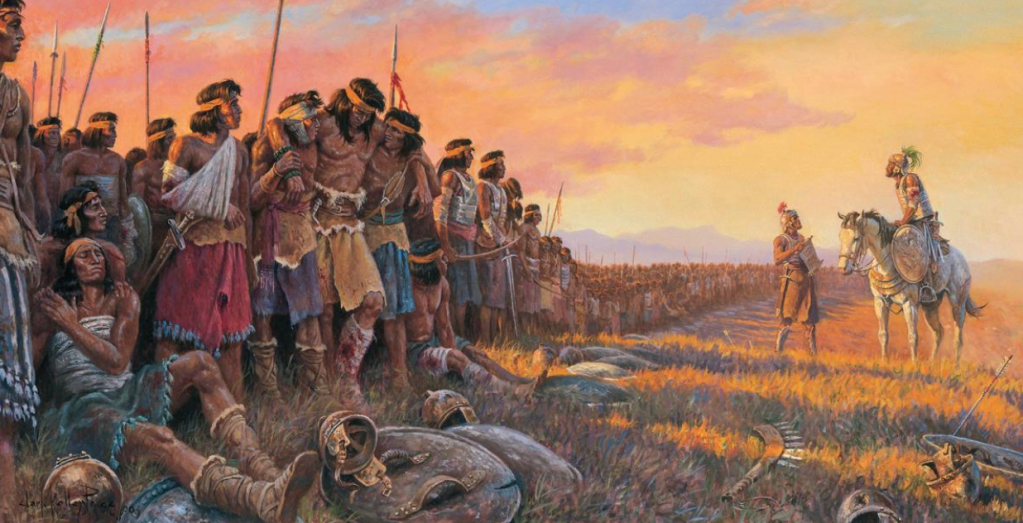
This is a true story. Miracles, yes, and pain. We cannot choose what our children face. We cannot choose what their world will demand of them, and we cannot perfectly shield them from pain. As I read this story this time around, this is the verse that brought me to tears. Our children will suffer. Many already do suffer. This is not a possibility, this is a fact of life. They will face terrible things. They will be afraid. They will be hurt. What can I do, in the face of this? What can I do, when there is so much I do not know?
I want my children to have something precious and warm and nourishing that they can hold like warm bread on a cold day. I wish I could perfectly protect them. But I want them to know where they can turn when they’re in trouble. When they’re alone, and afraid, I want them to have a deep well inside that will sustain them. So I pray to my mothers, tell me what you taught your children. Give me the smell of the roots that sustained them, trailing through their toes into the earth and back to you. Linger with me as I send my own children into the world. And let them come back, knowing their own name, alive.
We are as the armies of Helaman, vulnerable, frightened, small. And still we stand, facing tomorrow, holding each other up tall.
Ideas for Play
Contributed by Kristen

- Read the Book of Mormon storybook!
- Watch the Book of Mormon video
- Watch this video of the valiant fox
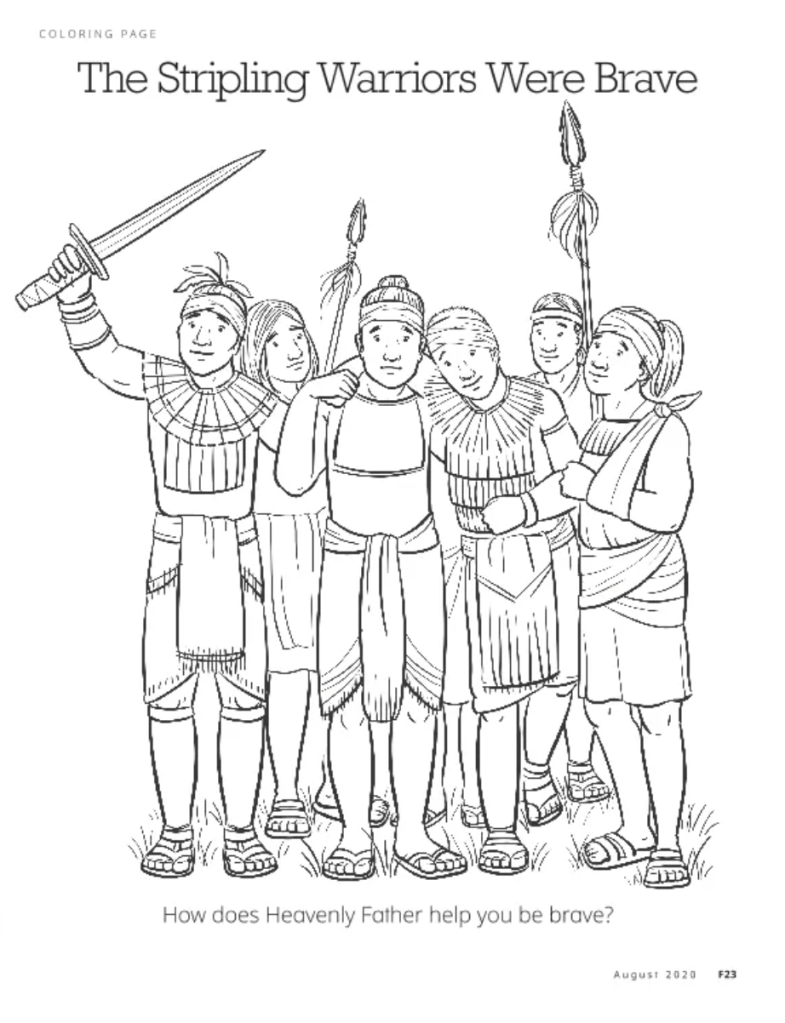
- What have your parents given you that sustains you? What do you want to give your children? What do you hope they will say that they knew you knew?
- How do we face things that scare us? What do we do when we’re faced with something terrible?

- Play a game: have a child volunteer to be a “warrior.” What does this child need to feel brave enough to do something scary? Gather things like food, blankets, stories, stuffies, etc. Discuss how Jesus cares about what life looks like inside of us, not just what we do or look like on the outside. Having faith could be like having enough delicious food. What will sustain and nourish us to face life? That’s faith’s job.
- Continue the activity with faith. Is faith doing its job? What about when… (try different scenarios). What does faith need to do its job? Maybe faith needs help from a friend. Maybe faith needs good food. Maybe faith needs time to rest. We can care for our faith with love because its job is to help us find, feel, and give God’s love.
- Can we find faith in the story of the stripling warriors? Where do you find and see it?
Artwork
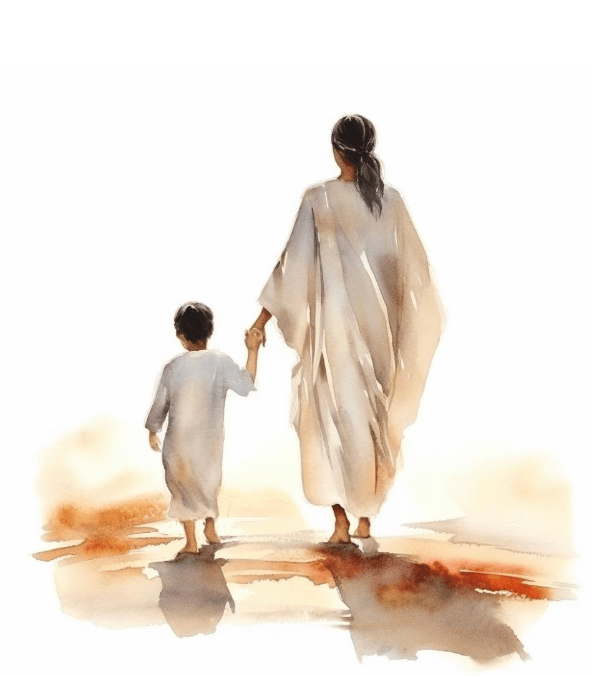
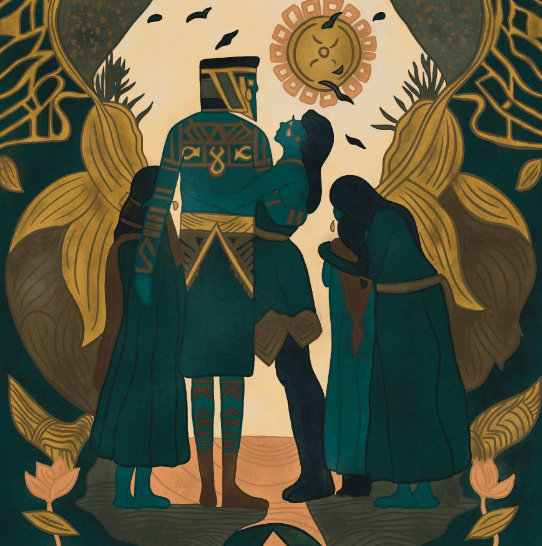
Compiled by Caroline
Poetry
By Maya Angelou
Shadows on the wall
Noises down the hall
Life doesn’t frighten me at all
Bad dogs barking loud
Big ghosts in a cloud
Life doesn’t frighten me at all
Mean old Mother Goose
Lions on the loose
They don’t frighten me at all
Dragons breathing flame
On my counterpane
That doesn’t frighten me at all.
I go boo
Make them shoo
I make fun
Way they run
I won’t cry
So they fly
I just smile
They go wild
Life doesn’t frighten me at all.
Tough guys fight
All alone at night
Life doesn’t frighten me at all.
Panthers in the park
Strangers in the dark
No, they don’t frighten me at all.
That new classroom where
Boys all pull my hair
(Kissy little girls
With their hair in curls)
They don’t frighten me at all.
Don’t show me frogs and snakes
And listen for my scream,
If I’m afraid at all
It’s only in my dreams.
I’ve got a magic charm
That I keep up my sleeve
I can walk the ocean floor
And never have to breathe.
Life doesn’t frighten me at all
Not at all
Not at all.
Life doesn’t frighten me at all.
Music
Compiled by Caroline
 milk & honey mamas
Leave a comment