
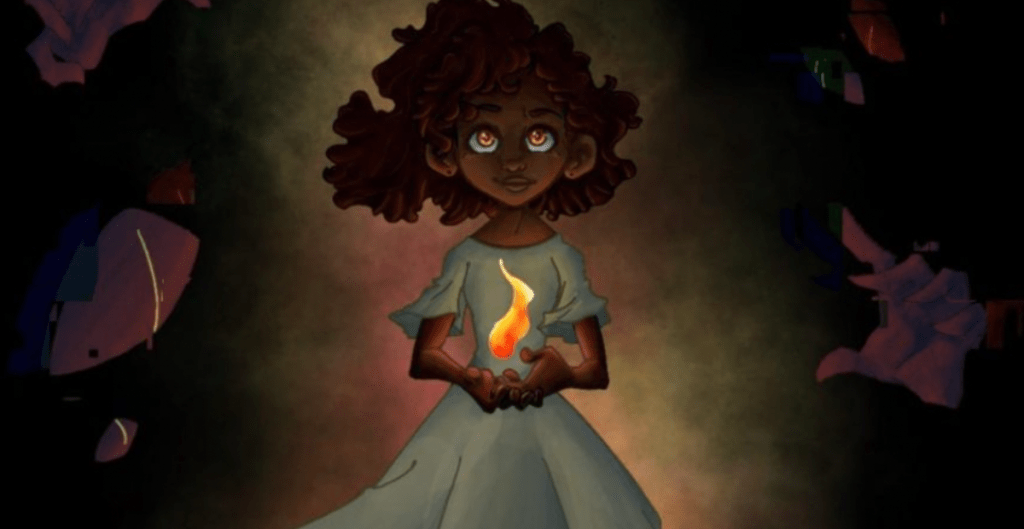
Theological Background by Kristen
In a beautiful book by Chaim Potok, a young Jewish artist visits a museum and sees images of the crucifixion. He asks his mother, who tells him of the Christian Jesus. “Did the Messiah really come?” He asks his mother. “Oh Asher, ” she responds, “would the world be so full of pain if he had?”
What does it mean that Jesus has come? The Book of Mormon is filled with stories about people, stories that ring true to me for their very humanness. It also filled, to my eye, with aching responses to this question. Jesus is an idea at first, a foreign and mystical idea to the observant Jews in diaspora. Jesus takes on flesh for Alma perhaps more than any previous writer, and Jesus comes enfleshed and significant for his atoning power. And then there is war. War – the careful and methodical practice of destruction – comprises an enormous chunk of this book. It scuttles through various eras and rears its head for years throughout entire generations. War ends the book. War, in fact, ends an entire people in the book.
In the midst, Jesus.
War is a human story. Perhaps war is the most human of all the human stories. It is a cruel paradox; its ubiquity in nearly every civilization across the face of the earth from the beginning of human history does not diminish the equal truth that war erodes the human soul. We seem always to be at war – with ourselves, with each other. And we seem always to be destroyed by our impulse to destruction. In the face of the paradox we wonder if we are simply bad (a compelling answer) and prone to evil, or if we are victims in the machinations of demonic forces. These questions are the subjects of theological anthropology. Who are we? What does it mean that we were created in the image of God? How can we escape the cycles of misery and loneliness that haunt us?
Christian theological answers to these questions have firmly circled Jesus. Jesus is the sun around which we orbit. Jesus pulls us back. Jesus grants relief from the cycles of humanness. Jesus.
Yet if this is true, the Book of Mormon points to the perplexing complexity of the truth. Jesus comes to the people in this book. He holds their children. He wipes away their tears. And still war tears them apart. It is easy to dismiss this tragedy as a result of sin and depravity, a “pride cycle,” but when we’re honest with ourselves we know this is no simple answer. The conundrums of the human condition are not black and white. The ending of this book is, and will always be, terribly sad. Could it have been otherwise?
War is a human story. Is Jesus the antithesis to the human story? Or is Jesus part of the mess, scarred and bloody with the suffering? I cannot picture Jesus with a sword of destruction. But I can picture Jesus weeping. What do the tears mean? What can heal us in our vulnerability, our brokenness? What will draw us away from our woundedness and toward hope?
So I pray. Did they pray, too, thousands of years ago, to know what it all meant? Is there an answer over us all, or simply quiet, holding the world like an acorn, sure and steady?
Ideas for Play
Contributed by Kristen

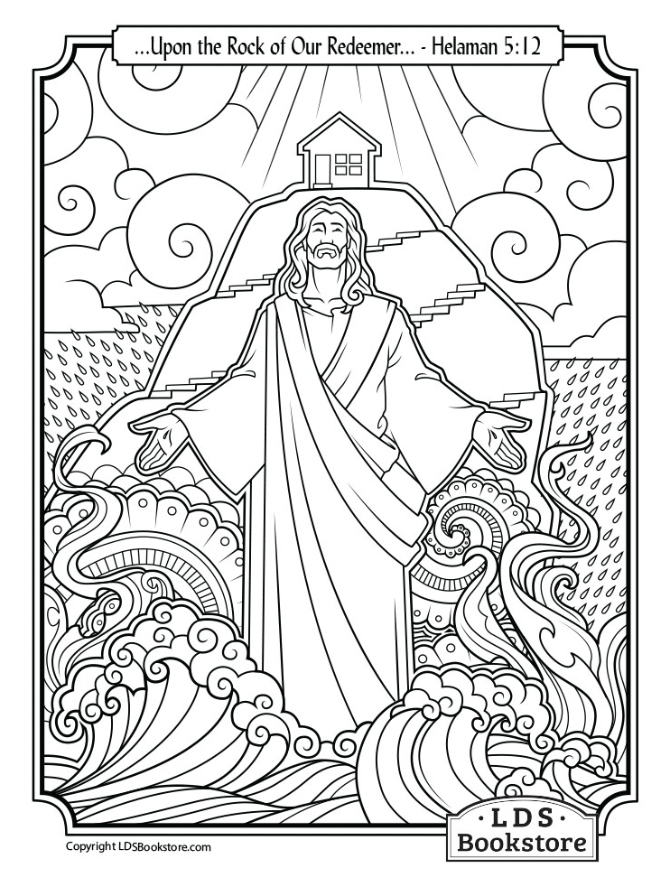
- Upon the rock of our redeemer coloring page
- Read Helaman 5-6. What do you think these verses mean? What did they mean to the people who heard them?
- How did Jesus help them? How could Jesus help you?

- Build a foundation together. What do you need to help you stand tall? Ideas: blankets, food, water, pictures of family, things that bring confidence, stories, etc. what does it mean to have Jesus as part of our foundation? How can we build a foundation with Jesus?
Artwork
Compiled by Caroline


Poetry
Compiled by Caroline
Making Peace
Denise Levertov, “Making Peace” from Breathing the Water. Copyright © 1987 by Denise Levertov.
A voice from the dark called out,
‘The poets must give us
imagination of peace, to oust the intense, familiar
imagination of disaster. Peace, not only
the absence of war.’
But peace, like a poem,
is not there ahead of itself,
can’t be imagined before it is made,
can’t be known except
in the words of its making,
grammar of justice,
syntax of mutual aid.
A feeling towards it,
dimly sensing a rhythm, is all we have
until we begin to utter its metaphors,
learning them as we speak.
A line of peace might appear
if we restructured the sentence our lives are making,
revoked its reaffirmation of profit and power,
questioned our needs, allowed
long pauses . . .
A cadence of peace might balance its weight
on that different fulcrum; peace, a presence,
an energy field more intense than war,
might pulse then,
stanza by stanza into the world,
each act of living
one of its words, each word
a vibration of light—facets
of the forming crystal.
Music
Compiled by Caroline
O Thou Rock of Our Salvation, Addison Kirk
 milk & honey mamas
Leave a comment