

Contributed by Kristen
And my soul was rent with anguish, because of the slain of my people, and I cried:
O ye fair ones, how could ye have departed from the ways of the Lord! O ye fair ones, how could ye have rejected that Jesus, who stood with open arms to receive you! Behold, if ye had not done this, ye would not have fallen. But behold, ye are fallen, and I mourn your loss. O ye fair sons and daughters, ye fathers and mothers, ye husbands and wives, ye fair ones, how is it that ye could have fallen! But behold, ye are gone, and my sorrows cannot bring your return. And the day soon cometh that your mortal must put on immortality, and these bodies which are now moldering in corruption must soon become incorruptible bodies; and then ye must stand before the judgment-seat of Christ, to be judged according to your works; and if it so be that ye are righteous, then are ye blessed with your fathers who have gone before you. O that ye had repented before this great destruction had come upon you. But behold, ye are gone, and the Father, yea, the Eternal Father of heaven, knoweth your state; and he doeth with you according to his justice and mercy. (Mormon 6:16-22)
The “awful scene of blood and carnage” which Mormon beheld, the sights and smells and sounds of which accompanied his final mortal breaths, constituted the context of his editorial transcription of the plates of Lehi. I wonder, in fact, if this heart-rending passage of Mormon 6 is the backdrop to the entire text Mormon edits, the framework with which he makes sense of the glories and tragedies of his ancestry. It must have been comforting to feel companionship with the prophets who came before him, prophets whose words fell on unhearing ears. It must have brought him hope in some sense to feel not quite so alone, to identify patterns through the eyes of his contextualized agony, to tell the story with the end in view. O ye fair ones, he cries, and I hear Lehi: O that you had held to the rod, and I hear Benjamin, O that you could realize your indebtedness, and I hear Alma, O that you would repent, and Samuel, O that you could behold, and Jesus, O ye people of these great cities which have fallen, who are descendants of Jacob, yeah, who are of the house of Israel, how oft have I gathered you as a hen gathereth her chickens under her wings, and have nourished you.
The path, the covenant, the iron rod. They are all symbols for the same thing, the same ragged human impulse toward safety and surety. If we build a strong enough foundation, Lin Manuel-Miranda writes centuries later, we’ll pass it onto you, we’ll give the world to you… Surely there is a way to ensure happiness, to guarantee peace and security. Surely there are safe passages over life’s tempestuous seas, bridges over troubled waters, havens from the storms. I too want to give my children a strong enough foundation to lean on, to trust when their confidence grows dim. I too want to promise safety.
It would be centuries later that Julian of Norwich would write from her own context of clerical corruption, devastating plague, war, famine, and political upheaval.
And from that time that it was shewed I desired oftentimes to learn what was our Lord’s meaning. And fifteen years after, and more, I was answered in ghostly understanding, saying thus: Wouldst thou learn thy Lord’s meaning in this thing? Learn it well: Love was His meaning. Who shewed it thee? Love. What shewed He thee? Love. Wherefore shewed it He? For Love. Hold thee therein and thou shalt learn and know more in the same. But thou shalt never know nor learn therein other thing without end Thus was I learned that Love was our Lord’s meaning. And I saw full surely that ere God made us He loved us; which love was never slacked, nor ever shall be. And in this love He hath done all His works; and in this love He hath made all things profitable to us; and in this love our life is everlasting. In our making we had beginning; but the love wherein He made us was in Him from without beginning: in which love we have our beginning. And all this shall we see in God, without end. (Showings, Chapter LXXXVI)
Everything is explained by love for Julian. The meaning of our making, our suffering, our mortality. It is all love. From her anchorage, with a window close to the sea, Julian would have seen the comings and goings of soldiers, priests, bodies succumbed to plague, and people of all walks of life (see Shelly Rambo “Julian of Norwich: Witness to the Wounded”). She developed her theology (really a theodicy) over nearly 15 years, in which she wrote and rewrote the meaning of the visions she had received. Mormon, too, looked out his window into suffering. He was not housed in an anchorage, cloistered to some degree from the world though gazing out into it. He was leading his people hopelessly to their deaths, watching their destruction, and taking in the macabre spectacle of human decay as a civilization crumbed before his eyes. Mormon’s is a text written from and in great trauma, a text seeking a larger narrative to nestle in.
Mormon is not the first to write from and within scenes of unfathomable evil, destruction, suffering, and death. Julian is not the last. Today, we don’t need to look as far as our windows to see bodies strewn without the dignity of graves and motherless children begging for food. We know brother against brother and mother against child in political persuasion. We know suffering on grand scales, and we know suffering in the intimate pangs of personal loss and woundedness. I think we relate to the narrative arc of the Book of Mormon at least because we find comfort in the singularity of the narrative. Good and evil, right and wrong, an encapsulated explanation for suffering and destruction. I feel great compassion for Mormon. I think I understand that it could not, for him, have been otherwise.
The tragedy of the Book of Mormon is not a single story. Tragedy unwinds on every page of the human saga, at every turn against reason. So does beauty. So does life. But let us not fail to catch our breath at the bodies strewn upon the earth with no one left to bury. Let us sorrow at the women and children transactionally bartered, and the war cries, and the earth running with blood. Whether they brought this on themselves or not, this is human suffering in the extreme. Let us weep for them, for these people whose history was whittled down to a book I can hold between two fingers. Transcendence does not blot out what happened these centuries ago. But we will tell their story, and try to hear the unwritten ones, and pray for their dead, and thank the earth for enfolding them gently into her heart, where they remain today flowing in the waters and hills and mountains and valleys of our evergreen mother.
May it be well, I pray with Julian of Norwich, may all manner of things truly be well.
Ideas for Play
Contributed by Kristen

- Read the Book of Mormon storybook
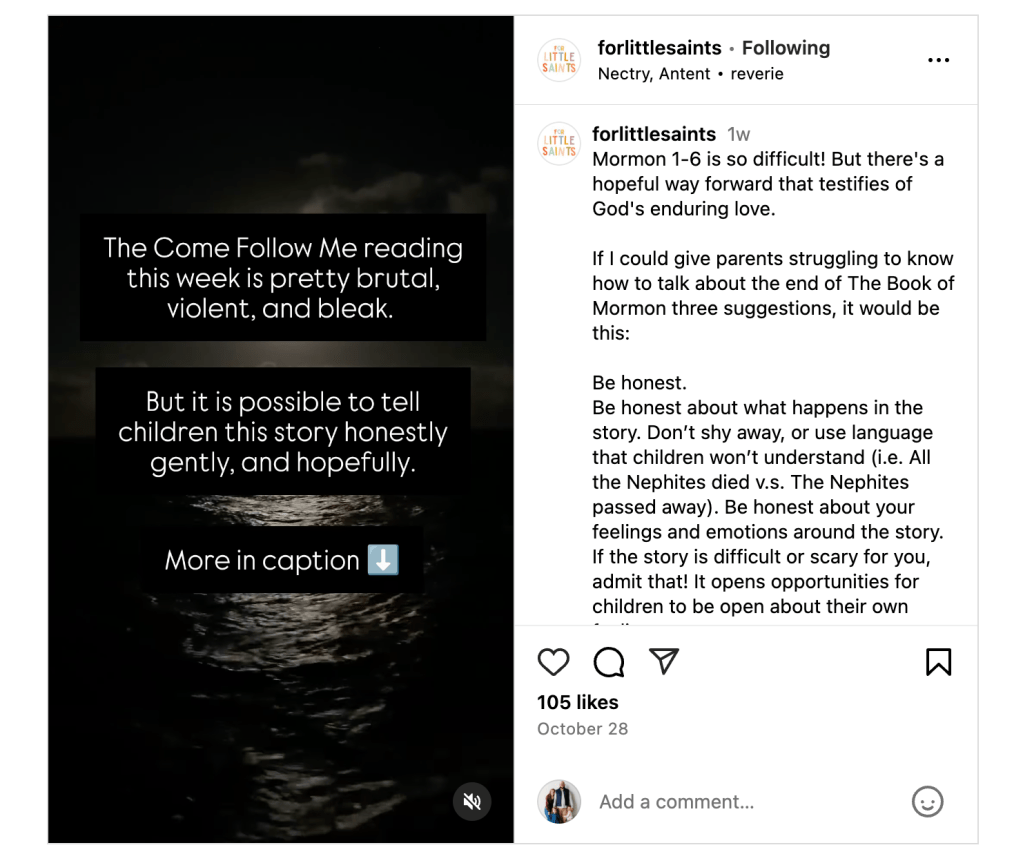
- Josh and Sarah don’t shy away from talking and writing about the reality of this tragedy. Read their post about why they feel this is important.

- Try these books:
- What sad things have happened to you, or that you have known about? What have you done? Discuss as a family.
- Does God’s love mean sad things will never happen? What does it mean for both to exist? Discuss as a family.
- Has someone you loved ever had a hard time? How did this feel? What did you do? Talk about loving people who are suffering or making different choices than you.
- Does this change God’s love for us?
- How can we trust God’s love?

- Activity: turning away from each other
- Use little wooden characters and set them up like a community. One at a time, have them make choices that turn them away from each other (there’s only one coat and only I will use it for the winter; I am going to keep all the food for myself. I don’t want to listen to your worried feelings; etc). Show that they are all wounded and split from each other. What needs to happen? How can they heal? (you can also imagine this as the Nephites and Lamanites, demonstrating how hurt they all were).
- Now, where is Jesus? Does Jesus come only after they’ve made things right? What are some ways Jesus might help them?

- Act out Mormon hiding the plates – kids could make their own mini plates and then “bury” them.
Artwork
Compiled by Caroline
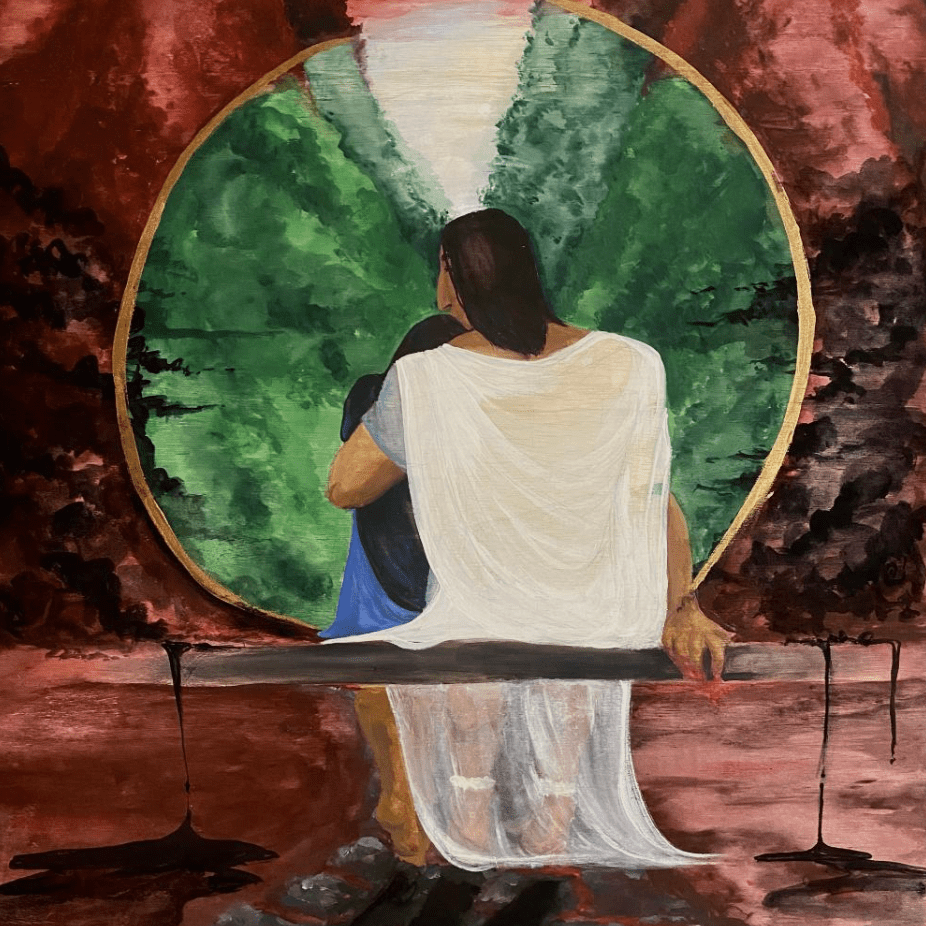
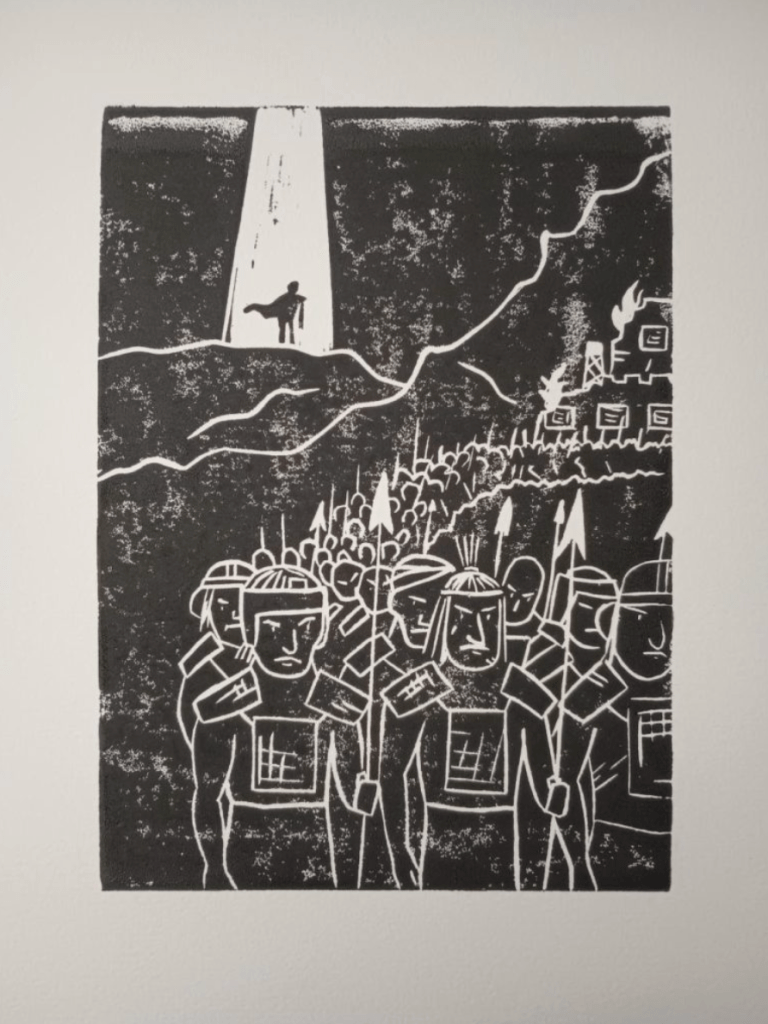
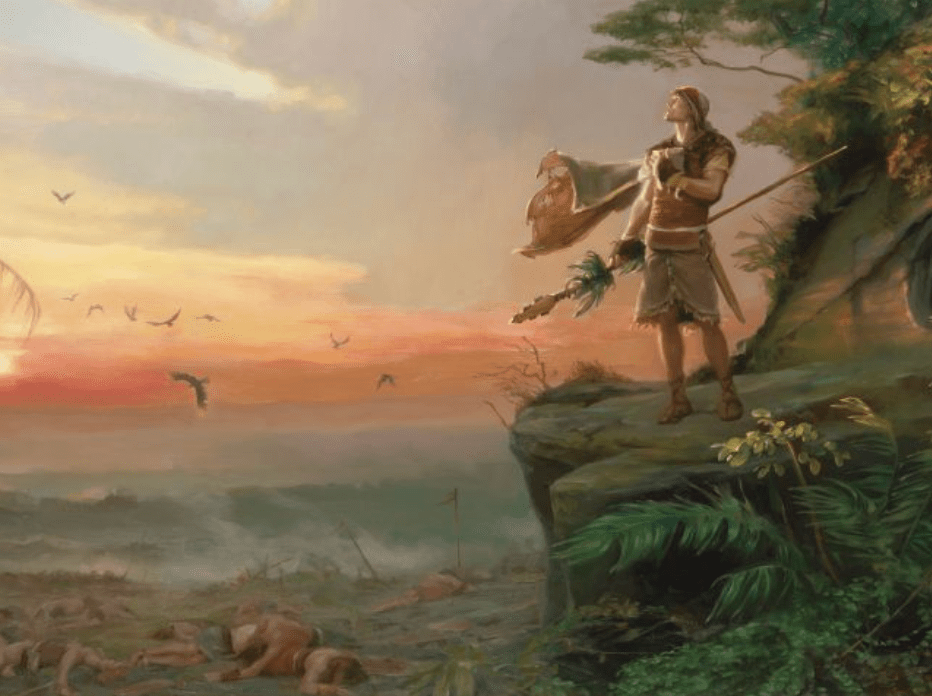

Poetry
Compiled by Caroline
Walking with grief
(Prayer from The Celtic Daily Prayer: Book One)
Do not hurry
as you walk with grief;
it does not help the journey.
Walk slowly,
pausing often:
do not hurry
as you walk with grief.
Be not disturbed
by memories that come unbidden.
Swiftly forgive;
and let Christ speak for you
unspoken words.
Unfinished conversation
will be resolved in Him.
Be not disturbed.
Be gentle with the one
who walks with grief.
If it is you,
be gentle with yourself.
Swiftly forgive;
walk slowly,
pausing often.
Take time, be gentle
as you walk with grief.
Music
Compiled by Caroline
 milk & honey mamas
Leave a comment