

Contributed by Kristen
Questions of authority have long characterized theological discussions in Christianity, though in markedly different ways. In the early Jesus movement, devoted converts interpreted the accounts of Jesus’ life and death in defense of the movement at a time when Christianity and the crucified God was not yet considered a viable religious movement. Once the church became a religion of the empire, interpretation of scripture and tradition was a political as well as an apologetic task. In both instances, men were recognized as authorities and leaders, though women played interesting and sometimes controversial roles, especially as ideas about attachment and responsibility shifted. Women in the earliest days of Christianity were martyrs, teachers, and writers, but rarely were they recognized as authorities.
Indeed, throughout the Middle Ages, women taught and wrote—including scathing critiques of the church and its leaders—under the auspices of piety. Michelle Voss writes about a medieval mystic Mechtild of Magdeburg, noting that she and other “medieval Christian women seize upon their humble status as a platform for their message” (see here). In other words, Mechtild uses her lowly status as a women to justify her claims to authority. God would deign to stoop even to the status of a woman. It is not she who speaks, Mechtild claims, but God through her. The beguine movement of lay women drew out the spiritual desires and longings of Christian women to govern themselves, though always through the church. It is no accident that this thriving movement raised flags to the state and was quietly (and sometimes violently) ended.
Prior to the Reformation, the dominant theology of the church was called scholastic theology, a highly intellectualized pursuit of knowledge and religious certainty. It was scholastic theology that Martin Luther critiqued in particular, and the claims to knowledge and hierarchy that were part of the church order. Luther proposed a priesthood of all believers in contrast, which emphasized his central contention, namely that no amount of knowledge or education can save us. It is only grace extended by the mercy of God that can proffer salvation. The reformation sets the groundwork for the Protestant context of the Great Awakening, in which Joseph Smith is enmeshed.
The increasing claim of non-academically trained individuals to authority (including women) was a cause of great alarm and consternation to many, particularly those responsible for the education of Christian ministers (see here). Yet despite efforts to curtail the democratization of authority to those outside the walls of Yale and similarly auspicious institutions, the religious revivals of the Great Awakening shook the foundations of the tradition’s claims and paths to authority.
Joseph Smith was not a theologian. He was not educated in the tradition of scholastic theology and was entirely ignorant of the history of Christianity and academic thought around the questions he considered. Instead of turning to the tradition for help with his theological questions (which questions were certainly shared by the tradition) he turned straight to the source: God. Smith circumvents the powerful cogs of systematic theology as enshrined by institution and simplifies the question. For him, like Luther, power and authority are not matters of knowledge. They are simply matters of God’s grace. The authority to act in God’s name (already getting into hot water here) is conferred by God in an unbroken chain. The chain, Smith argues, was broken after the death of the apostles. Its restoration, then, is a miracle brought about (once again) by angelic visitation. This occurs, once again, in response to Smith’s wonderings. Once again, it occurs in a forest, by a river.
Smith’s reordering of the tradition is certainly interesting. I do wonder, however, about the period Smith dismisses, those “dark ages” inhabited by female blessings and female books. Did those women have no authority? Was their authority preparatory, as we sometimes say about the Protestant reformers? Paving the way for the official spokespersons of God? When I see Smith’s questions in the context of his moment, I have more compassion for how things shook out. It never occurred to him to think of women as spiritual or theological authorities. It never occurred to him to question the fundamental premises of his questions, rooted as they were in his context. One great, unbroken line is a lovely idea. But it does miss a few heartrending pleas on its swift and efficient way. It does not encompass the entirety of the human family in its narrow grasp. It does not, after all, make all things new.
1 Amy Marga’s book In the Image of Her: Recovering Motherhood in the Christian Tradition gets at some of the complex themes of asceticism, non-attachment, and martyrdom which characterized the early church. Interestingly, as the church became the religion of the state, the expectations and roles of women shifted as well.
For children
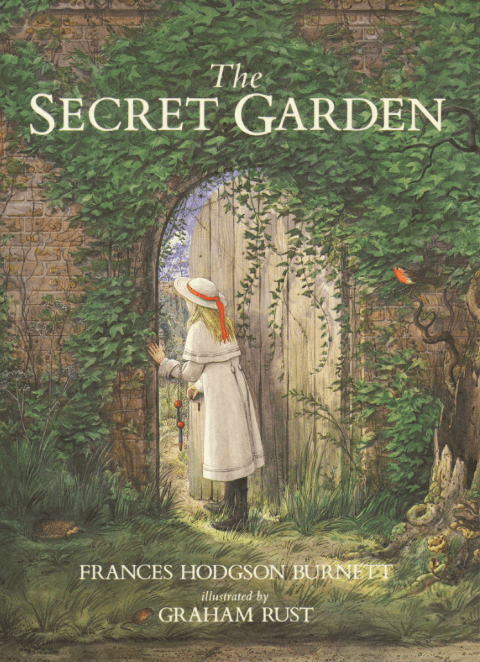
Do you remember the story of the secret garden? Mary Lennox goes to live in England with her uncle whose heart is broken by the death of his wife. He lives in a fog of grief which Mary, in her own loneliness, cannot pierce. But one day, she hears of mistress Lily’s garden. Once, when Lily was alive, her garden was her joy. But when she died, Uncle Archibald locked the gates and threw away the key. It lay dying and forgotten until Mary, little Mary, heard the story and began to look. The robin, friend of Spring, helps her. And one day, she finds the key. And then the door. And then, the garden. It is dead, overgrown, fading. But beneath the brown branches, there is life. Beneath the dead loneliness of life forgotten, it is wick. It wants to live.
Sometimes, our own hearts are like Lily’s garden. They are overgrown with weeds of sadness, hurt, and brokenness. They seem dead, without flowers or leaves. All of us have times when we feel that the doors to our hearts have been closed and the key thrown away. All of us have times when we feel no one could understand us, that we don’t belong to anyone, that we have no place in the garden of God’s love.
But God’s work is finding keys. The purpose of the keys is to unlock the doors between us so that the light can come flooding in. The purpose of the keys is to throw the doors open wide, to knock down the barriers between ourselves and God’s flowing love. The purpose of the keys is to connect us to each other without walls and without weeds.
Joseph Smith loved the ideas of keys. He loved the idea of connection—the whole human family wrapped up together as one. He tried to unlock doors between us, and sometimes he and his followers accidentally created more doors between us. But I still want to try, because I think he was onto something. Sometimes my heart feels like a forgotten garden, but it is still wick. It still wants to grow. It still wants to reach for the shining rays of love.
In our church, we use the words “priesthood” a lot. I am not sure exactly what that word means. You will hear many different ideas of what it means, and you will need to figure it out for yourself. Some of those ideas feel to me like doors closing, and some of them feel like doors opening. I too am still trying to figure it all out. But I think God wants doors to be open. I think God wants keys to be for unlocking, and loving, and connecting. I think God knows that this work is for everyone. Throw the doors open wide, my child. God’s love is rushing through.
Ideas for Play

- Read chapter 2 of The Democratization of American Christianity by Nathan O. Hatch

- Read The Secret Garden picture book
- Talk about some of the priesthood keys we have in the church. What is their job? How do they help to break down walls between us?
- What does it mean to be connected to each other? Is this God’s work?
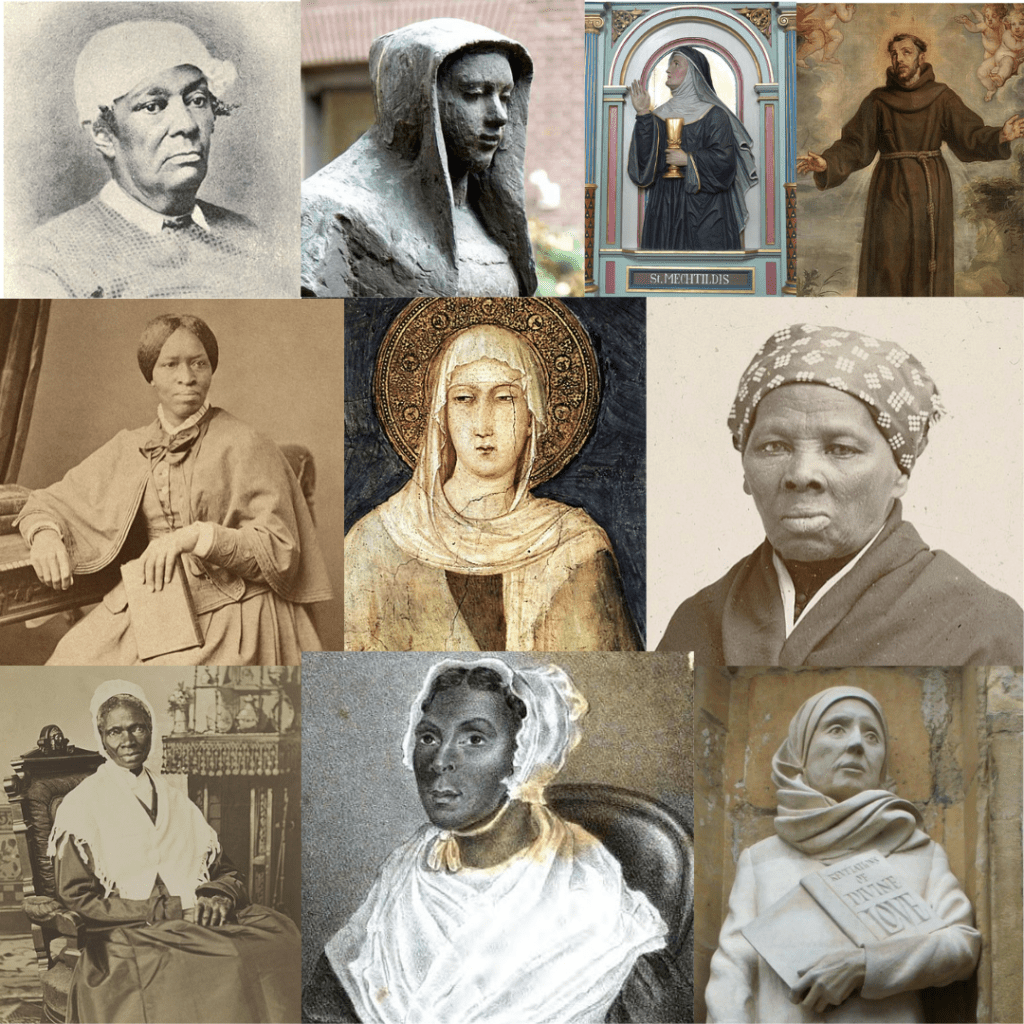
- Talk about different people who have found keys to break down walls between us and God throughout history:

- Read from Standout Saints
Artwork
Compiled by Caroline


Poetry
Compiled by Caroline

Music
Compiled by Caroline
 milk & honey mamas
Leave a comment