

Contributed by Kristen
I classify Joseph Smith as a mystic. This category remains contested in the academic field of theology, with diverging definitions from Wiliam James to Grace Jantzen. I use it because it is helpful to me to think about his experiences in the context of a long tradition of people who communed with the divine and interpreted the divine voice of God in their own language and context.
Section 19 of the Doctrine and Covenants covers a lot of theological ground, including atonement theories, theism, divine power, justice, punishment, sin, discipleship, obedience, and repentance. Many of the theological ideas presented resonate with assumptions that Joseph Smith certainly would have had in his Protestant context, including the nature of sin and the disparity between God and creation. Joseph’s ideas, interestingly, seem to change or at least develop somewhat over the course of his life (his idea of eternal punishment, for example, takes on a different tone in D&C 76, 100, and 138). But words about the human condition, the problem that needs to be solved, can have a powerful impact. For many of us, language about our fallen human nature causes great anxiety and even despair. Yet the ways in which Christian mystics have heard God’s voice on this matter have varied significantly.
There is not a unanimous interpretation on the vast subjects covered in this week’s section. So for this week, we are sharing snippets from a variety of Christian mystics through the ages describing their encounter with the divine on the subject of atonement. Our purpose is not to suggest that any one interpretation is wrong, but rather that God’s wisdom is fecund, not limited. Our hope is that considering a variety of revelations on the same topic will help us approach Joseph’s with grace and compassion as well as openness.
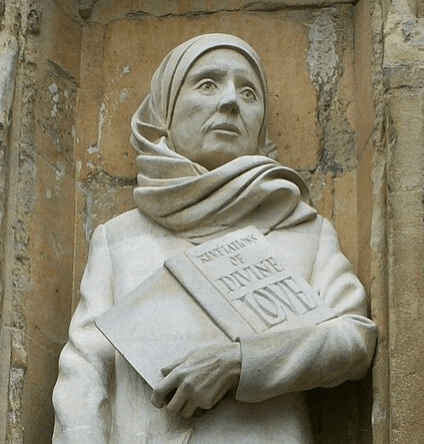
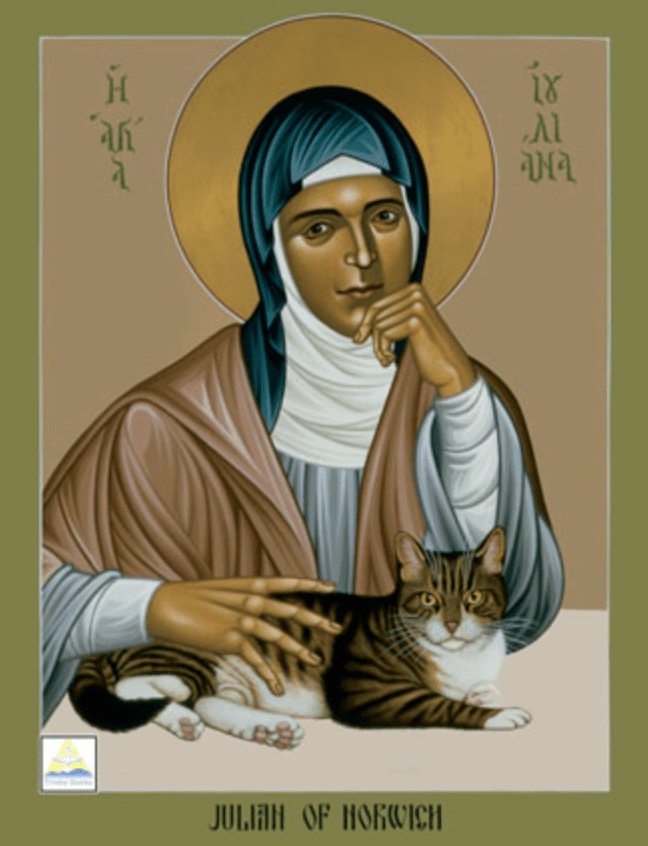
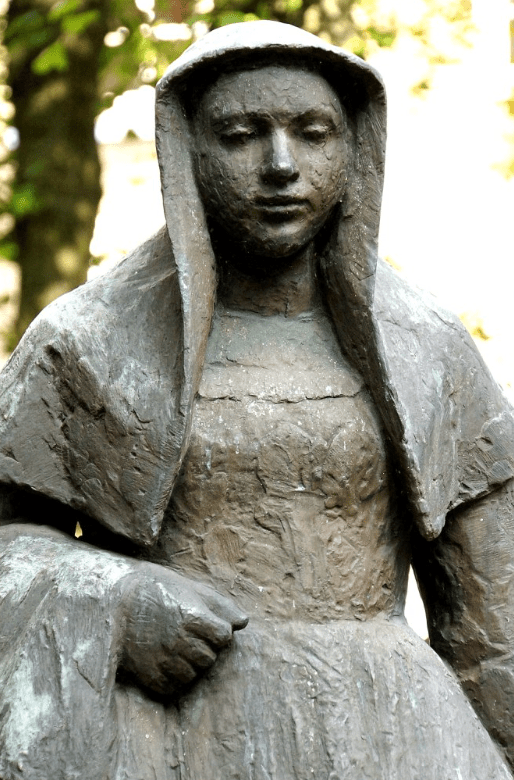
Julian of Norwich:
But yet here I wondered and marvelled with all the diligence of my soul, saying thus within me: Good Lord, I see Thee that art very Truth; and I know in truth that we sin grievously every day and be much blameworthy; and I may neither leave the knowing of Thy truth, nor do I see Thee shew to us any manner of blame. How may this be?
For I knew by the common teaching of Holy Church and by mine own feeling, that the blame of our sin continually hangeth upon us, from the first man unto the time that we come up unto heaven: then was this my marvel that I saw our Lord God shewing to us no more blame than if we were as clean and as holy as Angels be in heaven. And between these two contraries my reason was greatly travailed through my blindness…
[Julian then has a vision of the fall in which she sees a servant and a Lord. The servant loves the master dearly and goes to perform an errand but unfortunately falls into a pit on the way. The servant feels certain the Lord will blame and chastise him, but the Lord sees him all the time and sorrows only for the pain of his injury. Julian understands this to be a vision of the Fall.]
And because of this great, endless love that God hath to all Mankind, He maketh no disparting in love between the blessed Soul of Christ and the least soul that shall be saved. For it is full easy to believe and to trust that the dwelling of the blessed Soul of Christ is full high in the glorious Godhead, and verily, as I understand in our Lord’s signifying, where the blessed Soul of Christ is, there is the Substance of all the souls that shall be saved by Christ. (Chapters L-LIV)
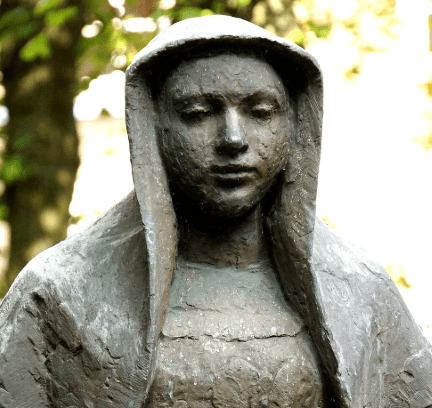
Hadewijch
[Dutch beguine Hadewijch has a vision of multiple trees which she explores with various symbols until she sees Christ who reveals his humanity to her. She then explains her interpretation of atonement]:
From the beginning to the end of the time he spent on earth, [the Son of God] did and perfectly accomplished, amid multiplicity, the will of the Father in all things and at all times, with all that he was, and with all the service he could perform, in words and works, in joy and pain, in grandeur and abasement, in miracles, and in the distress of bitter death. With his whole heart and his whole soul, and with all his strength, in each and every circumstance, he was ready to perfect what was wanting on our part. And thus he uplifted us and drew us up by his divine power and his human justice to our first dignity, and to our liberty, in which we were created and loved, and to which we are now called and chosen in his predestination, in which he had foreseen us from all eternity. (L6.324-343.)
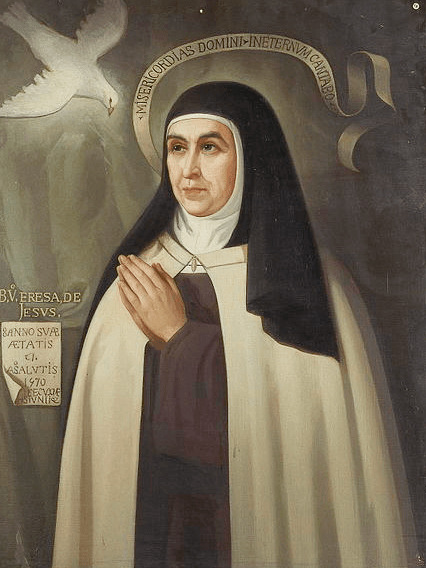
Teresa of Avila
“This Beloved of ours is merciful and good. Besides, he so deeply longs for our love that he keeps calling us to come closer. This voice of his is so sweet that the poor soul falls apart in the face of her own inability to instantly do whatever he asks of her. And so you can see, hearing him hurts much more than not being able to hear him… For now, his voice reaches us through words spoken by good people, through listening to spiritual talks, and reading sacred literature. God calls to us in countless little ways all the time. Through illnesses and suffering and through sorrow he calls to us. Through a truth glimpsed fleetingly in a state of prayer he calls to us. No matter how halfhearted such insights may be, God rejoices whenever we learn what he is trying to teach us.” (from The Interior Castle)

Hildegard of Bingen
[In her book Scivias she writes what she hears from the Lord. The following passage is what she hears about love]:
“I am the fiery life of the essence of God; I am the flame above the beauty in the fields; I shine in the waters; I burn in the sun, the moon, and the stars. And with the airy wind, I quicken all things vitally by an unseen, all-sustaining life.”
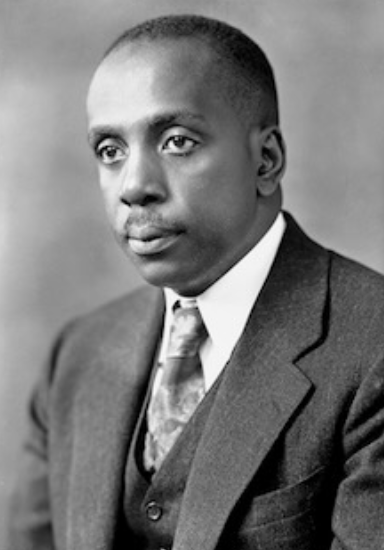
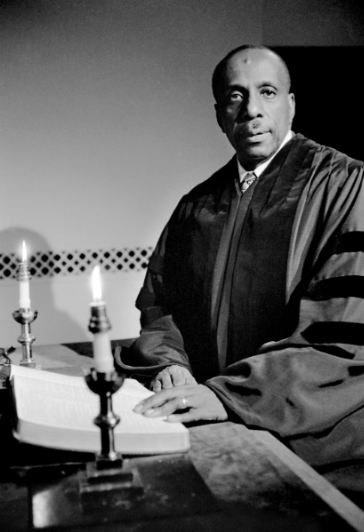
Howard Thurman
“We wait, our Father, until at last something of thy strength becomes our strength, something of thy heart becomes our heart, something of thy forgiveness becomes our forgiveness. We wait, O God, we wait.”
These are just a few snapshots from rich and complex lives. So is Joseph’s revelation. When I approach them all as moments, rather than static and inflexible incarnations of God, my heart has more room to play. And I think to be faithful, to be alive in faith, we desperately need to be able to play.
I just saw a fabulous production of Joseph and the Amazing Technicolored Dreamcoat, a show whose music I’ve been singing for as long as I can remember. But I couldn’t remember ever really hearing this phrase: “all that I say could be told another way.” It bowled me over. That’s it, for me. That’s what we’re doing here. Telling stories is an art of representation. The stories could always be told another way. But telling them, and retelling them, and telling them again, that’s how we step into them. That’s how we bring them to life. We never stop telling them another way. We never suspend our faith that they could be told anew. We believe them. We believe they are big enough to play.
Ideas for Play
Contributed by Kristen
- Discuss each of these figures as a family. Which words resonate with you? Maybe learn a bit about each of these fascinating figures.
- What does it mean to hear God speak?
- Can God say different things to different people? Can they both be “right” or “true”?
- Discuss D&C 19:10: “behold, the mystery of godliness, how great is it!” What is a mystery?
- Read Mysteries, Yes
- Explore what it means to not know everything about something (are there other things that are mysterious?)

- Consider exploring atonement something like this: as humans, we always want to solve mysteries. And we’re actually pretty good at solving mysteries! We’ve worked together to solve some pretty big mysteries over time, like the mystery of light, and movement, and math. But there are lots of mysteries we’re not so good at. Like how to love people we don’t like. And how to forgive ourselves when we mess up. And how to forgive other people when they mess up. And God is a mystery. Because no matter how many things we know about God, there will always be more goodness, and kindness, and loveliness, and hope, and beauty in God. And anytime we try to pin God down with words, God will spill out of our words like a package overflowing with cookies. Because God is more than words. God is more than a package of cookies. God is a mystery. But sometimes this makes us feel like we can’t be close to God. Like we are too different from God, and God won’t care about us. But God understands this. And actually, God’s whole work and joy is to connect our longing with the mystery of God’s goodness. God calls this at-one-ment. It’s like a bridge between our desire to “solve” mysteries and God’s fullness. When we step onto the bridge, we take a deep breath. We look at mystery like it is an enormous waterfall. We don’t want to look away. We are okay with not knowing everything about it. When we see mysteries around us, our hearts are a little softer. We see that actually, we don’t know everything about the world. We don’t know everything about the people who annoy us. We are all mysterious. And God wants to connect us.
- You can extrapolate on this, including how we get disconnected (sin, vulnerability), and how we can repair
- How do we live with mysteries?

- Play a connection game. Get string and small images of things like a person, a butterfly, a tree, a car, etc. How are these things connected? How could they be disconnected? How could they be made whole again? This is the work of at-one-ment, and we are part of it. God draws us in to God’s work.
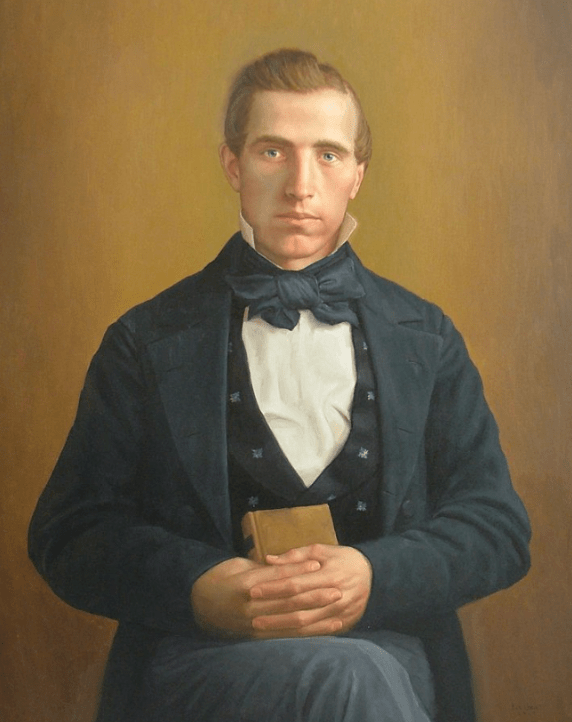
Artwork
Compiled by Caroline

Poetry
Compiled by Caroline
By Malcolm Guite
Show me O anchoress, your anchor-hold
Deep in the love of God, and hold me fast.
Show me again in whose hands we are held,
Speak to me from your window in the past,
Tell me again the tale of Love’s compassion
For all of us who fall onto the mire,
How he is wounded with us, how his passion
Quickens the love that haunted our desire.
Show me again the wonder of at-one-ment
Of Christ-in-us distinct and yet the same,
Who makes, and loves, and keeps us in each moment,
And looks on us with pity not with blame.
Keep telling me, for all my faith may waver,
Love is his meaning, only love, forever.
Music
Compiled by Caroline
O Magnum Mysterium
Translation in English:
O great mystery,
and wonderful sacrament,
that animals should see the newborn Lord,
lying in a manger!
Blessed is the virgin whose womb
was worthy to bear
the Lord, Jesus Christ.
Alleluia!
 milk & honey mamas
.jpg)
Leave a comment