

Contributed by Kristen
D&C 29, once again, covers a LOT of theological ground. While to our modern ears the language of judgement and the separation of wicked/righteous sounds harsh and intense (and it is harsh and intense) this was language very much in line with the cultural landscape of religious revival Joseph lived in. To develop a theology that doesn’t include elements of predestination and eternal judgement (as Joseph later does to a certain extent) would have been almost unthinkable. That said, it is difficult for many of us to read. Interestingly, though, we end up spending a great deal of time and energy focused on this idea of judgement and its intricacies, earning our way into heaven, rather than dwelling on and being changed by the unthinkably radical splendor of God’s effusive love. Alex’s essay deals with some of these tensions.
The Main Attraction
Contributed by Alex Hoagland
On the last day of the year, we went to the zoo with our kids. Proud owners of a new membership, we were excitedly discussing which animals we would see first as we reached the entrance. A zoo employee approached us—I assumed because she had heard the debate of whether to prioritize otters or orangutans, and she wanted to weigh in.
“Are you here for Noon Year’s Eve?” I was completely taken aback by the question, but Kristen cheerfully responded with, “Oh, what’s that?”
The zoo employee launched into a spiel about entertaining our kids in a big party with DJs and prizes, ending with, “They’re even giving away a PS-5! But you have to be in the Discovery Zone at noon to win. You can’t be wandering around the zoo!”
Without missing a beat, but still just as cheerfully, Kristen responded, “Oh, I’m not interested in that at all. Can you tell us about the animals?”
As we walked through the zoo, we wondered what kind of subpar marketing team the zoo had retained in order to come up with this idea. To us, it made no sense. Why would you host a party for kids and families at a zoo, especially one that insisted the families couldn’t be walking around the exhibits?
But sure enough, even with the New Year’s Eve zoo traffic bump, the crowds at the exhibits paled in comparison to the throng in the kids’ area of the zoo when we passed it. Plenty of families seemed to be enjoying the loud music and throng of dancing, tiny bodies, animals or no.
Ultimately, the party’s appeal seemed to boil down to how a parent approached a zoo trip. To many Toronto parents—especially over the holidays—the zoo is just a place to entertain your kids. It’s a much-needed way to get through the day, and possibly have some fun together in the meantime. Perhaps more charitably, maybe some parents are just looking to be with their children, and don’t really care about the exact activity (although one does wonder why pay so much for a chance to stroll and talk with your kids). If you’re a parent in this boat, a party at the zoo might be just the thing you were looking for. Now you can stay longer! You can walk the exhibits and dance in a toddler mosh pit!
Obviously, that didn’t work for us. In part, we weren’t coming to the zoo just to occupy our kids’ short attention spans for a few hours. We come to the zoo frequently because we want our children to learn about and love the world around them. (But, in all honesty, we also are far too meticulously planned as parents to let a party derail a carefully researched learning opportunity.)
There is nothing fundamentally wrong with either approach to a zoo trip. Setting aside my own bias, I can see that whether you come to the zoo to help a bored kid get out of the house or because you want to learn together about bird-eating tarantulas, both kids probably have good experiences. The only difference is the way your emphasis as a parent ultimately shapes what the day looks like.
There are so many things in the Gospel that I hear—again and again and again—to which I have the same gut reaction that Kristen had at the zoo entrance. Oh, I’m not interested in that at all. Can you tell me more about God’s love? Can you tell me more about how I can feel Them speaking through the world right now? Can you tell me more about how this community exists so that we remember we are never alone?
But I am not the only part of the body of Christ, and there are so many rich and varied ways to approach the Gospel (many, many more than there are ways to approach a trip to the zoo). Many faithful Saints come or cling to this faith as a refuge from the dark and dreary world. Because it helps make sense of so much suffering. Because they long for reassurance about what the next life holds for them.
Each of us, I believe, would give a different answer if we were asked for a reason of the hope that is in us. Some reasons for faith will resonate with you, others will not. Some may even make you uncomfortable. But is that alone sufficient reason to direct or dictate the story of faith, as we so often do in the Church?
Perhaps nowhere is the effect of this variation more pronounced than in approaching Church history, as we are doing this year. Here, we grapple with some of the boldest, most unique, and—sometimes—most outlandish claims of our religion. The way we face those claims depends, in part, on what our faith is calling us to seek.
Consider the notion of exclusive Priesthood authority. If you come to the Church looking for a fortress against the world, you may take immediately to the idea that God gave His (pronoun intentional) authority directly to Joseph and Oliver, and re-established a clear, unbroken line of authority spanning all creation. This makes the Church so distinct from the rest of the world as to allow us to create our own safe haven, where we don’t need to worry about the darkness and evil present outside our fortress walls.
But what if, like me, you come to the Church looking not for a fortress, but for a way to more deeply love and serve the world? What if your faith calls you back to the burning building, not away from it? In that case, it may be much harder to take the story of Joseph and Oliver receiving the Priesthood as an indication that God spoke to them and no one else. Personally, I see it as one way that Heavenly Parents are at work in the world, speaking and singing and working and wondering through all creation. I have no interest in an exclusionary Church. But can you tell me more about the ways God speaks to all Her children, all the time?
As Saints, we should be mindful that our faith is not one-size-fits-all, nor should it be. It is easy to slip into judgement of those who don’t see God the way we do. (I have had to pull myself out of this so many times just writing this essay.) And when the stakes are so high—when the people around us are the ones teaching Church History to our children, and choosing which hymns we sing, and representing the Church we hold so dear to the rest of the world—it can feel impossible to let others follow their own iron rod to the tree of life.
The way may be narrow, and straight, but does not need to be unique. There are so many ways to be a faithful disciple of Christ.
Ideas for Play
Contributed by Kristen

- Talk about chicks and hens. Show some artwork of hens and chicks and talk about how God talks about Godself as a mother hen gathering her chicks. What does this mean? Is this some future event, or does God gather us right now? How?

- Play a “gathering” game with stuffies. Can you gather stuffies like a hen under your wings? What if someone feels left out? Who can you reach?
- How can we reach God’s love to others around us?
- Can you think of an act of kindness for someone in your life this week?

- Read Mother God with gorgeous images of God’s mothering work
- How does Jesus gather me?

- Color this coloring page and talk about the associated scripture. What does it mean to you?
Artwork
Compiled by Caroline
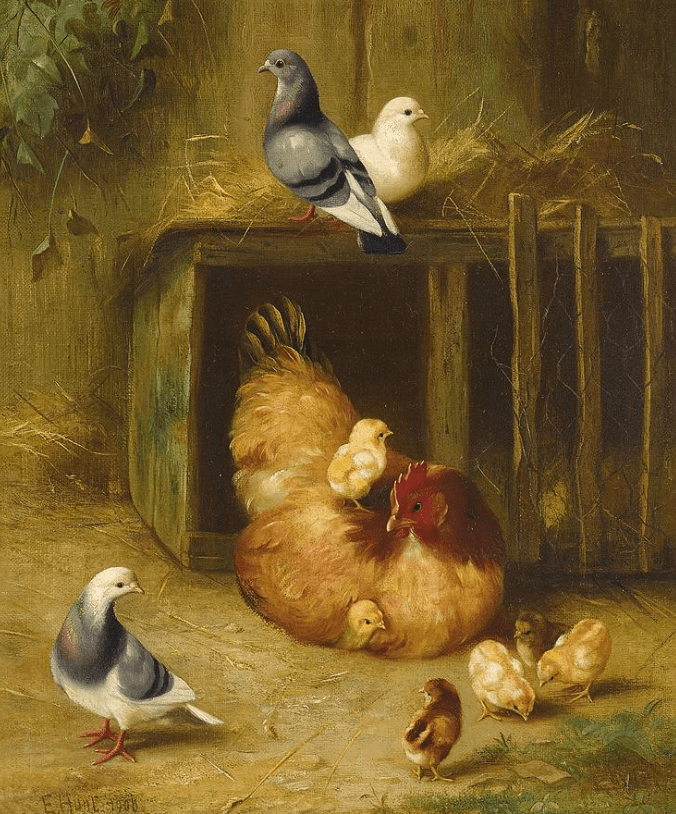
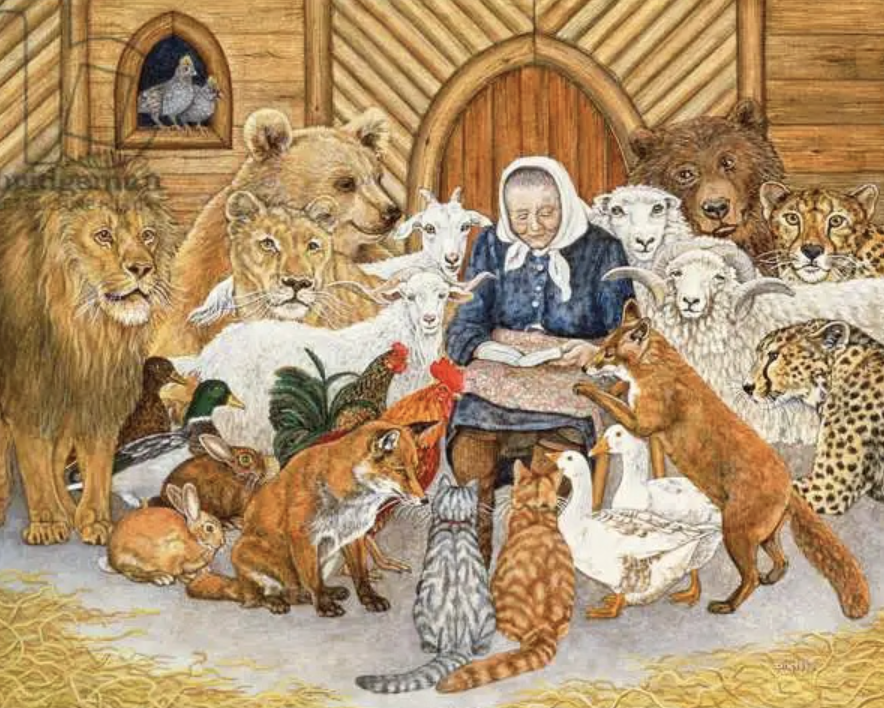
Poetry
Compiled by Caroline
| Alone by Maya Angelou Lying, thinkingLast night How to find my soul a home Where water is not thirsty And bread loaf is not stoneI came up with one thing And I don’t believe I’m wrong That nobody, But nobody Can make it out here alone. Alone, all alone Nobody, but nobody Can make it out here alone. There are some millionaires With money they can’t use Their wives run round like banshees Their children sing the blues They’ve got expensive doctors To cure their hearts of stone. But nobody No, nobody Can make it out here alone. Alone, all alone Nobody, but nobody Can make it out here alone. Now if you listen closely I’ll tell you what I know Storm clouds are gathering The wind is gonna blow The race of man is suffering And I can hear the moan,’ Cause nobody, But nobody Can make it out here alone. Alone, all alone Nobody, but nobody Can make it out here alone. |
Music
Compiled by Caroline
Gathering Stories, by Jónsi
 milk & honey mamas
Leave a comment