
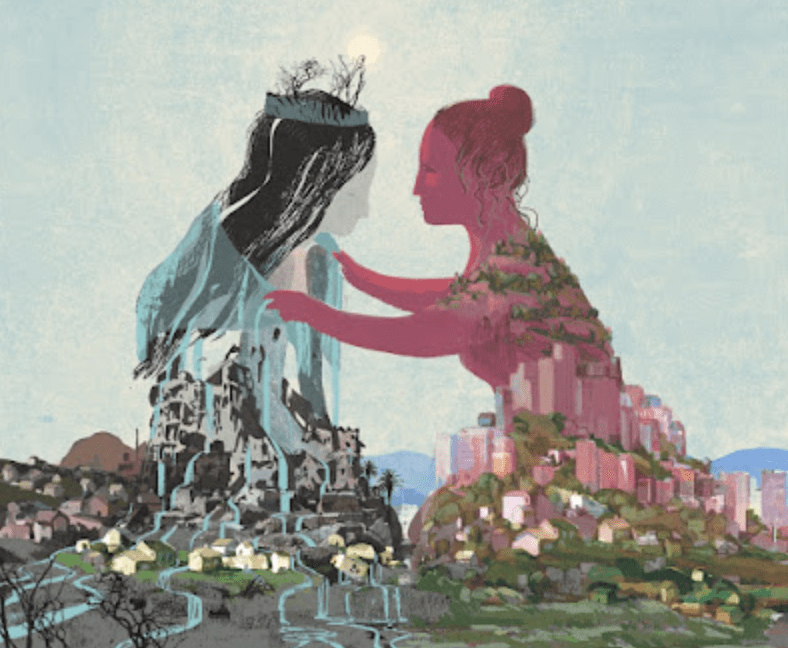
Did you know that there are lots of different names for Jesus that describe different things Jesus does? Here are a few of my favorites:
Healer (because Jesus is especially aware of people who are crying, and people who are hurt)
Teacher (because Jesus loves to help people to understand about who God is)
Shepherd (because Jesus is a guide when we are lost and afraid)
Savior (because Jesus reaches his arms out to us when we are falling)
Mother (this was a very common name for Jesus long ago in the Middle Ages! It describes how Jesus nurtures us with the love and tenderness of a mother)
Friend (because Jesus walks beside us and enjoys being with us)
Can you come up with any others?
I want to tell you about another name that describes something Jesus does: bridge-builder. This one isn’t in the scriptures, it’s just one I made up. But it helps me think about what Jesus does. Jesus is a bridge-builder. When we need to get over rushing waters, Jesus helps us. When we need to cross from where we are to where we want to be, Jesus helps us. When we feel stuck and alone and lost, Jesus will brainstorm plans with us. Sometimes it feels like the path between where we are and where God is has so many miles left to go. But this is Jesus’ favorite bridge. He says, “there’s no space between you and God. God is already here.”
And sometimes it feels like there is infinite space between how broken and sad we feel and what we imagine it might feel to be whole. This is when Jesus just sits down with us and says “tell me all about it.”
Bridges can be spun of silk like a spider web. They can be soft as moss and firm as steel. They can traverse even the deepest pain and even the biggest mistake. Bridges can lead to forgiveness, and hope, and new life, and “I’m sorry.” Bridges can lead to tomorrow, and yesterday, and all the way back to our first mother Eve. But above all, bridges bring us home.
I have desperately needed bridges in my life. Let me tell you about a few.
Compassion: there have been a few times in my life when I have been so angry and frustrated with other people that I could actually not focus on anything else. Like you, I have been deeply wounded by the actions of others that are, from my perspective, immoral, unethical, un-Christ-like, and even evil. Sometimes my anger and even disgust has become so intense that my own heart has been filled with hate. I think anger is very important because it can alert us to situations that are broken. Anger is a sign that something is off. But as we learn from the little fire-ey emotion in Inside Out, anger is not the best driver of our emotional bus! But one day I had an experience that really impacted me. I went swimming at the community center when I was pregnant with my littlest one, because it was one of the few places that I had some relief from intense nausea. I was swimming very slow laps (picture a huge manatee) and another person in the lane was extremely annoyed with me. She gave me this look that just communicated all the layers of how inconvenient and frustrating my presence was. You get it. And it hurt my sensitive little feelings. Then as I was leaving the building, a lady opened the door for me and gave me an enormous smile. As I relaxed in the gentleness of that smile I had a moment where my body fully received a message from the Spirit: you just met God in both of those people. That was humbling. I think of that mysterious scripture in D&C 92: “I [God] am the true light that lighteth every [person] that cometh into the world” (93:2). When we see another, we see God. The light that is God is inside all living things. In the Jewish tradition, the process of gathering light is called Tikkun Olum, and it is the work of healing the world. In the Hindu tradition, practitioners use the greeting “Namaste,” which loosely means “the divine in my bows to the divine in you.” Being able to see and feel the holiness in each other requires bridges of compassion, humility, and openness. I am grateful for the times that I have had help to move from my place of judgement, resentment, anger, and blame to a holier place of compassion, understanding, and grounded work for justice.
“That sounds hard”: another bridge I’ve needed and learned a lot from is the bridge of empathy. We all know how it feels to talk to someone who really wants to fix the hard situation we’re in. I often have to resist the urge to do this—many of us really want to control things! But it is rarely the case that our job is to fix or resolve the problems and pains people bring to us. When I worked as a chaplain, I had a secret weapon and it was one little, very simple phrase. Here it is: that sounds really hard. When I said these words to suffering people and really meant them, their shoulders dropped. They relaxed. When people say those words to me, my chest expands. Tears come to my eyes. Yes, this is really hard! Life is really hard. We need different kinds of help getting through it, including sometimes people who can give advice and direction, but a lot of the time the most helpful and healing bridge between where we are and where we want to be is just compassion. That sounds really hard. It’s not a magic formula, and it doesn’t resolve the pain we’re in, but it allows the pain room to just be, without judgement. Sometimes, it allows the pain to find words to express itself. This is all part of healing.
Wandering: Marilyn Robinson writes, “Weary or bitter of bewildered as we may be, God is faithful. He lets us wander so we will know what it means to come home.” It might not seem like it from looking at me, but I have wandered a great deal. In fact, most of the time I feel very unmoored from a spiritual center. Most of the time, I feel that I am wandering in the wilderness seeking a silent, distant God. And then sometimes, sometimes, I have moments of rupture where God breaks through and illuminates the cloud of my unknowing. One of these times was on a day that I just did not feel that I had it in me to go through the motions. I was spent. I know that all of you understand what I am describing here. I was spent and my spirit was weary. I felt that I could not do the things that I was “supposed” to do to earn God’s love and prove my righteousness. Quite unexpectedly, in a quiet, very small way, I had a deep spiritual impression that my whole paradigm was wrong. God did not need me to prove anything. God just wanted to love me. Sometimes, we find ourselves wandering even when we are on the “straight and narrow” path. The older brother of the prodigal son felt this way. In fact, I think the story is just as much about him as it is about his little bro. Doing everything right doesn’t heal our hearts and it doesn’t earn love. Love comes first. Love washes us from the inside out and opens our eyes to see that love is all around us. God is all around us. And the reality is that the bridge of God’s love stretches as far as we can wander. God is ready to meet us no matter how far we have flung ourselves from God’s gracious hand.
We are not alone: one last bridge. At a very stressful and emotional time in my life, my husband and I moved to Ohio with our infant daughter. This long road trip was the cause of enormous stress and anxiety to me, and I was extremely fragile. As we got into the car, I sat with tears streaming down my cheeks. At one point on the long drive, I was gazing at my precious, sleeping daughter, and feeling that agony of anxiety about what was ahead for our family. I suddenly but distinctly felt the tender, loving presence of my grandma Mary. I felt that she was letting me know that she would travel with me, watching over us, and would stay by my side.
In Moana, as grandma Tala is about to die, she tells Moana “There is nowhere you could go that I won’t be with you.” I believe fervently that this is true. It is true for our ancestors who love and champion us and it is true for our God. This is the most important bridge. It is flung between earth and heaven with reckless abandon. It meets us where we are without judgement.
The path to God can begin curled up in fetal position because it isn’t about doing more and more and more. It is about allowing the love and the light that is already within us, already our deepest heritage, to open our hearts. It is about seeking love and light in those around it. It is about getting messy seeing where the systems of the world have destroyed bridges to dignity, nourishment, and success for those who are the most disadvantaged. It is about joining our God in the work of building bridges so that no one sees an insurmountable distance between themselves and God. So that, by one better day, no one’s children are hungry and hurting and scared.
I believe in a bridge-building Jesus. Here’s what Jesus said about his mission when he was on the earth: “The Spirit of the Lord is on me,
because he has anointed me
to proclaim good news to the poor.
He has sent me to proclaim freedom for the prisoners
and recovery of sight for the blind,
to set the oppressed free.” (Isaiah 61:1,3)
As a follower of Jesus, this is my work too. Jesus has anointed me to proclaim good news to the poor, to proclaim freedom, to fight oppression and injustice. There is no where we can go that God’s love will not follow. There is no hidden hurt that Jesus does not see. There is no secret pain that Jesus does not weep for. There is no dark so complete that Jesus’ light cannot illuminate.
One of my heroes is a woman who lived in the 14th century. Her name was Julian. She very nearly died when she was quite young and she had a powerful experience of visions from God. She devoted the rest of her life to understanding those visions and to helping others feel God’s love. In one of the magnificent writings she left behind she discusses trying to understand the visions she has seen. She prays to God for help and this is what she hears:
“Do you want to know what your Lord meant? Know well that love was what he meant. Who showed you this? Love. What did he show? Love. Why did he show it to you? For Love.”
Love bridges our way. It bridges every boundary between us and our loving heavenly parents. So I sing with the Gullah people who brought songs of hope across a dark ocean of tribulation to a world of terrible injustice and evil. Kumbaya, my Lord. Come here, my Lord. A child is bored here, my Lord, come here. A sister is weeping, Lord. Come here. A brother is hurting, Lord. Come here. We are trying, Lord. Come here. Be with us. Help us cross toward peace.
Kumbaya.
*adapted from a sacrament meeting talk
Poetry
Peace
When will you ever, Peace, wild wooddove, shy wings shut,
Your round me roaming end, and under be my boughs?
When, when, Peace, will you, Peace? I’ll not play hypocrite
To own my heart: I yield you do come sometimes; but
That piecemeal peace is poor peace. What pure peace allows
Alarms of wars, the daunting wars, the death of it?
O surely, reaving Peace, my Lord should leave in lieu
Some good! And so he does leave Patience exquisite,
That plumes to Peace thereafter. And when Peace here does house
He comes with work to do, he does not come to coo,
He comes to brood and sit.
Ideas for Play
- Children’s poems for peace from UNICEF
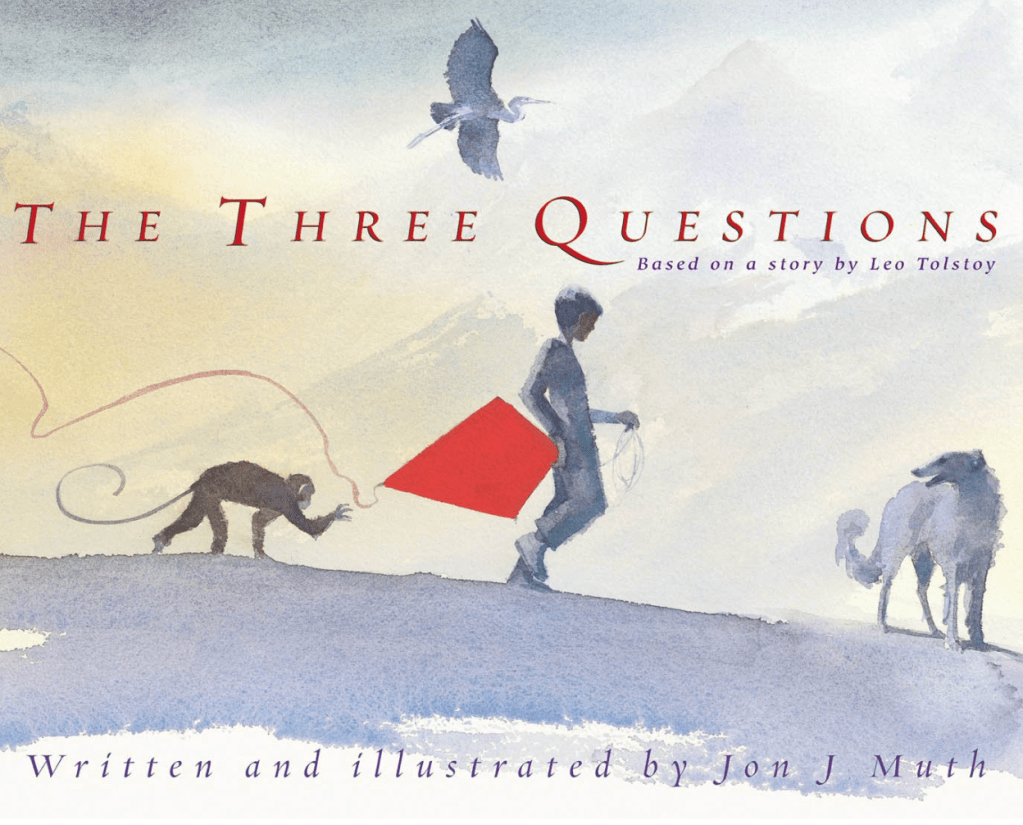
- Read The Three Questions
- What brings you peace? What does peace feel like?
- Activity: play different sounds on your phone (airplane taking off, sirens, crowd cheering, wind, etc.) and talk about how they make you feel
- Read some scriptures about peace – what is God saying?
- D&C 121:7
- John 14:27
- Philippians 4:7
- Consider memorizing one of these scriptures and making a collage / illustration about it
- How can we build peaceful places?
- Within ourselves?
- Within the world?
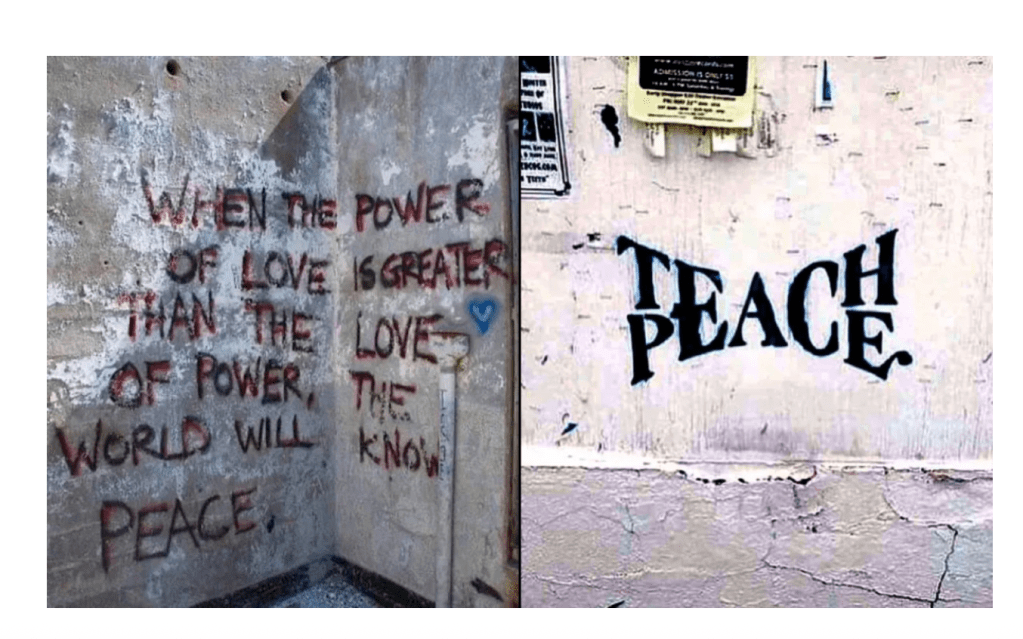
- Look at some art for peace. Here is a gallery of street art – lots of great conversation starters
 milk & honey mamas
Leave a comment