
Contributed by Kristen
One of the things I learned in divinity school that surprised me the most was that what we call the “Old Testament” (what I will call the Hebrew Bible out of respect for its ongoing authority in Judaism) is actually not a stand-alone, incomparable text. I had imagined that the Bible was written sort of like a transcription, a prophet jotting down words from God as they were received. This isn’t to refuse the possibility of exactly such a process, but rather to note that my expectations were misaligned with the scholarly realities which help us to understand these complex, ancient texts.
The Hebrew Bible does not represent, by any means, the “first” theology or the birthplace of theology. Rather, it is a reflection of its cultural context. There were many theologies in the ancient world, many of which shared basic assumptions and influences. The text of the Hebrew Bible, for example, shares many myths with the lands its authors inhabited in ancient Egypt and Mesopotamia. It is influenced by many of the assumptions and basic world views which characterized this ancient world, even if it differs from or critiques them at times. It is also a many-layered text, with multiple editors’ hands shaping its message over its lengthy lifetime. There are sometimes multiple editions of one story, with a younger version redacting or altering an older version. There are different opinions and persuasions, different literary styles and purposes, and different characters and audiences. This text is complex.
The Genesis story, for example, is actually two stories, written at different times and sutured together by later editors. The two versions differ in their literary style and portrayal of the deity Yahweh or Elohim. The earlier version (found in Genesis 2), sometimes called the Yahwist source (or J source), reflects the most ancient understanding of the spiritual questions it poses. The later version (found in Genesis 1), sometimes called the priestly source (or P source), reflects the more ordered, rabbinical approach seeking conformity in belief. Both accounts draw on mesopotamian myths of legends, including the famous epic of Gilgamesh, in their portrayals of creation and the human situation.
Does this make the story any less (or more) “true”? I don’t think so. To me, the story of the story is part of its life, its blood and bones and muscle. I like to think of its pieces, the land where it was birthed, the skin and food and sweat and blood and land of the people who brought it to life. It is still alive, thousands of years later. Our skin and food and sweat and blood and land bring it to life, all times new, old, mysterious, familiar, sacred.
For Littles: Genesis
Before there were trees and flowers and rocks and waterfalls, or even dirt and grass and ground, there was a magnificent Something that filled space. The Something was both good and bad, healing and hurt, light and dark. This something had a lot of names, names like Chaos, Mystery, Void. And Father and Mother God saw that the void was full of energy, like music waiting to burst out. But it had no form, and no organization. And so God had a Big Idea. They would organize the void and help the energies form relationships.
God started with an enormous breath. As Father and Mother God breathed in, the light and the dark separated out, shimmering. Dark over here. Bright over there. They breathed out and the light and dark grew bigger and fuller and brighter and darker.
From the light and the dark, Father and Mother God organized the sun, the moon, and the stars. Each shone brilliantly, and they rejoiced in themselves and in God who had created them. Father and Mother God laughed in delight. “You are glorious, mighty, and whole,” they said. And the light and the dark shone with purpose.
God breathed in again and organized land, water, and sky from the mysterious void. God breathed out and the land grew, steady and sure and firm. And the water rushed over the land, running and leaping and swirling with joy. And the sky stretched out like she was just waking up, filling the space with oxygen, wrapping the land and the water with a blanket of air. God saw the glory of the land and the water and the sky, and saw they were wonderfully, beautifully alive.
Father and Mother God had organized our whole world. It was beautiful and wonderful, but it had come at a price. Now the energies were separated from the void, and they were forming relationships: hydrogen and oxygen, land and water, light and dark. There was life, and there was also death. There was kindness, and there was also meanness.
And while everything was separated, it was also connected. And it was connected by the love of God that had organized the creation. And the world began to exist, separate but connected, by a deep, growing web of love. And roots began to form beneath the surface of the earth. And soon trees grew into forests. From within the ocean, creatures began to form. Animals: whales, fish, octopuses, sharks. Some creatures swam from the ocean onto the shore and became creatures with legs. Bears, tigers, monkeys, beetles, frogs. Father and Mother God saw the world they had organized evolving, creating, becoming, and they rejoiced. “You are glorious and mighty,” they said. The bears and tigers and monkeys and beetles and frogs and the whole earth sang back with happiness, shining with purpose and life.
When there were trees, and flowers, and living creatures, and sun, moon, and stars, and a great sky enveloping the earth, Father and Mother God knew it could be a home for humans, their own spirit children. “Are you ready?” they said to the very first people. “We are ready,” they said. And God breathed the breath of life into their bodies and they became living souls, spirits and bodies united together. They looked at the world, the green, singing world, and they said, “it is so beautiful.” They looked and looked and looked, and Father and Mother God looked with them, and they were all very still.
Everything on the earth was alive, and well, and connected. Then, Father and Mother God took the first people by the hands and looked into their eyes and said, “You, and all people after you, are the guardians of this world.” The first people saw that Father and Mother God had tears in their eyes as they spoke, and they listened carefully. “Please,” said Father and Mother God, “you must care for all creation. Because all of creation is held together by thin, precious, tendrils of love. And it must be kept and cared for, like a garden. And if it is not, all of creation could fall apart. It will splinter and fracture until nothing is left but the separation. A void. Emptiness”
The first people looked into the eyes of God and they nodded. “We will be the guardians,” they said. Father and Mother God smiled, and they looked at the first people and the first creations on the earth with great love, and they said one more thing: “we trust you.” Then, Father and Mother God sat down, because they had worked very hard, and they were tired, and their hearts were full of many feelings. They rested, and they looked at the beautiful world, and their beautiful human children, and they held hands and were still.
On and on creation continued, down and down until the glorious day you were born. And each time, to each creature, to each plant, to each drop of water, and to each child on the earth, Father and Mother God say, “You are glorious and mighty and whole.” For all creation is filled with the breath of life, and all that is alive sings of our sacred connections of love.
Listen carefully to the wind, you might hear her telling the story of how she came to sing through the trees. Listen to the trees, place your hand gently on their trunks, and you might feel their spirits, and how they speak to the earth and the sky. Listen to the ocean, look deep within her depths, and you might hear the whales singing the song of creation. After all this time, they still tell the story of the great mystery, and how Father and Mother God organized all life, and how we are all singing with the breath of life, and how there is good and bad within everything, and how even so, the world is glorious, and mighty, and very, very good.
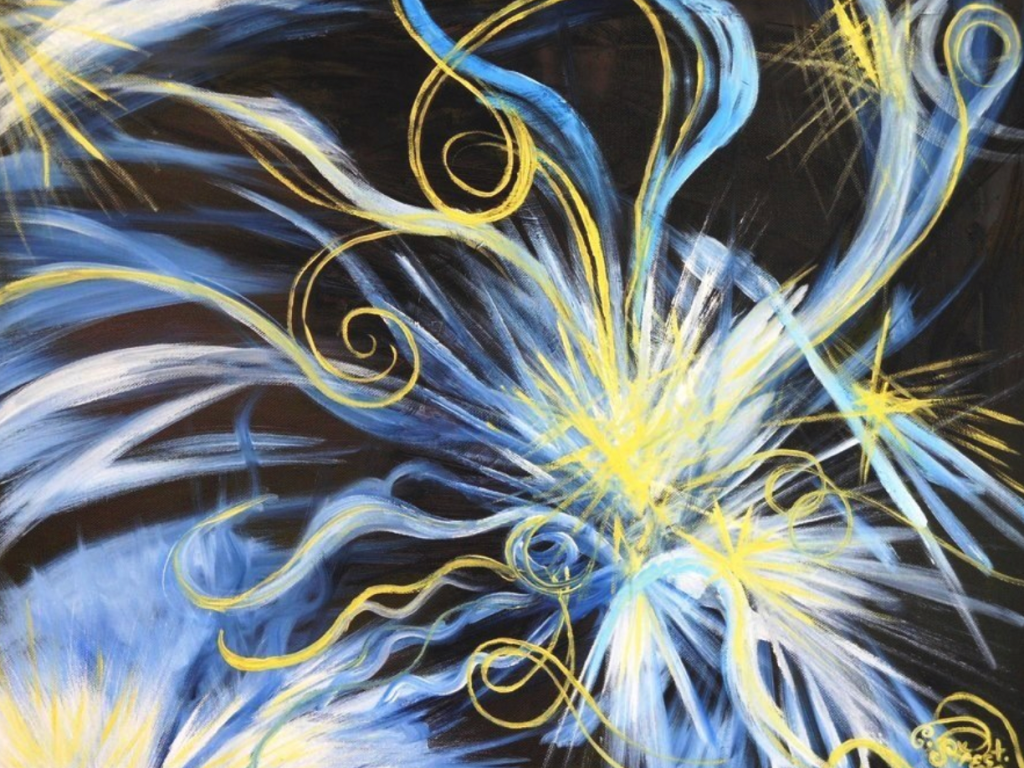
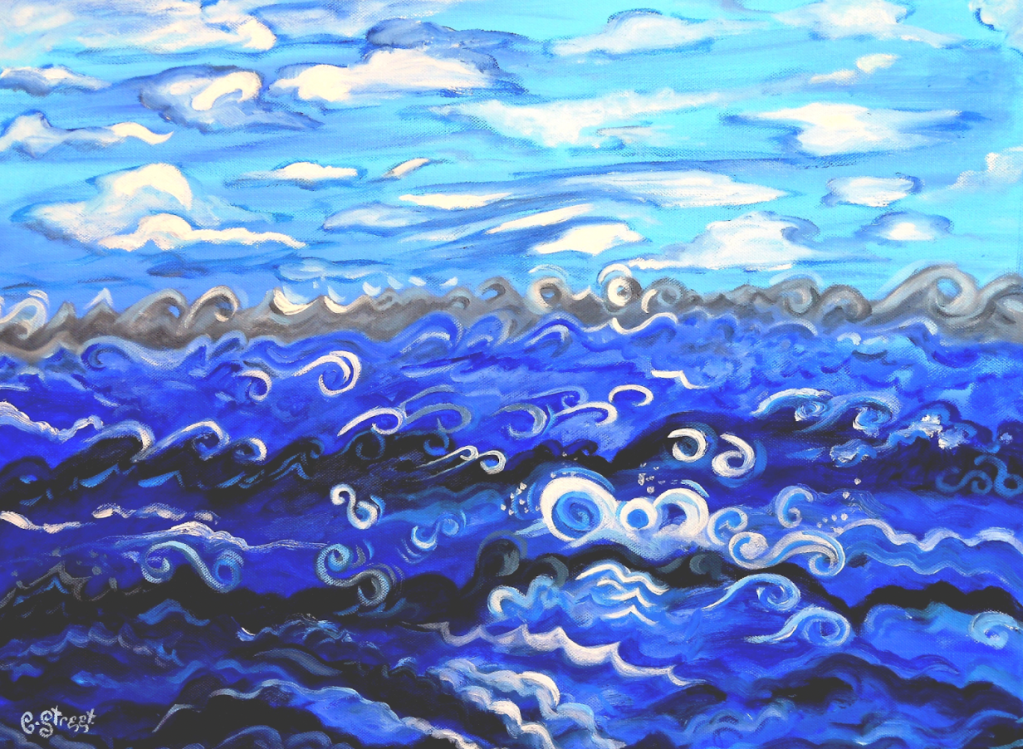
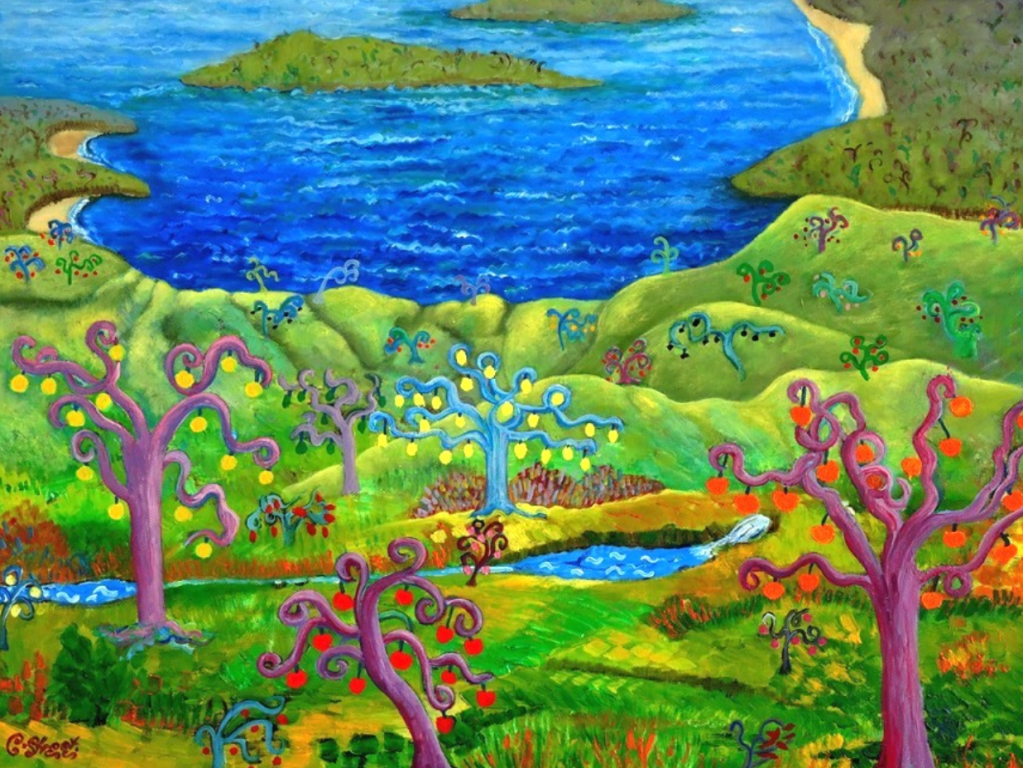
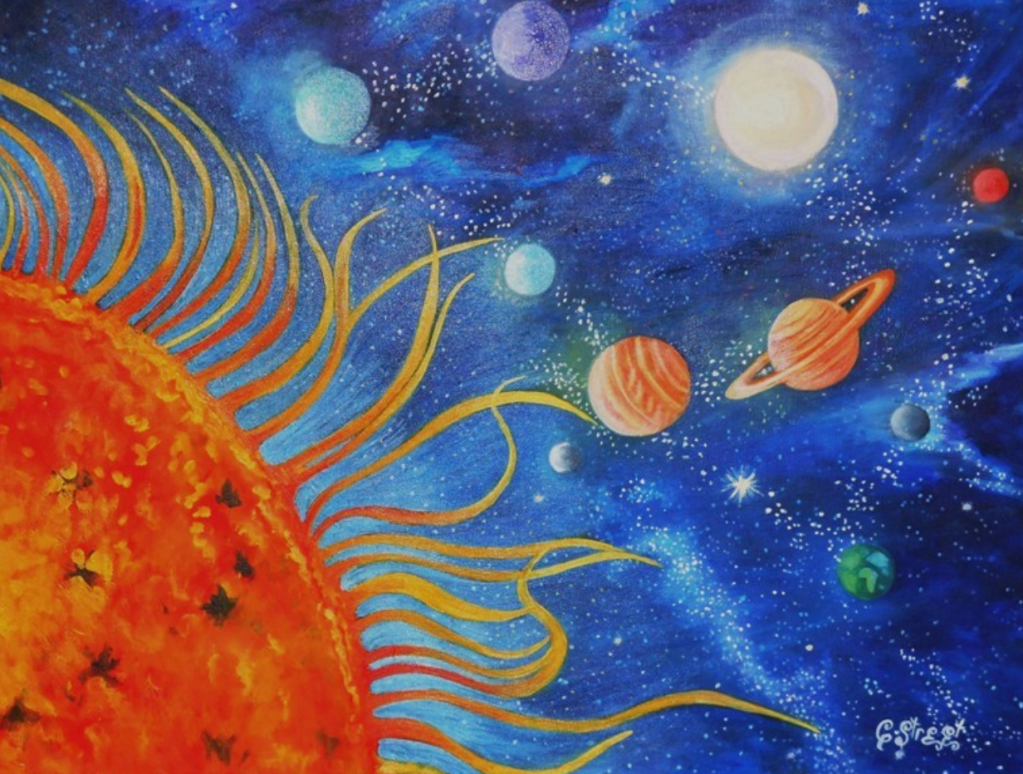
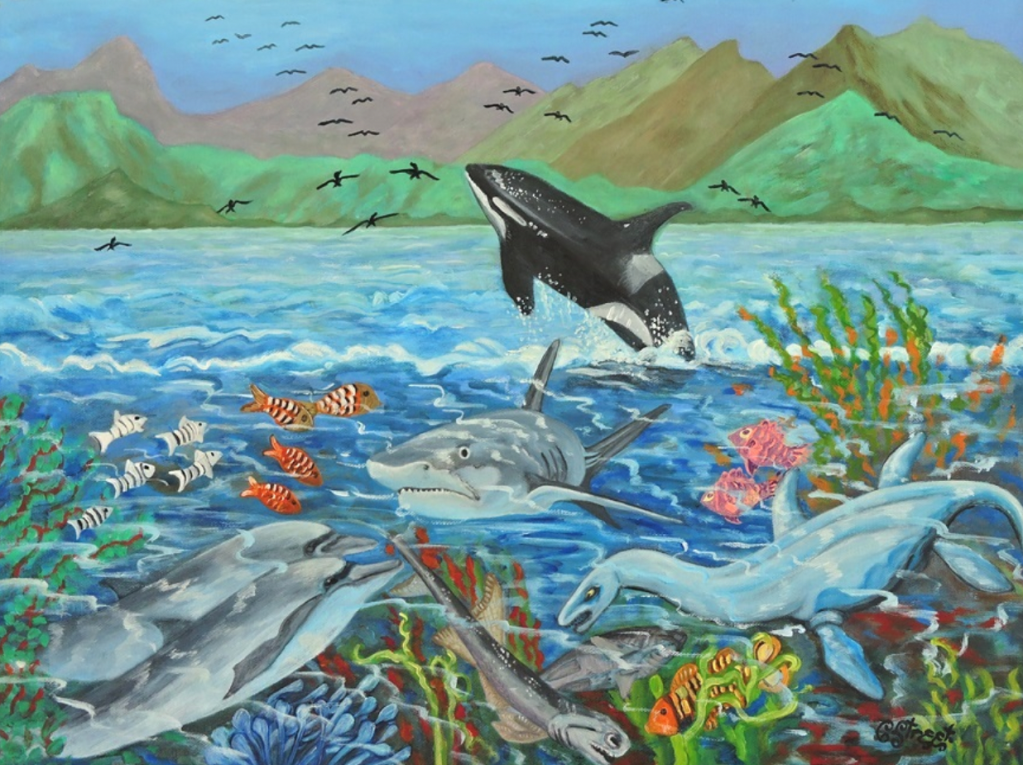
Artwork

Poetry
Book of Genesis
Written by Kei Miller
Suppose there was a book full of only the word,
let – from whose clipped sound all things begin: fir
and firmament, feather, the first whale – and suppose
we could scroll through its pages every day
to find and pronounce a Let meant only for us –
we would stumble through the streets with open books,
eyes crossed from too much reading; we would speak
in auto-rhyme, the world would echo itself – and still
we’d continue in rounds, saying let and let and let
until even silent dreams had been allowed.
 milk & honey mamas
Leave a comment