
Scattered throughout the Hebrew Bible and the Book of Mormon there is a vivid recurring dream of sweet nourishment offered freely by deity. In the Book of Mormon Nephi imagines Jesus saying, “Come unto me all ye ends of the earth, buy milk and honey, without money and without price” (2 Nephi 26:25). Milk and honey, symbols of fertility and abundance, offer physical and spiritual analogies for God’s loving presence and tender ministrations. God our father and our mother, offering not just nutritional fullness but delicacy, delight. The work of producing milk and honey is female. Female bees make honey, and female mammals produce milk. A land flowing with milk and honey is a land indebted to female industry, a land swimming in riches that sustain life. Cream and gold, made from flowers and grasses and water, milk and honey sing through the pages of holy texts, illuminating the unyielding graciousness of the earth and the unending mothering of our God.
We are mothers who believe deeply that our fervent desire to nourish and delight our children is a spiritual heritage. We believe that children are intelligent, creative, and insightful humans who do not need our theological crumbs. They need the full meal, at the big table, laden with milk and honey.
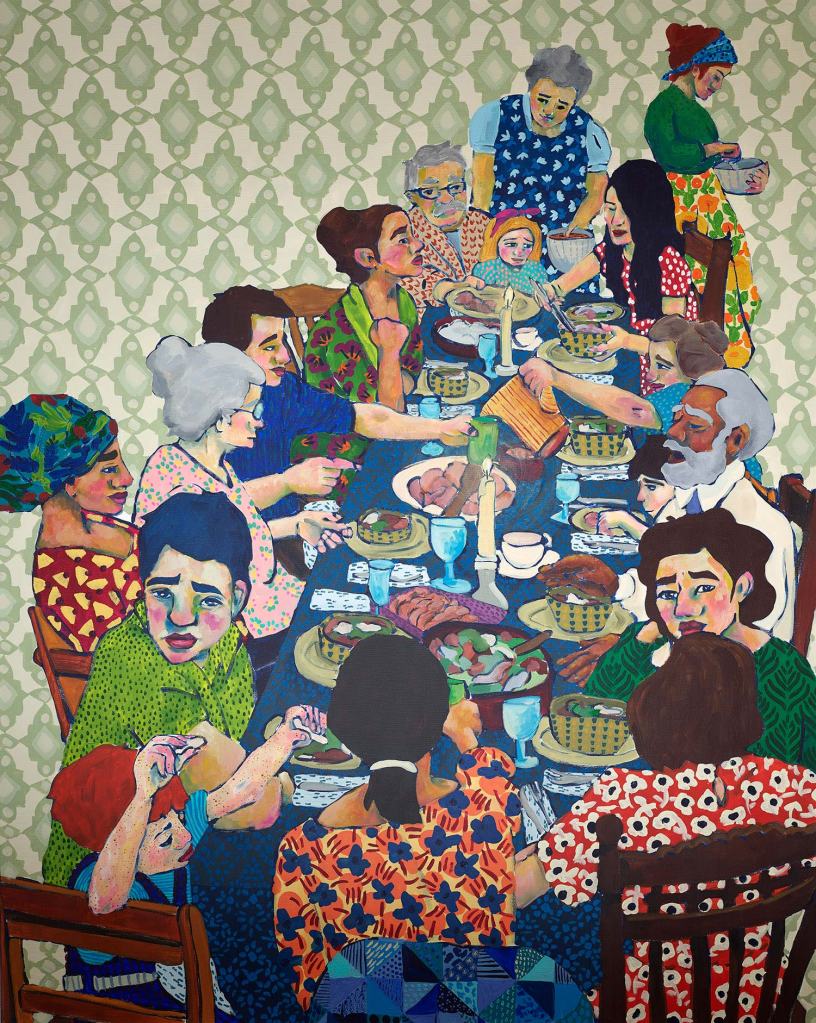
Here, we imagine a table with God at the mama’s seat, doling out the pasta and slathering the bread with jam. We place the stories of the scriptures in this context and imagine them as invitations to question, explore, play, and discover. We offer ideas for engaging the stories of Jesus and connecting them to other beautiful things—milk and honey—that may bring and keep them alive. We imagine ourselves in community with the many people doing mother-work and longing to feed the spirits of children so that they will love the stories, not fear them. Everyone is welcome, without money and without price.
Pedagogical Vision
We believe that children are naturally intelligent, curious, and active learners who work through new things primarily through play and experimentation. We believe that children are capable of understanding deep truths and complicated questions and that we do not need to dumb things down for them. We believe that children are inquisitive and can make their own discoveries and come to their own insights. We believe that the best learning happens when children can pursue what interests them at their own pace. We emphasize the use of repetition, retelling, music, and play.
Our resources use stories as the pivotal point of engagement, like Jesus did. We offer questions and other methods of engagement to foster connection and curiosity, and ideas for how to go where children lead.
Relaxing our ideas about what we need to cover, what our children should know, or even how much time we should be spending with scripture stories might allow us to foster different kinds of connection with Jesus and with each other.
Theological Vision
The New Testament is a complex document written many years after Jesus’ ministry and death. Its authors had different ideas, purposes, and even theological commitments. While our theological outlines are simplified for children, we hope they help parents approach the texts with more curiosity. Thinking differently about the words and stories of Jesus might help us meet Him again and find Him showing up more intimately in our daily lives.
 milk & honey mamas