

Theological Background by Kristen
The long, sometimes arduous war chapters of Alma spark various feelings among us as readers. Many look for the “point” of these stories for our day, searching for their morals, analogies, and spiritual insights. I see the value in this, but I also wonder if it has the tendency to distance us a bit from the grisly realities of the text. War stories tell us about our ugliest impulses and vilest tendencies. We see the inclination of our good editor (whether they are his words or Alma’s we don’t know) to moralize what he sees happening, especially in light of the circumstances of his own time and place:
And the bodies of many thousands are laid low in the earth, while the bodies of many thousands are moldering in heaps upon the face of the earth; yea, and many thousands are mourning for the loss of their kindred, because they have reason to fear, according to the promises of the Lord, that they are consigned to a state of endless wo.
While many thousands of others truly mourn for the loss of their kindred, yet they rejoice and exult in the hope, and even know, according to the promises of the Lord, that they are raised to dwell at the right hand of God, in a state of never-ending happiness.
And thus we see how great the inequality of man is because of sin and transgression, and the power of the devil, which comes by the cunning plans which he hath devised to ensnare the hearts of men.
And thus we see the great call of diligence of men to labor in the vineyards of the Lord; and thus we see the great reason of sorrow, and also of rejoicing—sorrow because of death and destruction among men, and joy because of the light of Christ unto life.
Alma 28:11-14
And later:
Yea, I would declare unto every soul, as with the voice of thunder, repentance and the plan of redemption, that they should repent and come unto our God, that there might not be more sorrow upon all the face of the earth.
Alma 29:2
This is a stricter version of his theodicy following Ammonihah, and a theodicy we see developed by his predecessors. It is a version of Lehi’s covenant path, in or out of bounds. Sorrow, Alma is suggesting, comes because of sin. Without sin – or in other words, with a knowledge of the true and living God – sorrow could be at last annihilated. Perhaps I am over simplifying good Alma’s theology here, mixed with good Mormon’s. I certainly feel great sympathy for them both. What were they to do, faced with what they faced?
And I turn back to my own mirror, my own time and place, and ask the same questions: what am I to do, faced with what I face? The ethos of violence shifts over the course of the Book of Mormon. There are godly war heroes and there are godly pacifists. Both are claimed to be “highly favored” of the Lord. Those without a correct knowledge, those telling the wrong story, are easily dehumanized and misunderstood. The Book of Mormon ends with tragedy for both “sides” of a once intact family. I see in this text much misplaced hate, violence, and struggles for power. I see the same impulses in myself. I see my own impulse to dehumanize, to stereotype, to hate for the sake of hating, to condone violence and power for the “correct” cause. When I read the Book of Mormon, I check myself. Are there really only two “sides,” good and evil, or is somehow much more messy and vulnerable? I am not a moral relativist, but I am wary of normative claims to rightness, especially in a theological arena. I know that when I look honestly at myself, I find unambiguous good and unambiguous bad. I find great fear. I find that I feel terribly vulnerable, often helpless, and sometimes hopeless. I imagine you do, too.
I think often of Tolkein’s famous words spoken through the forever good Gandalf:
“I wish it need not have happened in my time,” said Frodo.
“So do I,” said Gandalf, “and so do all who live to see such times. But that is not for them to decide. All we have to decide is what to do with the time that is given us.”
Perhaps this is true of every age, facing the violence, calamity, and unspeakable atrocity of its own time. Each century has had its own terrors. And reaching across the ages to the invisible spirits whose stories whisper from the digitized pages of magical translation, I feel the same old ache for meaning. For the sense to sort into categories of right and wrong, good and evil, heaven and hell. And I feel, deeper still, that these categories cannot hold us all. They fade into the night sky, twinkling like fireflies in the dusk. God remains, silent and still, heavy with the world in her arms.
Now my brethren, we see that God is mindful of every people, whatsoever land they may be in; yea, he numbereth his people, and his bowels of mercy are over all the earth. Now this is my joy, and my great thanksgiving; yea, and I will give thanks unto my God forever. Amen.
Alma 26:36
Ideas for Play
Contributed by Kristen

- Read the Book of Mormon storybook!
- Watch this little overview video
- Read the story of the Anti-Nephi-Lehi’s and act it out!
- Talk about facing our time
- Watch Gandalf himself
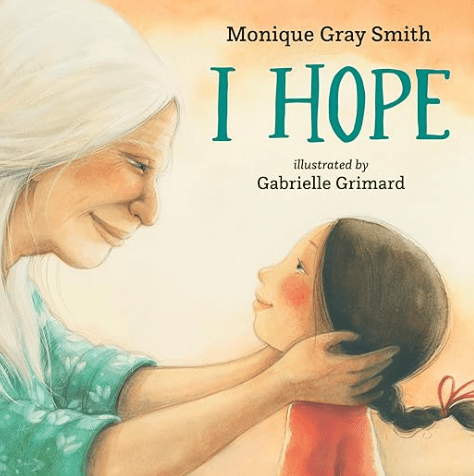
- Read I Hope
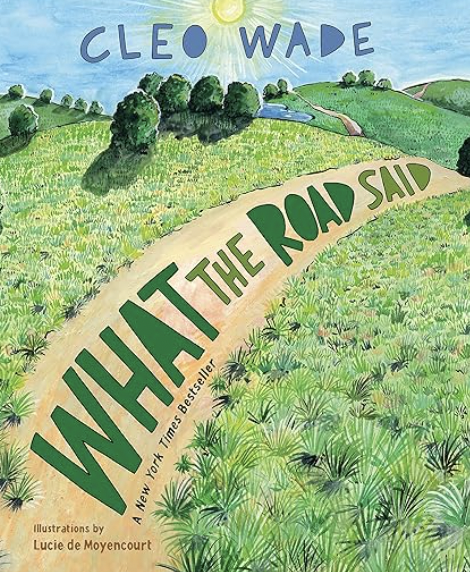
- Read What the Road Said
- Review what it means to be “orange,” (from the Book of Mormon storybook) – a mix of bad and good
- Create orange art or mistake art (mix colors to make new colors)
- What colors combine to make you?
Artwork
Compiled by Caroline
Poetry
Compiled by Caroline
The Darkling Thrush
BY THOMAS HARDY
I leant upon a coppice gate
When Frost was spectre-grey,
And Winter’s dregs made desolate
The weakening eye of day.
The tangled bine-stems scored the sky
Like strings of broken lyres,
And all mankind that haunted nigh
Had sought their household fires.
The land’s sharp features seemed to be
The Century’s corpse outleant,
His crypt the cloudy canopy,
The wind his death-lament.
The ancient pulse of germ and birth
Was shrunken hard and dry,
And every spirit upon earth
Seemed fervourless as I.
At once a voice arose among
The bleak twigs overhead
In a full-hearted evensong
Of joy illimited;
An aged thrush, frail, gaunt, and small,
In blast-beruffled plume,
Had chosen thus to fling his soul
Upon the growing gloom.
So little cause for carolings
Of such ecstatic sound
Was written on terrestrial things
Afar or nigh around,
That I could think there trembled through
His happy good-night air
Some blessed Hope, whereof he knew
And I was unaware.
Music
Compiled by Caroline
 milk & honey mamas
Leave a comment